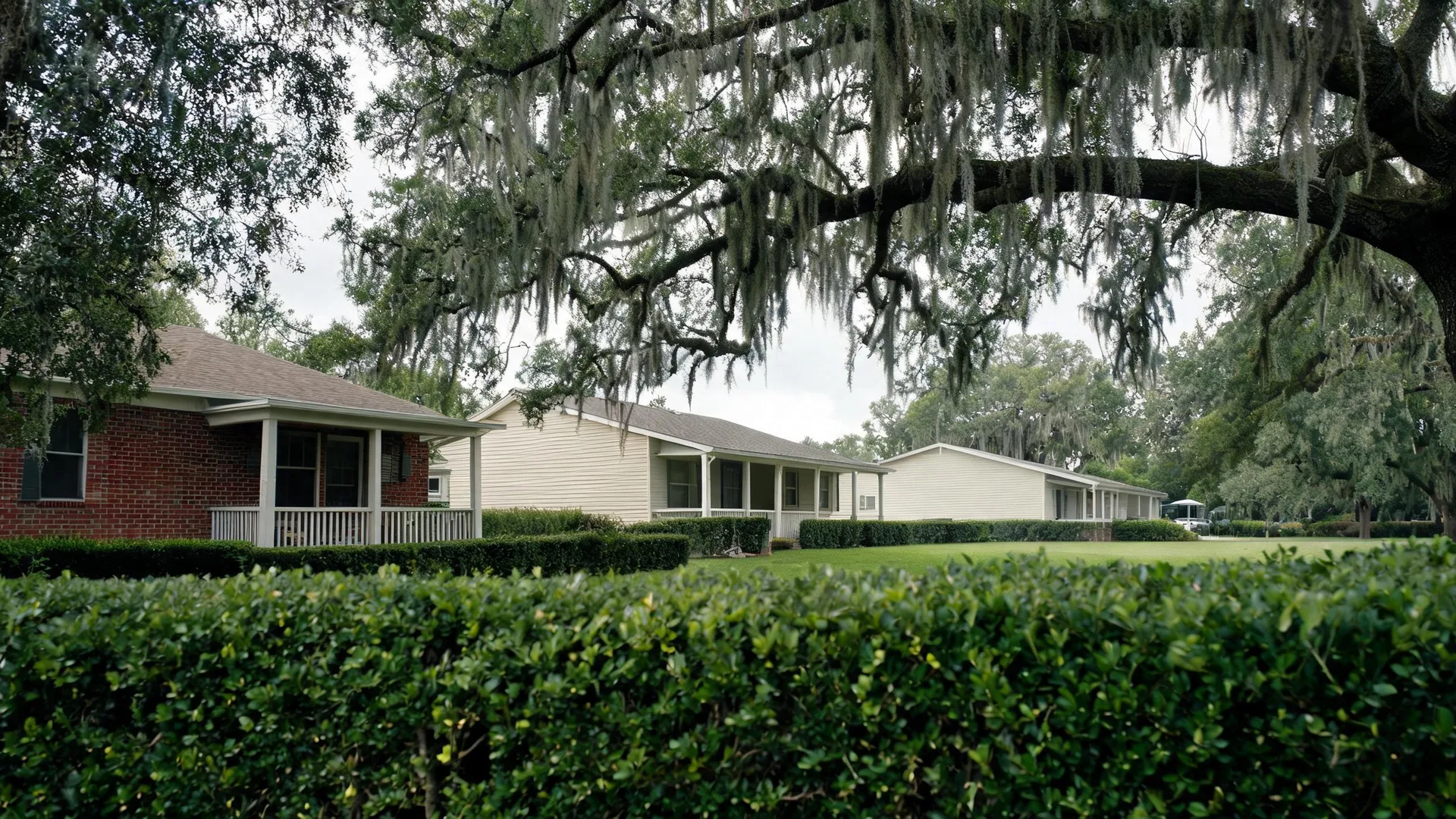






Single-story buildings with pale siding and one brick section with a covered porch stand behind a trimmed hedge and lawn, under a large moss-draped oak branch.

AC Maintenance in Shreveport, LA

Tell us about the job

Takes about a minute. No obligation.

Tune-up, service, or cleaningCentral ACCaddo Parish, LA
Step 1 of 2

What ZIP code is the job in?

Caddo Parish saw 419 severe weather events between 2015 and 2024. Most of that was wind, 279 events, plus 101 hail events and 29 tornadoes touching down. An outdoor AC unit sits outside through all of it, taking debris and hail with no cover. A bent fin or a cracked line isn't always obvious just from looking at it. Nearly half of Louisiana households went at least a full day without power last year, and that matters as much as the unit itself. A tune-up before storm season gets eyes on the unit while it still works fine, so damage gets caught before it costs you cooling.

6 months
May through October, your air conditioner is on duty
93°F
the average summer afternoon it cools against
101 hail events
in ten years, and hail bends the fins on outdoor coils
279 wind events
in ten years, and wind drives debris into outdoor units
Isometric cutaway illustration of a single-story house with a dark shingled roof, showing interior rooms with ductwork and an indoor air handler connected to an outdoor condenser unit beside the building.
Your air conditioner works hardest from June through September.

NOAA nClimDiv, 1991–2020 normals

Afternoon highs near 93°F and a dew point around 70°F mean your AC runs hard for six months straight, May through October.

That kind of stretch wears parts down faster, so problems tend to show up early in the season, not late.

Power here is cheap. A neglected system still burns more of it than it should.

Power here costs 13.67 cents per kilowatt-hour
Climate zone 3A
Cooling runs May through October

May is when cooling starts here, and it's also when the system goes from sitting to running hard with no ramp-up. April is the better time for a tune-up. A tech can check the capacitor, the contactor and the refrigerant charge while the unit is idle, before the first hot stretch asks something of it. Wait until May and you're booking the check at the same time everyone else's system is already struggling, which means a longer wait for an appointment if something does turn up. Six months is a long run for any part that's already weak. Getting ahead of it in April means the unit starts that run in the shape it needs to be in.

Have the unit checked before storm season finds the damage for you

Get the outdoor unit checked before storm season gets going. A tech can look it over for bent fins, loose panels or a cracked line while it's still running fine, and catch what a quick glance from the yard won't show.

Find a contractor
A man in a dark long-sleeve shirt and tan work pants carries a worn tool bag up concrete steps toward a green front door of a house with siding and a potted shrub.
An outdoor air conditioning condenser unit mounted on a concrete pad surrounded by gravel, photographed against a partly cloudy blue sky.

Six months is a long time to run on a part that was already weak

Six months of running is a long stretch for any part that started the season weak. The time-lapse here shows one day, but the system does that day over and over from May through October. Whatever is marginal in May has months to get worse before October lets up. A check before the season starts catches a part that's failing while the system is still easy to inspect, not after it's been run hard for months straight.

The refrigerant charge is never a guess

A gauge set tells a tech whether the charge is right. Too little and the coil can't pull enough heat out of the air. Too much and the compressor works against pressure it wasn't built to handle. Either way the air coming out of the vents feels fine to a homeowner standing there, right up until the compressor fails.


A capacitor failing doesn't announce itself

A weak capacitor still lets the compressor start, most days. A tech checks it against the rating stamped on the side, not just whether the unit kicks on. One that's drifted too far will still run the system right up until the morning it doesn't, usually on the hottest day it's asked to work.

Aerial view of a gray outdoor air conditioning condenser unit mounted on a concrete pad next to a house with vinyl siding.

Book your AC tune-up in April, before homes here start needing cooling in May.

  1. Jan
  2. Feb
  3. Mar
  4. Apr
  5. May
  6. Jun
  7. Jul
  8. Aug
  9. Sep
  10. Oct
  11. Nov
  12. Dec

A tune-up checks the refrigerant charge, cleans the coils, tests the capacitor and tightens the electrical connections.

A tune-up means someone actually opens the cabinet, not just stands at the thermostat. The condenser coil gets cleaned, because a coil caked with dirt and grass clippings can't shed heat the way it's supposed to, and the compressor behind it works harder for the same result. The blower wheel and evaporator coil get checked too, since dust on either one chokes the airflow the whole system depends on. A tech checks refrigerant pressure against what the unit calls for, tightens electrical connections that work themselves loose from vibration, and tests the capacitor and contactor under load rather than just eyeballing them. The condensate drain gets cleared, because a clogged one backs up and can shut the system down on its own. None of this is guesswork. Each check has a number or a reading behind it, and a tech knows what that reading should be before they ever look at it.