
AC smells like burning in Shreveport, LA

Request a pro

A burning smell from your AC is not something to wait out, not with Shreveport summers running as long and muggy as they do. Your system is likely to be running hard most of the day, and a smell like that usually means something is already under strain. You turned to a search instead of guessing because you want to know you're dealing with someone who can look at your unit and tell you what it actually is. That's the part you don't have to figure out alone. Send the form and a contractor who handles this kind of call will be matched to you and get in touch. No waiting on hold, no calling around Caddo Parish to find someone with an opening. Once you submit it, the job of finding help is off your plate. Someone who knows these systems takes it from there.

A burning smell from your AC usually comes from one of two places: the motor or the electrical parts. A dusty blower motor or fan motor can get hot enough to smell like burning dust when it kicks on, especially after the system has been off a while. That one often clears up on its own in a few minutes. A sharper, more electrical smell is different. That points to a wire, a capacitor, or a circuit board overheating, and running the system longer under Shreveport's summer heat only pushes it harder. If the smell is electrical, or it doesn't fade, turn the system off at the thermostat and at the breaker. Running it again risks a bigger repair, or worse, a fire. A contractor can tell you which kind of smell you're dealing with and what it will take to fix.

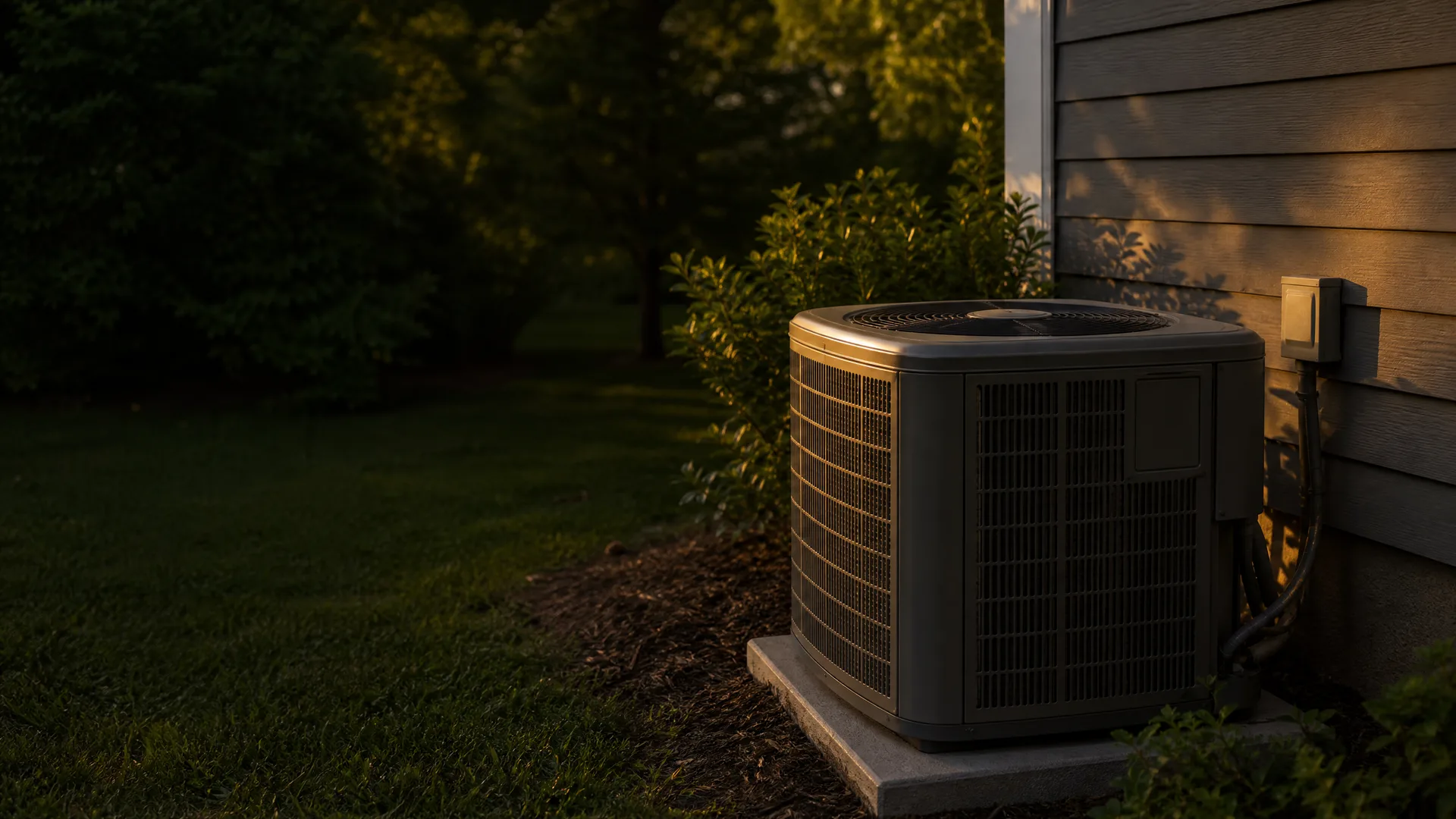
An outdoor air conditioner condenser unit on a concrete pad beside a house with horizontal lap siding, next to a mulch bed, shrubs and a lawn at dusk.

You're out back around seven, the light gone thick and gold over the yard. The grass still holds the heat of the day. You notice it before you see it: the condenser humming but the fan on top sitting dead still. No air moving through the grille. You crouch down and catch it then, a burnt, dusty smell coming off the unit, sharp enough to pull you in closer. Inside, the air has already gone a little stale and warm. You stand there a second, hand near the housing, feeling for heat. The cicadas are loud. The fan doesn't move.

Is that smell coming from the vents or outside?

Stand near a vent and see if the smell gets stronger. A burning smell indoors, especially one that smells like hot dust, usually means the blower motor or a part near it is overheating. If the smell is sharper, like burning plastic or something electrical, that points to a wire or component getting too hot, and running the system longer raises the chance of a breaker tripping or a part failing outright. If the smell is outside at the condenser, check whether the outdoor fan is actually spinning. A motor straining to turn, or not turning at all, builds heat fast. Either way, running the system while that smell is present asks more of a part that is already struggling.

A gray outdoor air conditioner condenser unit on a concrete pad beside a house with horizontal lap siding, with a flowering shrub at left and a disconnect box with conduit on the wall at right.

Running clean

This is what a healthy condenser looks like: fan spinning free, no smell, air moving steady through the grille. The unit cycles on, does its job, and shuts off without any odor following it. Nothing around the base is blocking airflow, and the conduit feeding it carries power without strain.


An outdoor air conditioner condenser unit on a concrete pad beside a house with light horizontal vinyl siding, surrounded by bare dirt, gravel and dry leaves, with refrigerant lines and conduit running along the wall.

In trouble

Leaves and dirt have built up around the base here, and refrigerant lines run bare along the wall. Debris packed against the unit chokes airflow, which makes the motor work harder and run hotter. A unit that's sat neglected like this is more likely to be the one you smell before you see.

Is a burning smell from my AC an electrical fire risk?

You smelled it and your mind went straight to the worst case. A burning smell near anything electrical makes people think fire, and with your AC running most of the day through a Shreveport summer, you want to know if this is something that could actually catch or if it's a part that just needs attention before it gets worse.

It can be, if the smell is sharp and electrical rather than dusty

A hot dust smell from the blower is usually not a fire risk. It burns off and the system keeps running. A sharp, acrid smell, more like melting plastic than dust, is different. That points to a wire, a connection, or a part like a capacitor or contactor overheating, and those can get hot enough to damage insulation or start a small fire inside the unit. If you smell that, shut the system off at the thermostat and at the breaker if you can get to it safely, and don't run it again until someone has looked at it. Waiting it out is how a bad connection turns into a bigger repair, or worse.

A smiling bearded man in a dark green long-sleeved shirt sits on a leather couch in a living room, with a bowl of popcorn and a remote control on a wooden table in the foreground.
A smiling man in a dark blue T-shirt sits on a couch in a dimly lit living room with a bowl of popcorn and a remote on a wooden table, a lit floor lamp and bookshelves behind him, and windows showing greenery.
A smiling man in a dark long-sleeved henley shirt sits on a beige sofa in a living room, with a bowl of popcorn and a remote on the table in the foreground and shelves, a lamp, and a doorway behind him.
A smiling man with dark curly hair in a dark green henley shirt sits on a light sofa in a living room with large windows, a lamp, shelving, a stone fireplace, and a bowl of popcorn in the foreground.

Get the right pro for your air conditioner

A burning smell doesn't fix itself, and running the system while it's there just keeps heat and current flowing through whatever's already stressed. In a Shreveport summer, that means hours more strain added every day the unit stays in service. A seized motor bearing or a melting wire insulation doesn't get better with time, it gets worse, and what started as a smell can end as a tripped breaker or a system that won't start at all. You don't need to know which one it is to know it needs a licensed technician looking at it soon. Shut the system off if the smell is sharp or you see any sign of smoke, and leave the diagnosis to someone who can open the unit and check the motor and wiring safely. Getting matched with a contractor means you stop carrying this alone. You send the request once, and the work of finding someone qualified is off your plate.

Shut your system off at the thermostat if you catch that smell, not just at the wall switch. Setting it to off stops the compressor and blower from cycling back on and pushing more current through whatever part is already failing.

A motor or wire that overheats once will overheat again under the same load, and each time it does the damage gets a little worse. Leaving the system alone until a contractor looks at it keeps a bad part from turning into a bigger repair.

An outdoor air conditioner condenser unit sits on a concrete pad beside a stucco wall, with refrigerant lines and conduit running to the wall and a shrub to the left.
Before you get your air conditioner repair
A gray outdoor air conditioner condenser unit on a concrete pad beside a house with dark horizontal siding and a stone base, surrounded by gravel, with a flowering shrub at left and a concrete walkway in front.
After you get your air conditioner repair
A gray outdoor air conditioner condenser unit on a concrete pad beside a house with horizontal lap siding, with a wall-mounted disconnect box and conduit, mulch bed, shrub, and lawn nearby.

Fan spinning, no smell

The fan on top turns freely and air moves steady through the grille. The unit sits on its pad, lines running clean up the wall to the disconnect box. It cycles on, runs, and shuts off without any odor trailing behind it.

An outdoor air conditioner condenser unit sits on a gray pad beside a light vinyl-sided wall, on a concrete slab next to a gravel bed.

Something is off

Same kind of unit, same spot beside the house, but this is where trouble shows first. If the fan has slowed, stopped, or the smell is coming from near the conduit or lines running up the wall, a motor or electrical part is likely overheating.

A woman stands in the open black front door of a white-sided house with a dark shingled roof while a man in a navy jacket approaches along the walkway, with lantern wall lights, a potted shrub, and flowering garden beds nearby.

What keeps running in this house while the smell does

A burning smell doesn't just mean one bad part. It means your AC keeps cycling on all day, in a Shreveport summer, pushing current through whatever is already overheating. Every hour it stays in service is another hour that part gets worse. A motor that's starting to smell now can seize by tonight. Wiring that's warm to the touch now can arc later.

You don't have to figure out which part it is before you get help. Once you send in your information, it stops being something you have to diagnose or track down alone. A contractor who knows these systems gets matched to your situation and reaches out to you, so the next step is theirs to handle, not yours.

A living room corner with a beige sofa and cushion, a round wooden coffee table holding a pale ceramic vase of eucalyptus stems and a wooden bowl, and a curtained window with a potted plant above a latticed radiator cover in the background.
  1. Heat builds inside a motor winding or a loose electrical connection.

  2. The insulation around that wire or winding starts to scorch.

  3. Warm air carries the burning smell through the vents or the grille.

  4. The part keeps overheating every time the system cycles on.

A woman with dark hair tied up reclines on a sofa with her eyes closed under a gray blanket, with a lit floor lamp, framed picture, and a book beside her in a dim room.
A smiling bearded man in a dark green sweater sits at a dinner table with a glass of red wine, plates of food and a lit candle, with a lamp and houseplant in the dim background.
A two-story gray horizontal-siding house with multiple gables, a covered front porch with white columns and railing, and a dark front door, fronted by a patchy green and brown lawn under a clear blue sky.

Summer air in Caddo Parish carries a dew point around 70°F, averaged across June, July and August, according to NOAA climate records. Air that heavy means your AC has to pull more moisture out of every breath it moves, so the system runs longer stretches just to keep the house feeling dry. That extra runtime matters right now, because a motor or wire already overheating gets more hours of current through it, not fewer. You'll notice the unit cycling on again not long after it shuts off, and if a burning smell already showed up once, that kind of nonstop demand is exactly what makes it show up again.

NASA POWER T2MDEW

A gray outdoor air conditioner condenser unit sits on a concrete pad beside a house with horizontal lap siding, with conduit and an electrical disconnect box on the wall, dark mulch and a shrub to the left, and a concrete walkway in the foreground.
A condenser that sits quiet until it's needed, fan spinning free, no haze or odor rising off the grille.
An outdoor air conditioning condenser unit on a concrete pad beside a house with horizontal lap siding, with a shrub and mulch bed to the left and conduit and a small electrical box on the wall to the right.
Grime packed into the fins and a disconnect box crowded right up against the siding, with no smell yet but the wear already there.

Cooling runs May through October

Six months of cooling means your system logs long hours every one of those days, and a burning smell on day one of that stretch is a different problem than one in October. The part under strain now has to get through the rest of summer, not just today.

NOAA nClimDiv 1991-2020

Where this leaves you

  • A burning smell from your AC almost always traces back to the motor or the electrical parts behind it.
  • Cutting the system off at the thermostat stops current from feeding whatever part is already overheating.
  • A smell that shows up in June has the rest of a long Shreveport summer to get worse if it runs unaddressed.
  • Sending the form is the last step on your end; from there, finding someone to look at it is off your plate.
  • A system that cycles on and off clean, with no odor trailing it, is doing what it's supposed to do.
  • Waiting it out costs nothing upfront but keeps heat moving through a part that's already failing.

A burning smell has a reason behind it, and that reason is almost always the motor or something electrical near it. That part doesn't fix itself by running longer. Shut the system off at the thermostat and the current stops feeding whatever's overheating, which is the one thing you can do tonight to keep it from getting worse before someone looks at it. June is early in a Shreveport summer. Whatever's straining now still has July, August, and most of September to get through, running hours every day, and a part already under stress doesn't hold up better the longer it's asked to work. None of that means you have to track down who handles this or sit on hold working it out. Send the form and that part of it is done. Someone who knows this equipment takes it from there, and finding them stops being your job the moment it's sent. A system that's running the way it should doesn't smell like anything. It cycles on, moves air, shuts off, and does that again a few hours later without a trace of odor trailing it. That's the baseline, and it's what you're working back toward. The smell is the system telling you something's already wrong. Shutting it off is what keeps that from turning into something worse before it gets looked at.

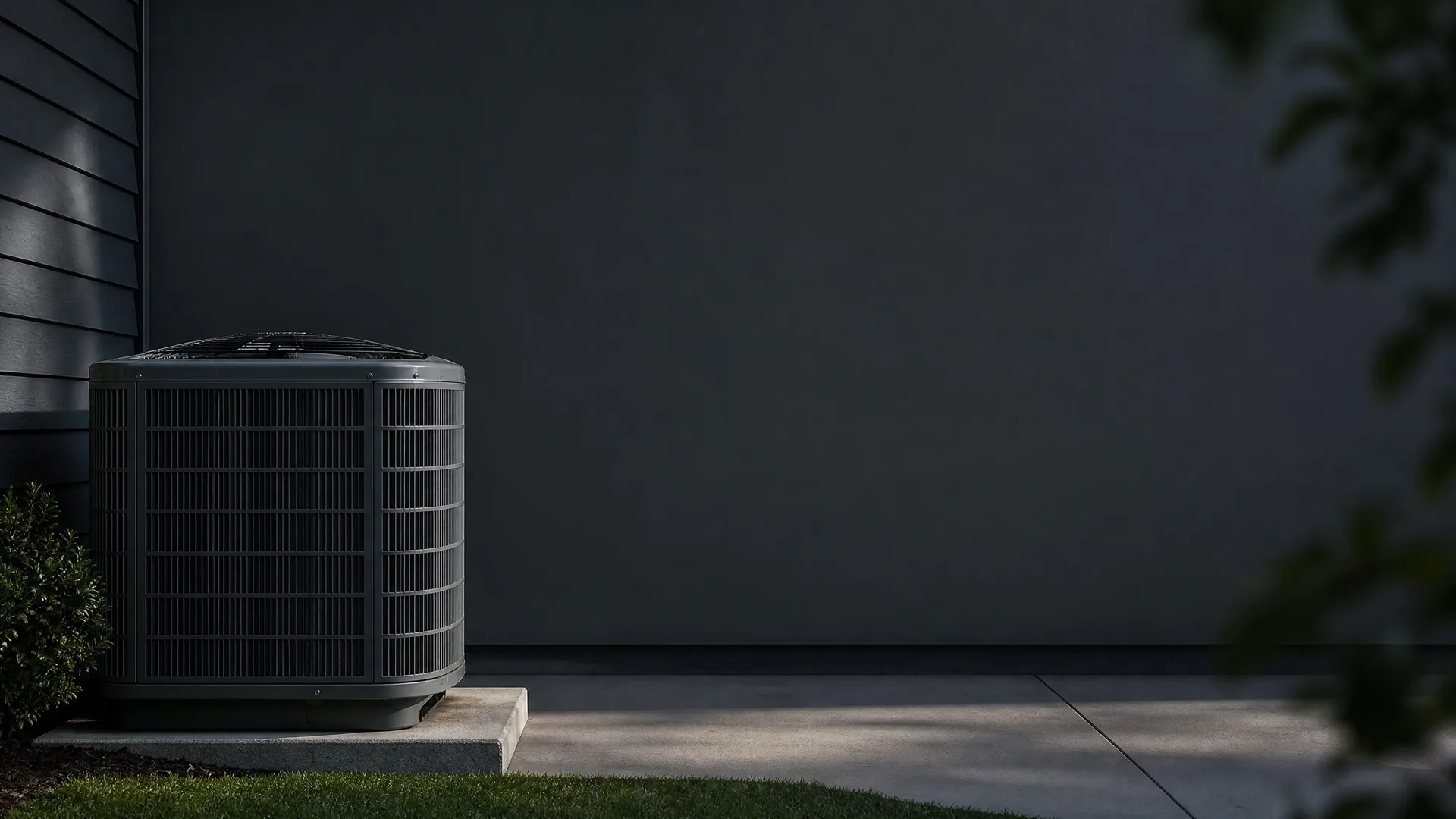
An outdoor air conditioner condenser unit on a concrete pad beside a dark wall, with grass in the foreground and a shrub and leaves at the edges.

A pro who works on air conditioners

After you send the request, you're done searching.

RepairCentral ACCaddo Parish, LA
Step 1 of 2

What ZIP code is the job in?