





Two illuminated white colonial-style houses with wrap-around porches, flanked by oak trees draped in Spanish moss, photographed at night.

AC Maintenance in Thibodaux, LA

Tell us about the job

Takes about a minute. No obligation.

Tune-up, service, or cleaningCentral ACLafourche Parish, LA
Step 1 of 2

What ZIP code is the job in?

Electricity in Lafourche Parish runs about 11.91 cents per kilowatt-hour, cheaper than most of the country. That helps, but it only goes so far when a system is working harder than it should. A dirty coil or a low charge makes the compressor run longer to cool the same house. Longer runtime on even cheap power adds up across a Louisiana summer. A unit that is clean and properly charged does its job in less time and pulls less power doing it.

7 months
April through October, your air conditioner is on duty
90°F
the average summer afternoon it cools against
16 hail events
in ten years, and hail bends the fins on outdoor coils
16 wind events
in ten years, and wind drives debris into outdoor units
Isometric illustration of a cutaway house showing interior rooms, an attic furnace with large ducts, and an outdoor condenser unit connected by a line set, on a white background.
Your air conditioner works hardest from May through September.

NOAA nClimDiv, 1991–2020 normals

This air conditioner runs seven months a year here, April through October, into afternoons that average 90°F with a dew point near 74°F.

That kind of stretch wears parts down fast, and a unit already struggling shows it in the first hot week, not the last.

April is when it starts working. March is when it gets checked.

Cooling runs April through October
Summer afternoons average 90°F
Power here costs 11.91 cents per kilowatt-hour

A dirty coil does not fail all at once. It loses a little capacity, the compressor runs a little longer, and nobody notices until the day it has to work its hardest. Dust and pet hair build up on the indoor coil and block airflow across it. Outside, the condenser coil collects grass clippings and cottonwood until it can't shed heat the way it's built to. A refrigerant charge that's slipped low from a small leak makes the compressor pull harder for the same result. None of this trips a breaker or throws a fault code. It just means the system spends more of its life running flat out, and parts that run flat out are the parts that fail in the shoulder season when you can least afford to wait on a repair.

A clean, properly charged system costs less to run

A tune-up gets the coil clean and the charge right before the hottest part of the year puts real load on it. A system that is clean and properly charged runs less to do the same job, and that shows up on every bill while it's running.

Find a contractor
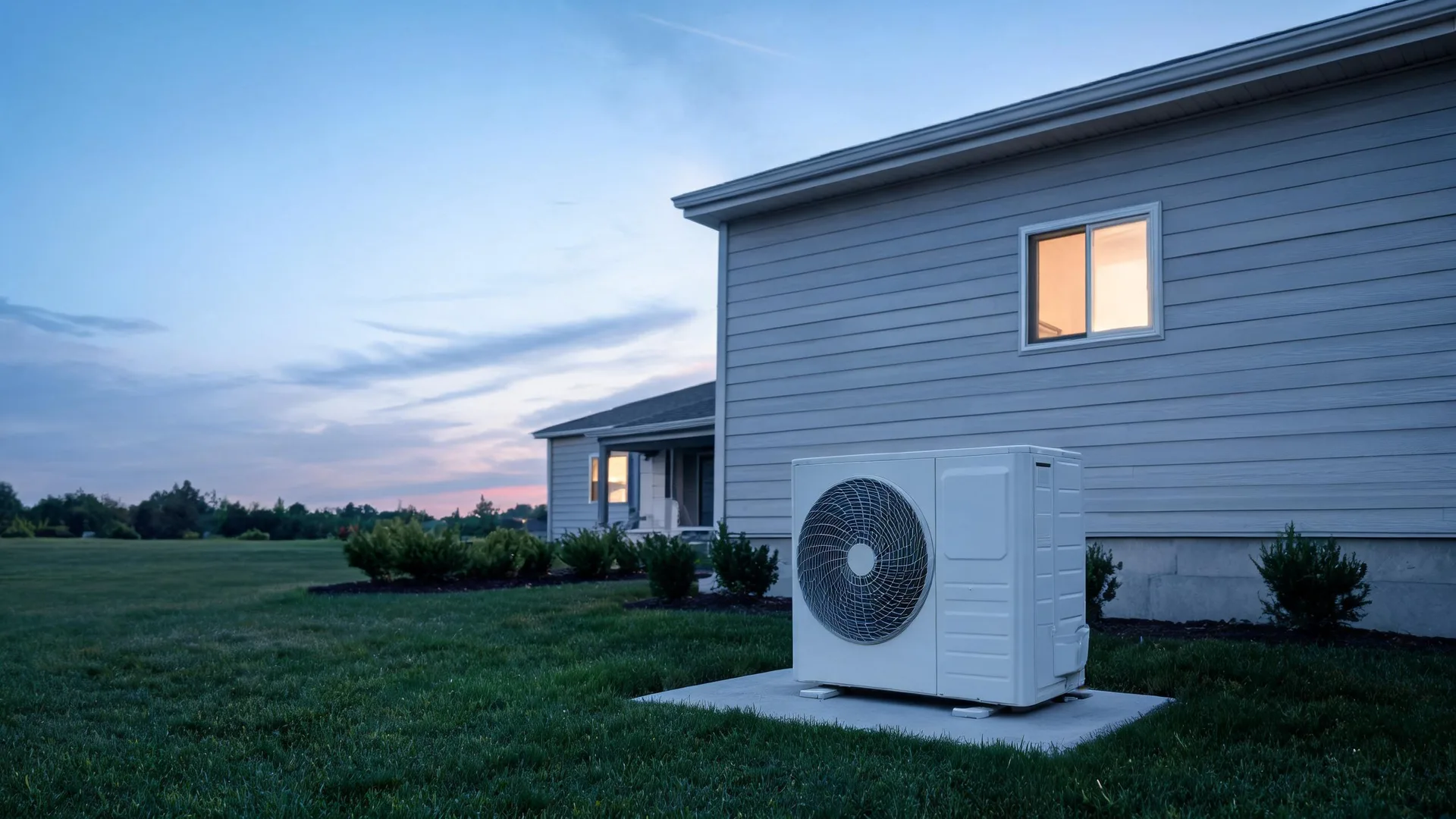
A gray residential air conditioner condenser unit mounted on a concrete pad in an open grass field.

Seven months of work, starting in April

Once this system starts in April, it doesn't get a break until October. Seven months of carrying a Louisiana summer is a long stretch for any part that's already worn thin. A tune-up before that stretch starts is what catches a slipping capacitor or a dirty coil while it's still a small problem. Wait until the machine has been running for a few weeks, and you're finding the same problem after it's already cost you in runtime.

Gauges on, panels off

A thorough tune-up means the refrigerant charge gets checked with gauges against the system's actual target, not eyeballed. The condenser cabinet comes off so the coil gets washed, not just hosed from the outside. The indoor coil gets looked at too, along with the blower wheel, which collects a film that throws off airflow even when the filter is clean. A quick visit skips the panels and checks that the unit turns on and blows cold.

What a real check catches early

A capacitor can be weak and still start the compressor, right up until the day it can't. A thorough tune-up tests it under load and gives a reading, not a guess. Contactor points get checked for pitting, since a pitted contactor can stick or fail to pull in. Drain line gets checked for algae buildup before it clogs and backs up. These are the failures that show up mid-summer as a no-cool call, and they're visible months ahead to someone who actually looks.

Aerial view of a square outdoor air conditioning condenser unit on a concrete pad beside a house wall with a sliding glass door.

Book your AC tune-up in March, before homes here start needing cooling in April.

  1. Jan
  2. Feb
  3. Mar
  4. Apr
  5. May
  6. Jun
  7. Jul
  8. Aug
  9. Sep
  10. Oct
  11. Nov
  12. Dec

A tune-up checks the refrigerant charge, cleans the coils, tests the capacitor and tightens the electrical connections.

A full tune-up follows the refrigerant loop and the airflow path, not just the thermostat response. The technician hooks up gauges and checks both pressures against what the system is rated for, then checks subcooling or superheat depending on the metering device, since that number says more about the charge than pressure alone. The blower compartment comes open so the wheel can be checked for the caked-on film that builds up over time and cuts airflow even with a clean filter. Electrical connections get checked for a loose lug or a scorched terminal, because a connection that's heating up will keep heating up until it fails. The condensate drain gets checked for a clog or a cracked trap, since a backed-up drain means water in places it shouldn't be. None of this shows up by looking at the thermostat or feeling the air at a vent. It shows up when someone opens the panels and checks it.