A row of single-story houses with porches behind a manicured lawn and trimmed hedges, framed by large oak trees draped with Spanish moss.

Heat Pump Repair in Addis, LA

Tell us about the job

Takes about a minute. No obligation.

RepairHeat PumpWest Baton Rouge Parish, LA
Step 1 of 2

What ZIP code is the job in?

The air itself is the load

Summer dew points in West Baton Rouge Parish average 73°F across June, July and August. That's heavier air than most of the country deals with, and a heat pump has to pull more moisture out of it to keep a house comfortable. That work falls on the same compressor and coil year after year.


What that means for the repair

A heat pump running against air this heavy wears sooner than the manuals assume. The part that failed probably didn't fail early for no reason. Getting a proper diagnosis matters more here, so the fix addresses what actually gave out instead of just the symptom.

5 months
November through March, your system heats
7 months
April through October, it cools
43°F
the average winter night it heats against
91°F
the average summer afternoon it cools against
Isometric grayscale illustration of a cutaway house showing interior rooms, ductwork and an indoor air handler connected by lines to an outdoor condenser unit on the ground outside.
Your system heats November through March and cools April through October.

NOAA nClimDiv, 1991–2020 normals

West Baton Rouge Parish logged 25 severe weather events between 2015 and 2024, including 11 damaging wind events and 7 hail events.

An outdoor heat pump unit takes that wind and hail directly, so one that still runs after a storm can be hiding damage worth having checked.

Half these homes are still young. So is the system in them.

Half the homes here were built by 1993
Climate zone 2A
Power here costs 12.71 cents per kilowatt-hour
The first cold snap in November finds the weak partHeat runs November through March here. Whatever's already strained gives out when it first has to work.

If the outdoor unit sat through a storm this year, don't wait for it to act up before someone looks at the coil fins and the fan blade. Hail bends fins and that blocks airflow long before the unit starts short cycling or losing capacity. A bent blade can throw the fan off balance and wear the motor bearing down faster than it should. None of that shows up as a strange noise right away. A tech can check the coil, the blade and the refrigerant lines in one visit, and it costs far less than waiting for whatever that damage turns into next summer.

Diagnose it right the first time

A heat pump here spends most of the year working against heavy, muggy air, then gets asked to switch gears and heat all winter too. That's more hours of strain than the same unit would see in a milder climate. Whatever part is acting up on yours now didn't fail for no reason. A proper diagnosis finds what actually gave out, so the repair holds.

Find a contractor
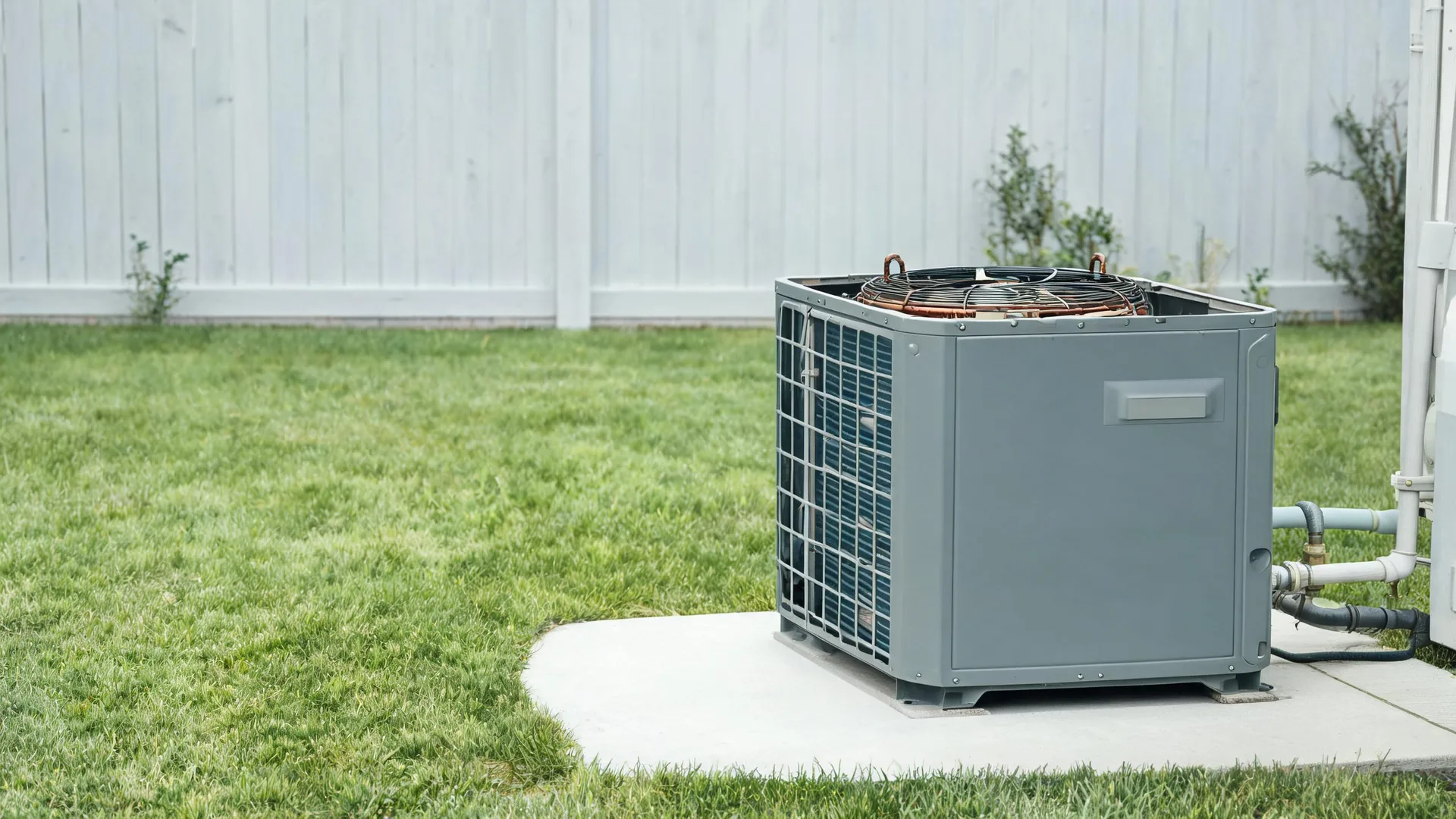
A gray heat pump outdoor unit mounted on a concrete pad next to a residential house with lap siding and stone accents.

Still within its working life

Half the homes here were built in 1993 or later. A heat pump that came with a newer house hasn't had as many summers to wear against this air, even heavy and muggy as it is. That points toward repair over replacement when something acts up. The part that failed still failed for a reason, and a tech can tell you whether it's an isolated part or a sign the unit has been working harder than its age would suggest.

What a struggling heat pump sounds and feels like

Air coming from the vents that's warm when it should be cool, or barely warm at all in winter. Ice forming on the outdoor coil instead of melting off during the defrost cycle. The outdoor unit running constantly without ever seeming to catch up. A hissing or bubbling sound near the lines, which points to a refrigerant leak. Clicking that repeats without the unit starting, which usually means the contactor or capacitor is on its way out. Any of these is the system telling you something specific is wrong, not just getting old.

Why acting on it early matters

A heat pump that's low on refrigerant doesn't just cool poorly, it makes the compressor work against a charge it wasn't built to run on, and that shortens its life. A failing capacitor can take the compressor down with it if it's ignored long enough. Ice on the coil blocks airflow, which makes the whole system run harder to do less. None of these get better by waiting. The part that's struggling now is the part worth having looked at before it takes something bigger down with it.

Before calling anyone, cut power to the system at the thermostat and check the air filter. A filter clogged with dust blocks airflow across the indoor coil, and that alone can cause a lot of what looks like a bigger failure. Next, look at the outdoor unit. Clear away leaves, grass clippings or anything stacked against it, since the outdoor coil needs open air on all sides to work. Check the circuit breaker for the system, since a tripped breaker sometimes looks like a dead system when it isn't. If you see ice on the outdoor coil, leave it alone rather than chipping at it, and let the system run in regular cycles to see if it clears on its own. Don't open any refrigerant line or take the access panel off the outdoor unit. That part of the job calls for gauges and training a homeowner doesn't have, and getting it wrong can hurt you or the system.

A repair is worth making when the system is basically sound and one part gave out. A compressor, a reversing valve, or a coil with a slow leak are a different question, since those are expensive to replace on their own and sometimes cost close to a bigger share of a new system. Age matters less than what's actually failed. A heat pump that's had steady care and is now down to one bad part has earned the repair. One that's needed a tech out for something new every season is telling you the part that just failed probably isn't the last one. A good tech will tell you plainly which situation yours is instead of defaulting to either answer.