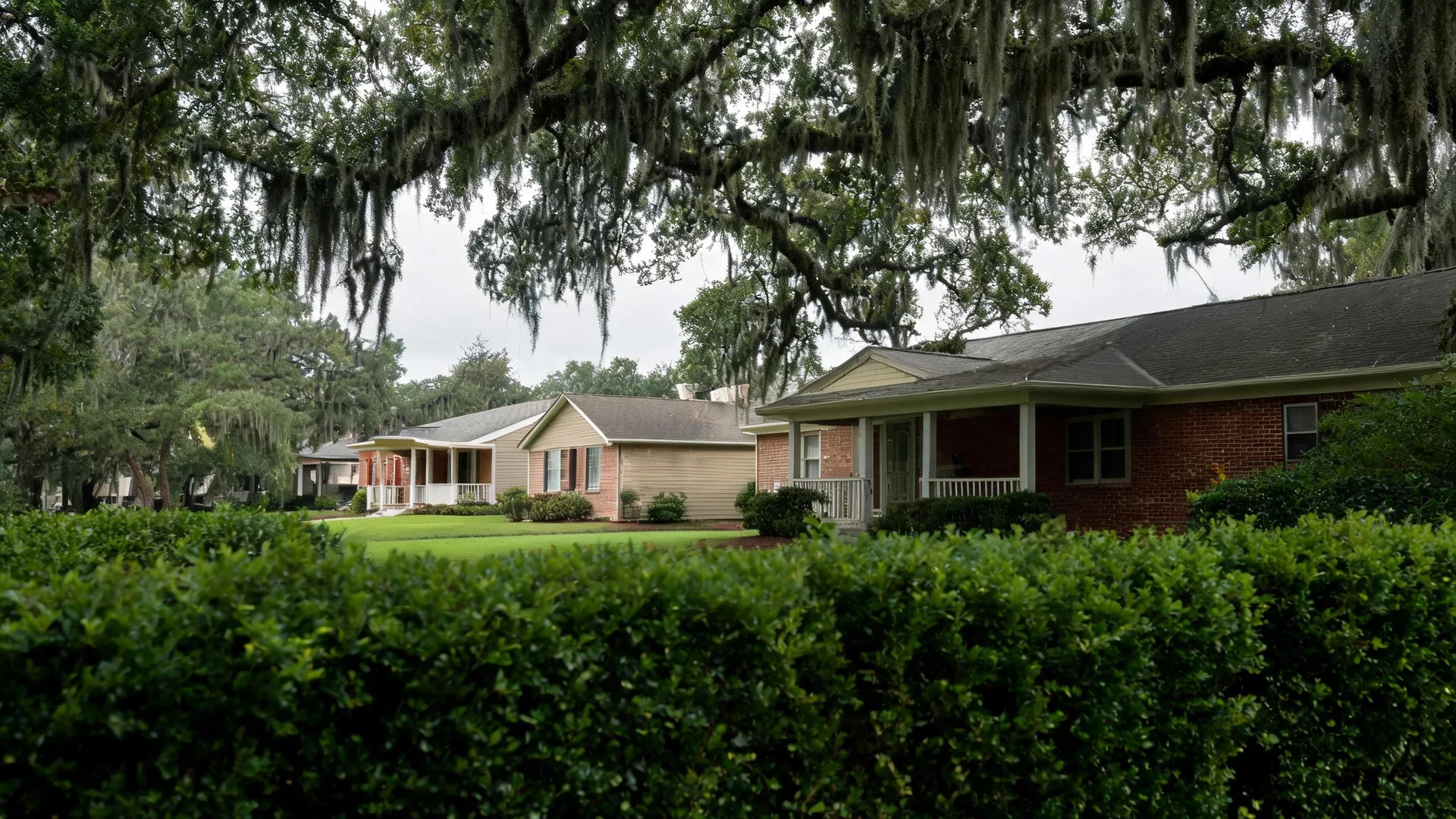







Single-story brick and siding houses with covered porches behind a trimmed hedge and lawn, framed by large oak branches draped with hanging moss under an overcast sky.

Heat Pump Repair in Bastrop, LA

Tell us about the job

Takes about a minute. No obligation.

RepairHeat PumpMorehouse Parish, LA
Step 1 of 2

What ZIP code is the job in?

Morehouse Parish saw 113 severe weather events between 2015 and 2024. Most of it was wind. Damaging wind hit the parish 76 times in that span, with 17 hail events and 13 tornadoes on top of that. A heat pump's outdoor unit sits right in the path of all of it, with the coil and fan exposed to whatever blows through. Hail can bend the fins and dent the housing without stopping the unit from running that day. Statewide, close to half of households lost power for a day or more in 2024, and a heat pump depends on that power to heat or cool anything at all.

5 months
November through March, your system heats
5 months
May through September, it cools
37°F
the average winter night it heats against
92°F
the average summer afternoon it cools against
Isometric cutaway illustration of a house showing attic ductwork, an indoor air handler, furnished rooms, and an outdoor condenser unit connected by lines along the exterior wall.
Your system heats November through March and cools May through September.

NOAA nClimDiv, 1991–2020 normals

A breaker that keeps tripping means something is pulling too much current, not a loose switch.

Flip it back once. If it trips again, leave it off and get someone out to look at it.

A heat pump that runs this much, this hard, is going to show its weak points early

Climate zone 3A
Power here costs 12.01 cents per kilowatt-hour
Cooling runs May through September
The First Weeks of the Season Find the Weak SpotHeat pumps here run about five months of heat and five of cooling, and trouble tends to show up in the first cold snap or the first hot week.

When a heat pump has been through wind and hail and power cuts year after year, the thing acting up now is rarely a one-time fluke. It's a stress point that finally gave. A contractor who knows this checks the outdoor coil and fan for storm damage first, not just the part that failed. Fixing the symptom without finding what weakened it means the next outage or the next storm finds the same weak spot again. Get it looked at properly, and get it looked at soon.

Get the Whole Unit Checked, Not Just the Part That Failed

If your outdoor unit has been through a few years of wind and hail, a repair now is as good a time as any to have the coil and fan checked for storm damage, not just the part that failed. That way the next outage or the next storm isn't finding the same weak spot again.

Find a contractor
A man in a dark T-shirt and tan work pants carries a canvas tool bag up wooden porch steps toward a green panelled front door, with a potted shrub beside the entry.
A gray heat pump condenser unit mounted on a concrete pad against the gray lap-siding exterior wall of a house.

What the Unit Tells You Before It Quits

A heat pump that's struggling makes noise about it before it quits outright. Short cycling is one of the first signs, the unit kicking on, running a few minutes, then shutting off before the space actually changes temperature. That wears the compressor faster than steady running ever would. Ice on the outdoor coil in the dead of winter is normal for short stretches, the unit defrosts itself on a timer. Ice that stays, or builds up fast, means the defrost cycle isn't working or airflow across that coil is blocked. Warm air in heating mode that doesn't feel as warm as it used to, or a system that runs long stretches without catching up, points to a refrigerant leak or a failing reversing valve. That valve is what switches the unit between heating and cooling, and when it sticks, the system can get stuck doing the wrong one. A hissing or bubbling sound from the lines outside usually means refrigerant escaping, and that's not something that fixes itself or waits well. Listen for grinding or squealing from the outdoor fan too. That's a bearing going, and a fan that stops turning means the coil can't shed heat, which backs up the whole system fast.

A Struggling Compressor Doesn't Fix Itself by Working Harder

A compressor low on refrigerant or straining against a bad start capacitor still tries to do its job every time it cycles on. Each cycle after that runs hotter and draws more current than it should. That heat breaks down the oil that's supposed to keep the compressor's moving parts from wearing on each other. Once that happens, the damage doesn't stay the same size. It spreads until the compressor seizes, and a seized compressor is a full replacement, not a repair.
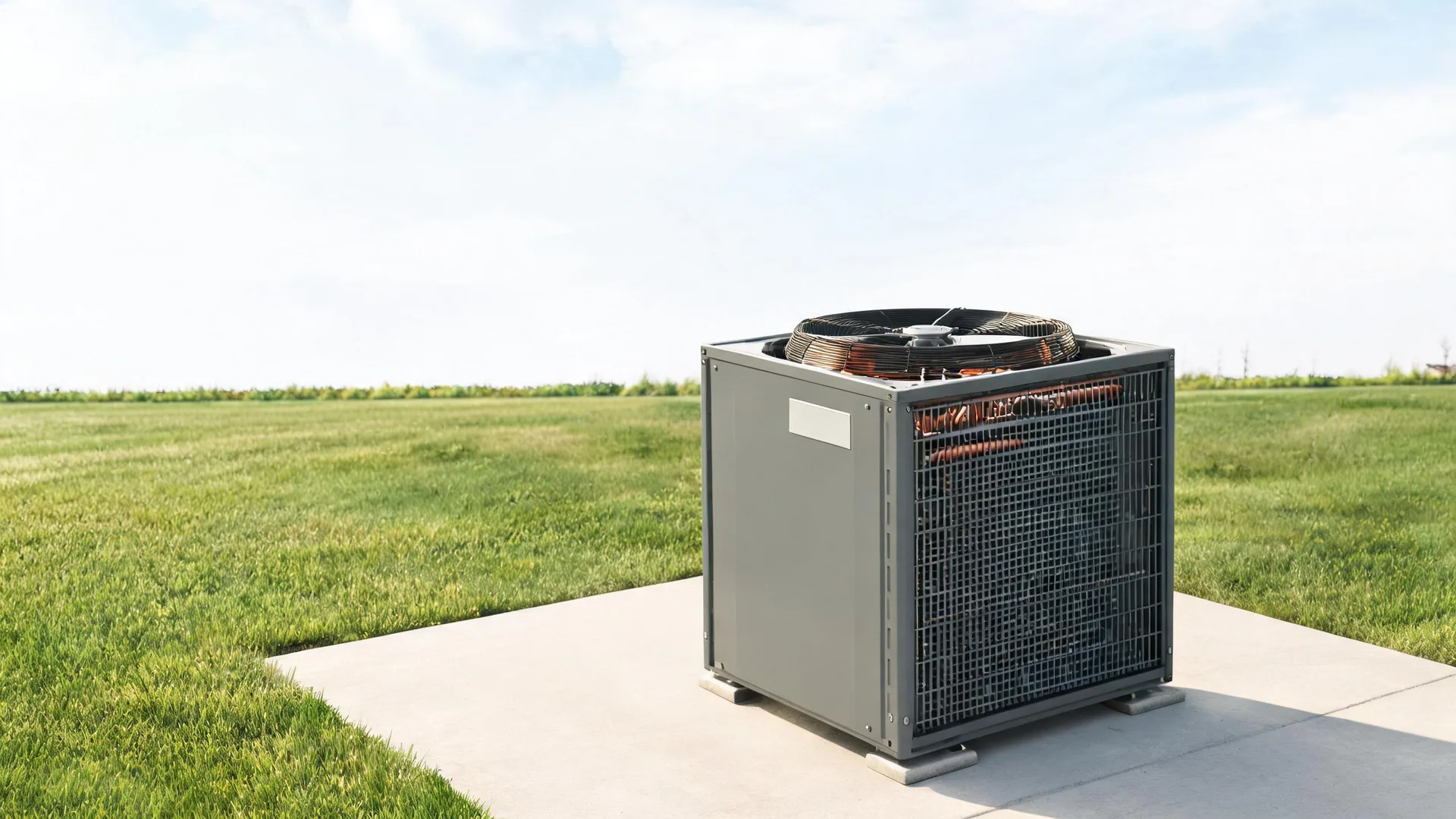
Letting It Run Turns a Part Into the Whole System

A failing part rarely stays contained to itself. A reversing valve that's sticking makes the compressor work against pressure it wasn't built to push. A blocked coil makes the fan motor strain to move air that isn't moving. Leave any of these running and the part next to the failure starts absorbing stress that was never meant to be its load. Shutting the system off when something sounds or feels wrong keeps one bad part from taking the rest of the unit down with it.

Most heat pump failures start small and get ignored. A capacitor weakens over months, not days, so the unit still starts most of the time right up until it doesn't. Dirty filters and a dirty outdoor coil make the whole system work harder than it should, and that extra strain is what takes out a compressor or a fan motor years before its time. Low refrigerant almost always means a leak somewhere in the lines, not the system just running low on its own, so topping it off without finding the leak only buys a little time. Electrical connections loosen with every cycle of heating and cooling the metal goes through, and a loose connection running hot is how wires and terminals burn. The parts that fail most often, the capacitor, the contactor, the reversing valve, are also the ones a yearly checkup is built to catch before they strand you without heat or air.

At some point every heat pump owner asks whether a given repair is worth it or whether the money should go toward a new unit instead. Age and history matter more than the symptom in front of you. A unit that's had one issue in years of running is worth fixing almost every time. A unit where this is the third or fourth repair in a short stretch is telling you something different, even if each individual fix looks cheap on its own. The compressor is the part that decides this more than any other. It's the most expensive component in the system, and a contractor who finds it failing will usually be honest that putting money into an old compressor rarely makes sense. Refrigerant type matters too. A system that uses an older refrigerant can still be repaired, but parts and refrigerant for it get harder to find every year, and that scarcity alone pushes some repairs toward replacement even when the fix itself would be simple. None of this means repair is wrong. It means the question is never just what broke, but what else on the unit is close behind it.