




Single-story brick and siding houses with lawns behind a long trimmed hedge, framed by large oak branches draped with Spanish moss under an overcast sky.

Heat Pump Repair in DeRidder, LA

Tell us about the job

Takes about a minute. No obligation.

RepairHeat PumpBeauregard Parish, LA
Step 1 of 2

What ZIP code is the job in?

A heat pump that's struggling usually tells on itself before it quits outright. The air coming from the vents feels lukewarm instead of warm, or the system runs a long time without catching up to the thermostat setting. Outside, the unit might ice over even when it's not that cold, or you'll hear it clicking as it tries to switch between heating and cooling and can't settle into one mode. A unit stuck in defrost, or one that never defrosts when it should, points to a problem with the reversing valve or the sensor that controls it. Grinding or squealing from the outdoor unit usually means the fan motor or a bearing is going bad. Any of these is worth a call before the system stops heating or cooling altogether, since a heat pump under strain tends to put more load on the compressor, and that part is what keeps the whole system running.

5 months
November through March, your system heats
7 months
April through October, it cools
42°F
the average winter night it heats against
92°F
the average summer afternoon it cools against
Isometric line illustration of a cutaway house showing interior rooms with furniture, ceiling ductwork, and an outdoor condenser unit connected by lines along the exterior wall.
Your system heats November through March and cools April through October.

NOAA nClimDiv, 1991–2020 normals

Half the houses in Beauregard Parish were built in 1992 or later.

A heat pump that came with a newer house usually has years left in it, which is what makes repair worth doing.

November is when a weak heat pump here gets found out

Cooling runs April through October
Heat runs November through March
Power costs 11.73 cents a kWh statewide

If your heat pump has been part of the house since it was built, check the date it was installed against the house's age. A unit that age still has years of working parts in it, which is why a repair call makes more sense than a replacement quote at this stage. Ask the technician to confirm which part failed and whether it's a common failure for the unit's age, not just whether it can be swapped out. That answer tells you whether this is a one-time fix or the start of a pattern worth watching.

Repair it

If your system came with a newer house, it likely has plenty of life left. Repair is usually the right call.

Find a contractor
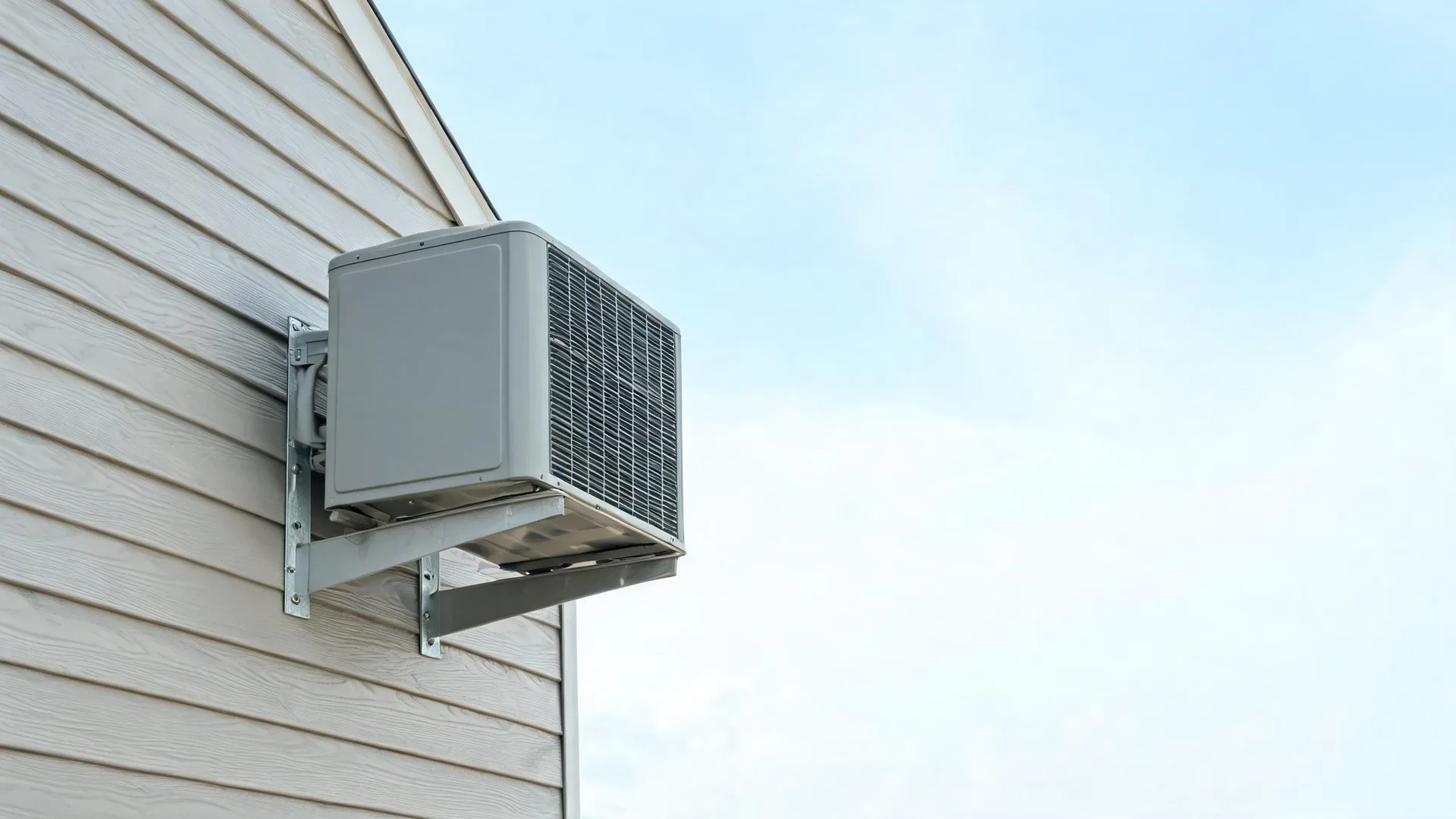
A residential heat pump outdoor unit mounted on a concrete pad next to a house with gray vinyl siding.

What actually wears out first

A heat pump works both sides of the year, and that's what wears it down. The reversing valve is the part most specific to this machine. A furnace or a straight air conditioner doesn't have one. It's also one of the first parts to give trouble after years of switching between heating and cooling. The compressor usually fails last, not first. By the time it goes, something smaller often failed before it and put the compressor under load it wasn't built for. A low refrigerant charge will do that. So will a failing capacitor, or an outdoor coil caked with dirt that made the whole system work harder to move heat. Fan motors and bearings wear out too, from years of running outdoors in the heat and the cold both. Catching the small failure early is what keeps the compressor out of the conversation.

What you can check yourself

Look at the outdoor unit first. If it's caked in leaves, grass clippings or ice, clear what you can reach by hand and see if that changes anything after a while. Check that the filter inside isn't clogged, since restricted airflow can make a heat pump struggle the same way a bad part does. Walk through the vents and feel whether air is moving at all, even if it's not warm. Check the thermostat batteries and the setting itself. Sometimes it's switched to a mode that doesn't match what you need. None of this fixes a bad reversing valve or a failing capacitor, but it rules out the easy explanations first.
What to leave alone

Don't open the outdoor unit's cabinet or touch anything inside it. The capacitor in there can hold a charge even with the power off. Don't chip away at ice buildup with a tool, since that risks damaging the coil underneath. If the breaker has tripped, you can reset it once, but if it trips again, that's telling you something is pulling too much current and needs a technician, not a second reset. A unit that's icing over, clicking, or short cycling is working the compressor harder than it should, and that's not something to wait out.

A heat pump that's struggling doesn't fail cleanly. It fails slower, under more strain, until something bigger gives out with it. Ice on the outdoor coil blocks airflow, so the system pulls in less heat than it needs and runs longer to make up for it. That longer run time is what pushes a failing capacitor past the point where it can recover. A refrigerant leak works the same way. The charge doesn't just run low and sit there. The compressor keeps working against a charge it wasn't built to run on, and that strain is what turns a small failure into a bigger one. Short cycling does similar damage, only faster, since every start sends a jolt through parts that were already struggling.

A diagnostic visit starts outside, at the unit itself, before any panel comes off. A technician checks the refrigerant pressure, since a low charge shows up there before it shows up anywhere else. They check the temperature of the air going into the system against the air coming out, which tells them whether the unit is actually moving heat the way it should. Electrical readings on the compressor and the fan motor come next, since a motor can run and still be drawing more current than it ought to. If the reversing valve is suspect, they test it directly rather than guess from the symptoms, since a valve that's stuck partway can act like several other problems at once. The visit ends with a straight answer about which part failed, why, and what it takes to put it right.