A nighttime street scene featuring a row of lit white colonial-style houses with wrap-around porches, flanked by oak trees draped in Spanish moss.

Heat Pump Repair in Farmerville, LA

Tell us about the job

Takes about a minute. No obligation.

RepairHeat PumpUnion Parish, LA
Step 1 of 2

What ZIP code is the job in?

A struggling compressor can burn itself out

When a heat pump loses refrigerant or airflow, the compressor has to work harder to move heat. Run it in that state long enough and it overheats, and a compressor that burns out usually means replacing the whole outdoor unit rather than a single part.


Waiting rarely saves the call

A heat pump making a new noise or tripping its breaker is already telling you something is wrong underneath. Shutting it off and having someone look at it protects the parts still working. Letting it run on a bad part just gives the failure more time to spread to the parts around it.

5 months
November through March, your system heats
5 months
May through September, it cools
37°F
the average winter night it heats against
92°F
the average summer afternoon it cools against
Isometric line illustration of a cutaway house showing interior rooms with furniture, ceiling ductwork under a dark shingled roof, and an outdoor condenser unit connected by lines on the right.
Your system heats November through March and cools May through September.

NOAA nClimDiv, 1991–2020 normals

November is when heat pumps here switch over to heat for the first time since spring.

A weak part that made it through summer often gives out in those first cold weeks.

Thick summer air keeps this machine working from May to September

Climate zone 3A
Power here costs 12.10 cents per kilowatt-hour
Cooling runs May through September
Many heat pumps here are already olderHalf the homes in Union Parish were built in 1987 or earlier.

A heat pump that runs hard all summer doesn't always show the strain until something finally gives. The part that fails first isn't always the part that started the problem. A weak capacitor can put extra load on a compressor for weeks before either one acts up, and by the time you hear a new noise or see ice where there shouldn't be any, both may need attention. A proper diagnosis checks the whole unit, not just the part making itself known, so the repair holds instead of calling someone back out in a few weeks for the next piece that gives out.

Get it checked after a storm

Storms hit hard here. If the outdoor unit took hail or debris, have it checked even if it still runs.

Find a contractor
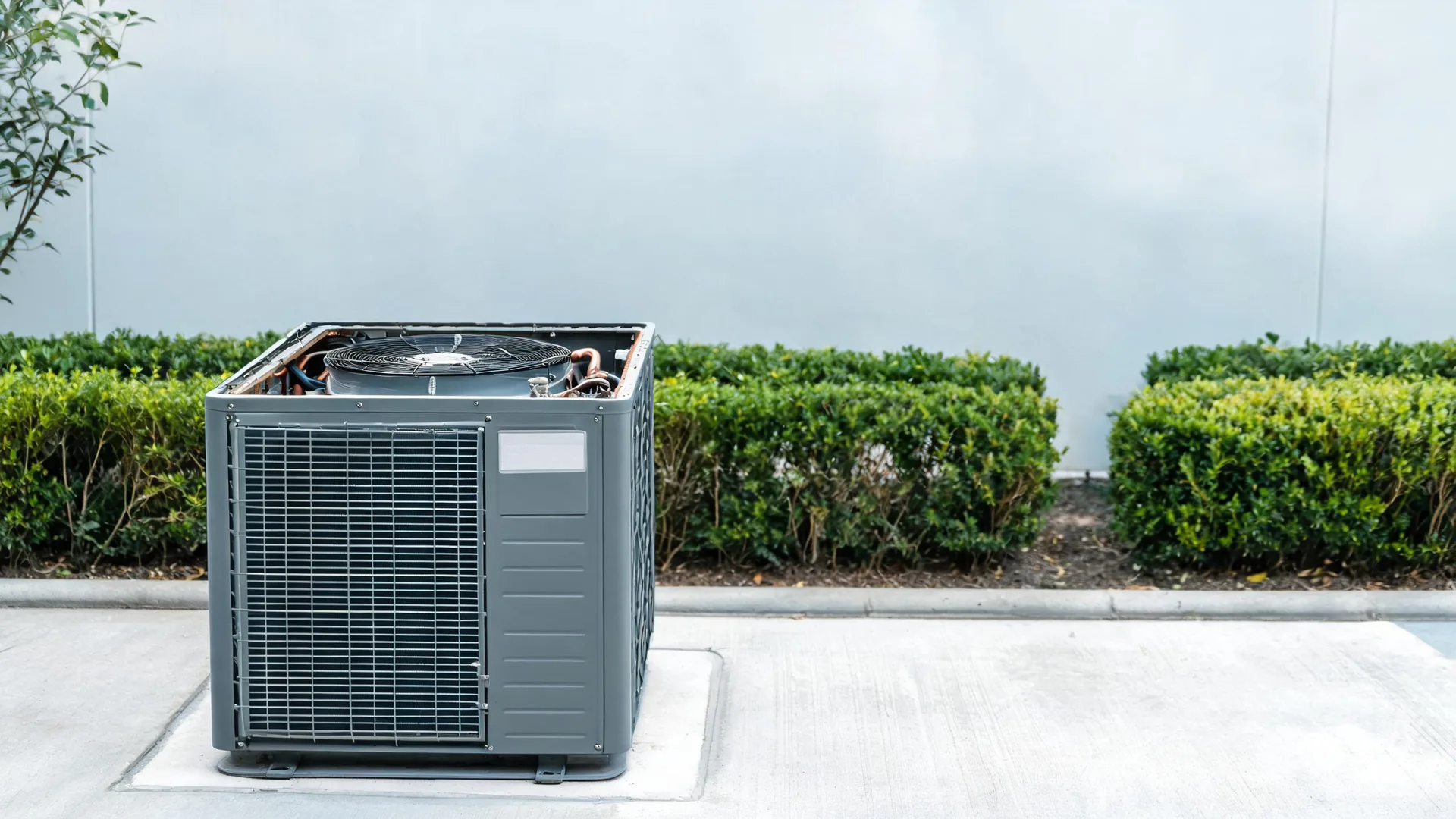
A gray heat pump outdoor unit mounted on a concrete pad next to the stone-accented exterior wall of a house.

The years add up before the breakdown does

An aging heat pump doesn't always announce itself. It just loses a little capacity each year until it finally can't keep up. If yours came with the house, ask the contractor how much life is left in it before you put money into the repair. A part replaced on a unit with a few years left is money well spent. The same part on a unit near the end just delays the bigger cost.

Short cycles wear out the parts that start it

A heat pump that shuts off a couple minutes after starting is struggling to finish a full cycle. The contacts and capacitor that handle the start-up load take the hit every time it short cycles, and those parts wear faster the more often this happens. It can come from a stuck sensor, a refrigerant problem, or a failing part in the outdoor unit itself.

Warm air from the vents in winter means it's not keeping up

Air that feels cool or barely warm coming out of the vents when the heat pump is in heating mode usually means it's losing the fight against the outdoor temperature. Sometimes that's a refrigerant charge that's dropped. Sometimes it's a reversing valve that isn't switching the way it should. Either way, the unit is running without doing the job, which costs more than the repair would.

Most heat pump failures trace back to one of a few parts. The capacitor that kicks the compressor and fan motor into motion weakens over years of starts and stops, and when it goes, the unit either hums without starting or won't start at all. The reversing valve, the part that switches the system between heating and cooling, can stick in one position and leave you with heat when you want cold air or the other way around. Refrigerant doesn't get used up, so a low charge almost always means a leak somewhere in the lines or coil, and that leak won't fix itself. Outdoor coils get caked with dirt, pollen and debris over time, and a dirty coil makes the whole system work harder to move the same amount of heat. Contactors and relays carry a lot of current every time the unit cycles, and eventually the contacts burn or pit until they stop making a clean connection.

A diagnostic visit starts outside, at the unit itself. A tech checks the refrigerant pressures, the electrical draw on the compressor and fan motor, and the condition of the coil before touching anything inside. Most of what a heat pump is doing shows up in those readings long before it shows up as a symptom you'd notice from the thermostat. Inside, they'll check the air handler, the filter, and how the system responds when it's told to switch between heating and cooling. That switch is where a sticking reversing valve gives itself away. The goal isn't just to find the one thing that quit. It's to see whether anything else is already being overworked because of it, so the repair fixes the actual problem instead of the symptom that got noticed first.