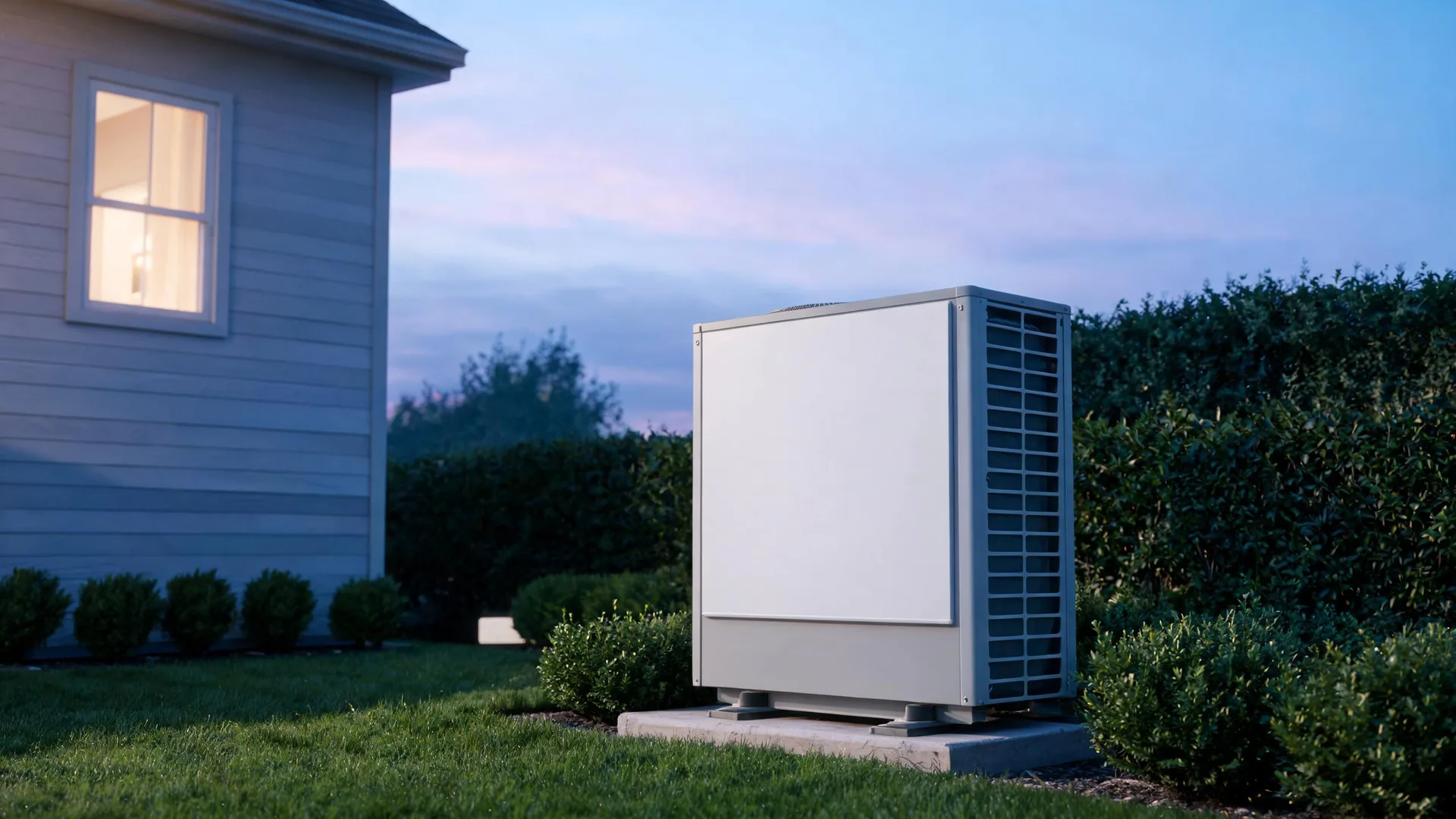
Weather here is rough on outdoor units
Ascension Parish recorded 54 severe weather events between 2015 and 2024, including damaging wind, hail, and tornadoes. A heat pump's outdoor unit sits outside year-round and takes whatever comes through.
Takes about a minute. No obligation.
Ascension Parish recorded 54 severe weather events between 2015 and 2024, including damaging wind, hail, and tornadoes. A heat pump's outdoor unit sits outside year-round and takes whatever comes through.
A heat pump needs electricity to run, both the outdoor unit and the indoor air handler. Nearly half of Louisiana households went at least 24 hours without power in 2024, and a heat pump with no power produces no heat or cooling at all.

NOAA nClimDiv, 1991–2020 normals
Heat pumps in Gonzales switch over in November, right as the first real cold hits.
A weak part that made it through a mild October usually fails in that first cold week.




A technician starts outside at the unit, checking the refrigerant charge and the reversing valve, since that valve is what lets a heat pump switch between heating and cooling. If it's stuck, the system blows the wrong temperature air or won't switch over at all. Next comes the defrost board and sensor, because a heat pump that can't sense frost on the outdoor coil won't know to run a defrost cycle, and ice builds up until airflow stops. Indoors, the check moves to the air handler, the blower motor, and the thermostat wiring, since a bad connection there can look exactly like a dead unit from the outside. Most calls come down to one failed part rather than a dying system, and finding which one it is takes less time than most homeowners expect.
Storms hit hard here. If the outdoor unit took hail or debris, have it checked even if it still runs.
Find a contractorA heat pump that's struggling doesn't rest just because it's still blowing air. A low refrigerant charge makes the compressor work harder to move the same amount of heat, and that strain wears it down faster than it would running at the correct charge. A weak capacitor makes the compressor or fan motor draw more current trying to start, again and again, until the motor windings take the damage. Ice on the outdoor coil, if the defrost cycle isn't kicking in, blocks airflow entirely, and the system keeps running without actually heating or cooling the house. None of these clear up by leaving the system on. Running it that way turns a failed part into a failed compressor, which is a different repair altogether.
A capacitor gives the compressor and fan motor the jolt they need to start. It weakens with age and heat cycling, and when it goes, the fan may hum without turning or the outdoor unit may try to start and quit. This is one of the most common reasons a heat pump stops working.
The reversing valve is what makes a heat pump a heat pump, switching the refrigerant flow between heating and cooling. Debris, corrosion, or a worn coil inside the valve can make it stick in one position, so the system only blows one temperature or won't change over when the thermostat calls for it.
Most calls start with something the homeowner noticed days before they picked up the phone. Warm air blowing when the thermostat is set to heat is one of the clearest signs, and it usually means the reversing valve isn't switching or the system is low on refrigerant. Short cycling, where the unit starts, runs a few minutes, and shuts off, points to a different problem, often a failing capacitor or a sensor telling the board something isn't right. Ice on the outdoor coil that doesn't melt off on its own means the defrost cycle isn't firing when it should. A hum from the outdoor unit with no fan movement is almost always the capacitor. None of these fix themselves, and waiting usually just adds a second problem to the first.
A repair is almost always worth it when one part failed and the rest of the system is sound. A capacitor, a defrost sensor, a contactor, these are inexpensive compared to the compressor they protect, and replacing one restores the whole unit to normal work. Replacement starts to make sense when the compressor itself is the problem. A compressor is sealed, so a tech can't open it up and swap a worn part inside, and a compressor replacement often costs close to what a new outdoor unit costs. Age matters too, not because a system wears out on a schedule, but because a unit old enough to have one major part fail is old enough that others are close behind it. A tech who finds the actual failed part can tell you which situation you're in, and that's worth knowing before you spend money on either path.