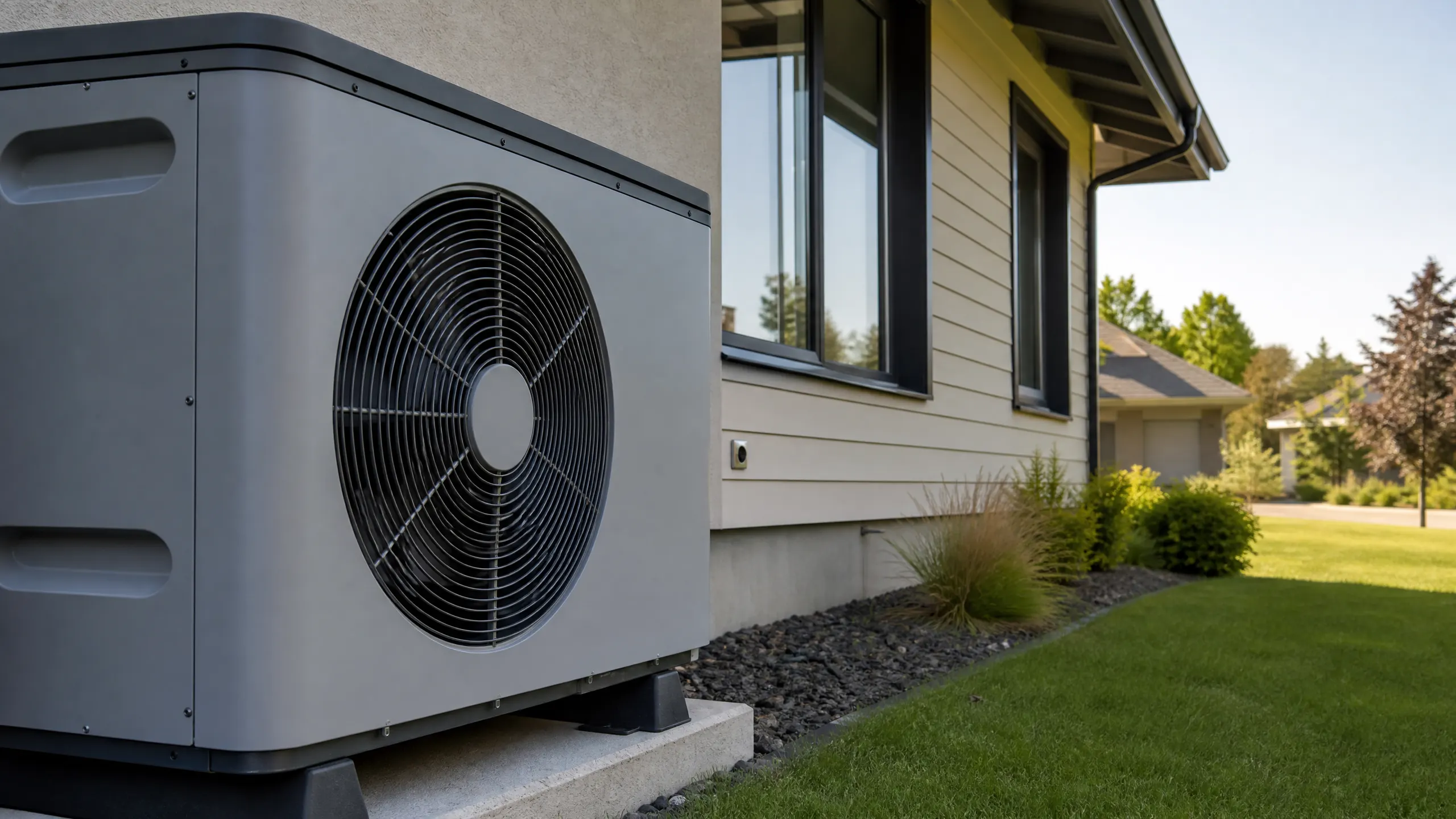






A grey outdoor HVAC unit mounted on a concrete pad beside the beige-sided exterior wall of a suburban house.

Heat Pump Repair in Jennings, LA

Tell us about the job

Takes about a minute. No obligation.

RepairHeat PumpJefferson Davis Parish, LA
Step 1 of 2

What ZIP code is the job in?

Jefferson Davis Parish saw 41 severe weather events between 2015 and 2024. That includes 19 damaging wind events, 13 hail events, and 9 tornadoes. A heat pump's outdoor unit sits outside through all of it, with coil fins and a fan exposed to whatever blows through. Hail dents fins and bends the fan cage. Wind-driven debris can nick the coil or jam the fan without stopping it outright. A unit that still runs after a storm can be running on damaged parts, so it is worth having checked rather than judging it by whether it turns on.

5 months
November through March, your system heats
7 months
April through October, it cools
44°F
the average winter night it heats against
91°F
the average summer afternoon it cools against
Isometric grey-toned illustration of a cutaway house showing interior rooms, ceiling ductwork and an air handler, connected by lines to an outdoor condenser unit beside the building.
Your system heats November through March and cools April through October.

NOAA nClimDiv, 1991–2020 normals

Summer air in Jefferson Davis Parish holds a dew point around 74 degrees.

A heat pump pulling that moisture out of the air all summer earns its breakdowns honestly.

Heat pumps break down in the first cold snap or the first hot week, not in the middle of the season

Cooling runs April through October
Heat runs November through March
Power here costs 11.74 cents per kilowatt-hour

A heat pump that has spent the summer pulling moisture out of the air is already carrying worn parts into the next season. If it is short cycling, running constantly, or blowing air that is not warm enough, that is usually the summer's wear showing up now. A tech can check the refrigerant charge, the compressor, and the reversing valve to find which one is behind it. Fixing the part that is actually worn holds up. Resetting the thing and hoping tends to bring the same problem back within weeks.

After a storm, have the outdoor unit checked before you judge it by whether it runs

If your outdoor unit has been through a storm this year, running fine now does not rule out damage underneath. A tech can check the coil fins and fan cage for the kind of damage that shows up later as a bigger repair.

Find a contractor
A man in a cap, dark work shirt and tan pants carries a worn canvas tool bag up gray steps toward a green paneled front door of a shingled house, with a potted shrub beside the entry.
A gray air-source heat pump mounted on a concrete pad next to a house with gray vinyl siding, surrounded by gravel and flanked by green shrubs and white hydrangea flowers.

Running it through the problem usually costs you the part

A heat pump that is struggling does not fix itself by staying on. A compressor working against a low charge draws more current than it was built to handle, and that heat has nowhere to go but back into the compressor's own windings. Keep it running and you are not giving it a chance to recover, you are cooking it. The same goes for a reversing valve stuck halfway. It lets refrigerant slip past in both directions at once, so the compressor pumps against itself every minute the system runs. A fan motor dragging on a bent cage will heat up the longer it spins, and motor windings that overheat enough times eventually short. None of these get better with patience. The unit will often keep running through all of it, because the parts fail slow rather than all at once, right up until the point where one of them doesn't.

Most signs are easy to live with for a while

A heat pump rarely quits outright. Air coming out warmer or cooler than it should, a longer runtime to hit the same setting, cycling on and off more than usual, frost on the outdoor coil when the weather doesn't call for it. None of these stop the system from running, so they get noticed and then ignored. Each one is a specific part working harder than it was built to, whether that's the compressor, the reversing valve, or the refrigerant charge.
What a tech needs to hear from you

Say exactly what the system is doing. Lukewarm air instead of hot or cold. Cycling every few minutes instead of running a normal stretch. Frost on the outdoor unit in the middle of the day. That detail points a tech to the right part before they even get there. The part behind it does not fix itself by running longer, so the sooner it gets looked at, the less it has worn down by the time someone's there to fix it.

A heat pump works all year, so it fails in more ways than a furnace or an AC unit does alone. The reversing valve is the part unique to it, and it takes a beating because it switches every time the system changes between heating and cooling. Over time the seals inside wear and it starts sticking, letting refrigerant bypass instead of routing it where it belongs. The compressor usually fails from something else going wrong first, a low charge or a restricted coil that makes it work outside the conditions it was built for. Capacitors weaken with age and stop giving the compressor and fan motor the jolt they need to start. Outdoor fan motors wear at the bearings until the blade drags, and a dragging motor runs hotter than it should every minute it spins. Most heat pump failures trace back to one of these, not to the unit simply wearing out all at once.

A diagnostic visit starts with questions, not tools. What is the system doing, and when did it start. Then the tech checks static pressure, refrigerant charge, and electrical readings at the compressor and fan motor before touching anything inside the cabinet. Gauges on the lines show whether the charge is low or restricted, and a clamp meter on the compressor shows whether it's drawing more current than it should. If the reversing valve is suspect, the tech checks the temperature of the lines going in and out of it, because a valve that's bypassing shows a smaller difference than it should. None of this is guesswork. Each reading points at one part or rules it out, and the repair gets built around what the readings actually show, not around replacing parts until something works.