White two-story houses with wraparound porches and Spanish moss-draped oak trees photographed along a residential street at night.

Heat Pump Repair in Lafayette, LA

Tell us about the job

Takes about a minute. No obligation.

RepairHeat PumpLafayette Parish, LA
Step 1 of 2

What ZIP code is the job in?

A small fault can take out a compressor

A heat pump low on refrigerant will keep trying to hit the temperature you set. The compressor runs harder and longer than it should, and it runs hot. Keep that up and you can crack or burn out a compressor that would have been fine if the system had been shut down and looked at sooner.

Ice on the outdoor unit means stop, not wait

Some frost in defrost cycles is normal. A coil caked in ice is not. If the defrost board or sensor has failed and the unit keeps running anyway, that ice builds until airflow is blocked and the compressor is pulling liquid refrigerant it was never built to handle.

5 months
November through March, your system heats
7 months
April through October, it cools
44°F
the average winter night it heats against
91°F
the average summer afternoon it cools against
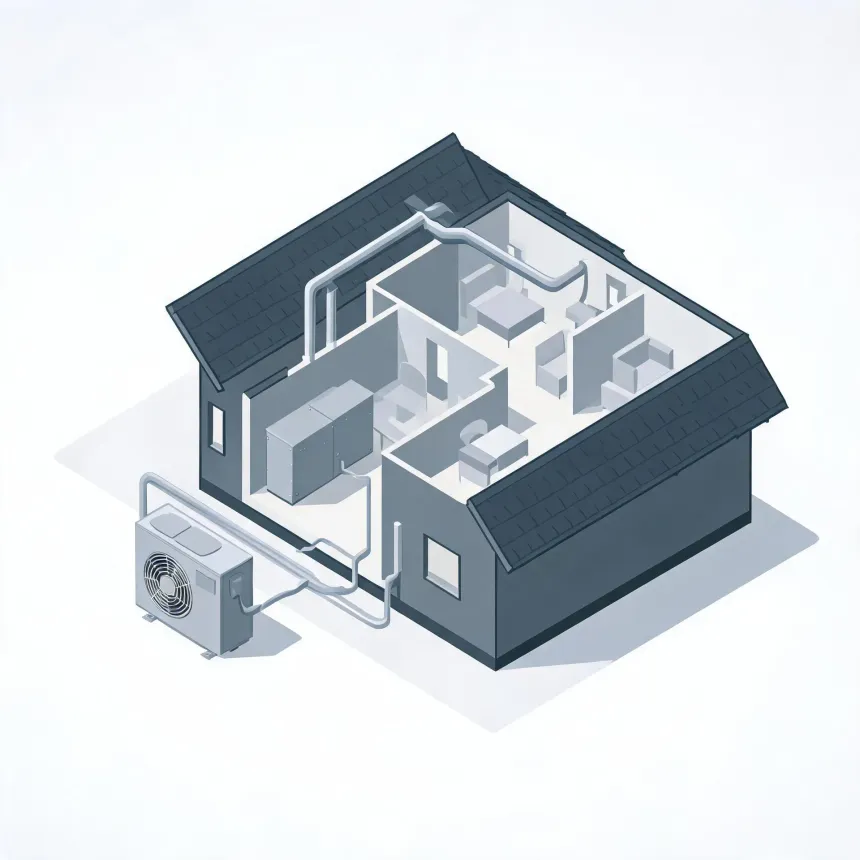
Isometric grayscale illustration of a cutaway house showing interior rooms, ductwork and an indoor air handler connected by lines to an outdoor condenser unit on the ground outside.
Your system heats November through March and cools April through October.

NOAA nClimDiv, 1991–2020 normals

Half the homes in Lafayette Parish were built in 1988 or later.

A heat pump that age still has working life in it, so repair is usually the right call before replacement.

Get it repaired, not replacedHalf the homes in Lafayette Parish were built in 1988 or later.

Lafayette Parish logged 68 severe weather events between 2015 and 2024, and damaging wind made up most of them. An outdoor heat pump unit sits outside year round, so it takes the brunt of that. Hail dents the fins, branches and debris land in the cabinet, wind rocks the unit on its pad. A unit can take a hit like that and keep running for months before the real problem shows up. Power outages during storms are common here too, and a unit that cycled off hard is worth a check before you trust it again. If your outdoor unit came through a storm, even one that still turns on, have it looked at.

Repair it

If your system came with a newer house, it likely has plenty of life left. Repair is usually the right call.

Find a contractor
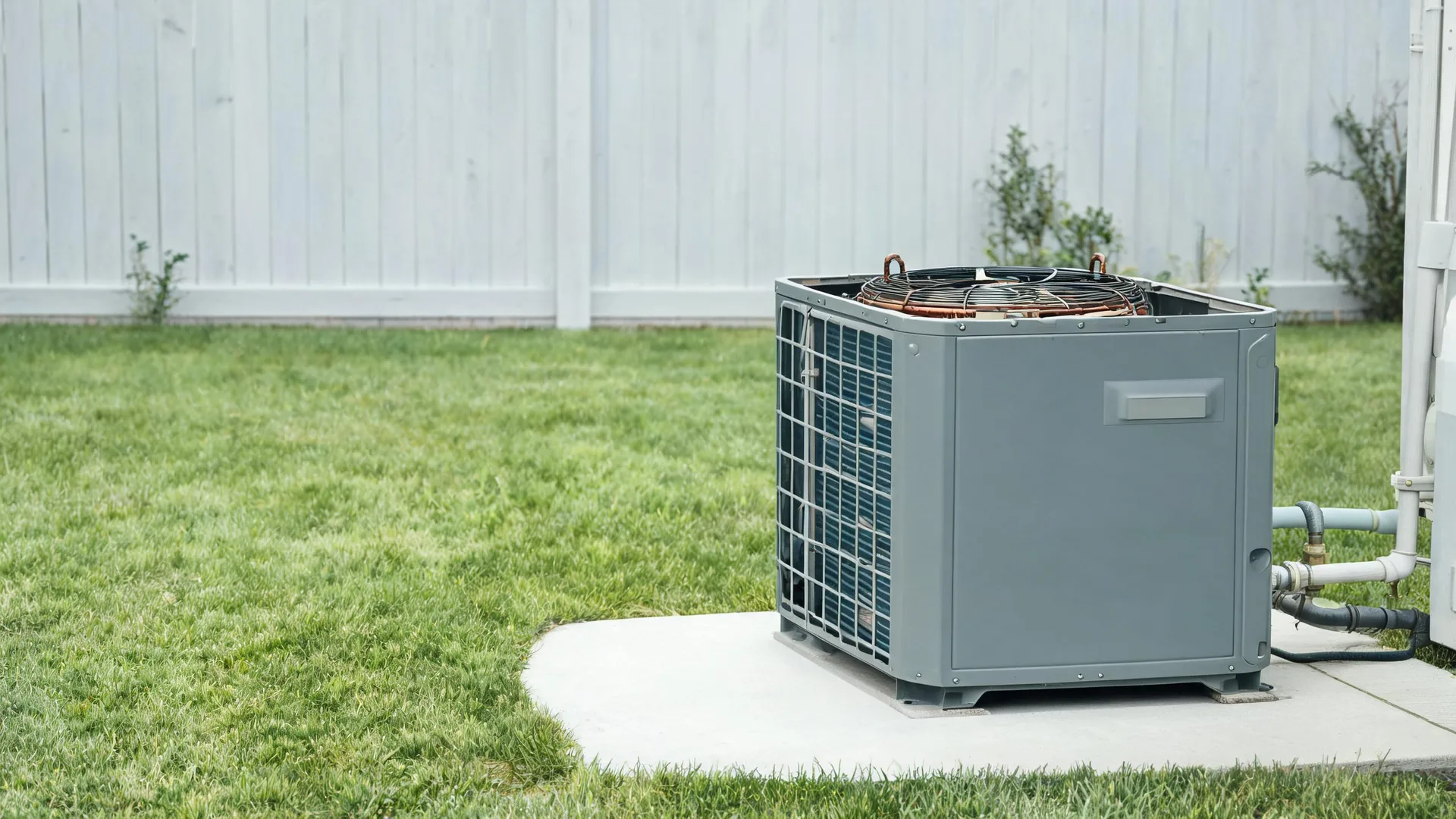
A gray heat pump outdoor unit mounted on a concrete pad next to a residential house with lap siding and stone accents.

What a diagnostic visit actually checks

A tech starts outside at the unit, pulling the panel to check the capacitor, the contactor and the wiring before anything else. Those fail often and they rule themselves in or out fast. From there it's refrigerant pressure and temperature split, checked at the supply and return, to see whether the system is actually moving heat the way it should. If the reversing valve looks suspect, running the system in both modes and feeling the lines shows a stuck or leaking valve right away. Airflow gets checked too. The filter, the blower wheel, the coil. A system can test fine on the gauges and still fail because something upstream is choking the air moving across it. Most of this points to one part. Finding it before it takes something bigger down with it is the whole point of the visit.

It blows air that isn't the right temperature

Heating mode that comes out lukewarm, or cooling that doesn't feel cold, usually points to the reversing valve or a refrigerant charge that's dropped. The system still runs and still moves air, but it isn't doing the job, and running it that way adds hours onto a compressor that's already struggling.

It won't stop, or it won't start

A heat pump that short cycles, turning on and off every few minutes, is tripping a safety switch somewhere, often from a dirty filter or a failing sensor. One that runs nonstop and never satisfies the thermostat is usually losing refrigerant or airflow. Either problem gets worse the longer the system keeps running that way.

A few things are worth checking before you call anyone. Go out and look at the outdoor unit. If the coil is covered in ice or the fan won't spin, cut power to the system at the thermostat or breaker and leave it off until someone can look at it. Check your air filter too. A filter packed with dust chokes off airflow and can cause problems that look electrical but aren't. Walk the outdoor unit and clear leaves, grass clippings or anything that's landed in the cabinet, since blocked airflow around the coil makes every other problem worse. If the thermostat screen is blank, check the breaker before you assume the system itself has failed. None of this fixes a bad reversing valve or a low charge, but it rules out the simple stuff first.

Age isn't the only thing that decides this. A compressor is the expensive part, and most repair calls aren't about the compressor at all. They're about something smaller that got left alone until the compressor took the damage. A failed capacitor, a stuck contactor, a low charge from a slow leak. These are normal wear items, and fixing them is usually straightforward. What changes the math is how long the problem ran before anyone looked at it. A system caught early almost always comes down to one part. One that kept running hot or short cycling for weeks can take the compressor down with it, and a compressor swap is a different conversation than a capacitor or a contactor. So ask how long it's been doing this, and whether it's been allowed to keep running that way.