




A row of single-story houses with porches behind a manicured lawn and trimmed hedges, framed by large oak trees draped with Spanish moss.

Heat Pump Repair in Leesville, LA

Tell us about the job

Takes about a minute. No obligation.

RepairHeat PumpVernon Parish, LA
Step 1 of 2

What ZIP code is the job in?

Vernon Parish saw 83 severe weather events between 2015 and 2024. Damaging wind came through 39 times in that span, hail 25 times, and 15 tornadoes touched down. An outdoor heat pump unit sits outside through all of it, exposed to whatever the wind throws at it or whatever falls on it during a storm. A dented cabinet or a bent fin near the coil does not always stop the unit from running, but it can still mean a slow leak or a motor working harder than it should. If a storm has come through and the unit took a hit, it is worth having someone look at it even if it still turns on.

5 months
November through March, your system heats
6 months
May through October, it cools
40°F
the average winter night it heats against
92°F
the average summer afternoon it cools against
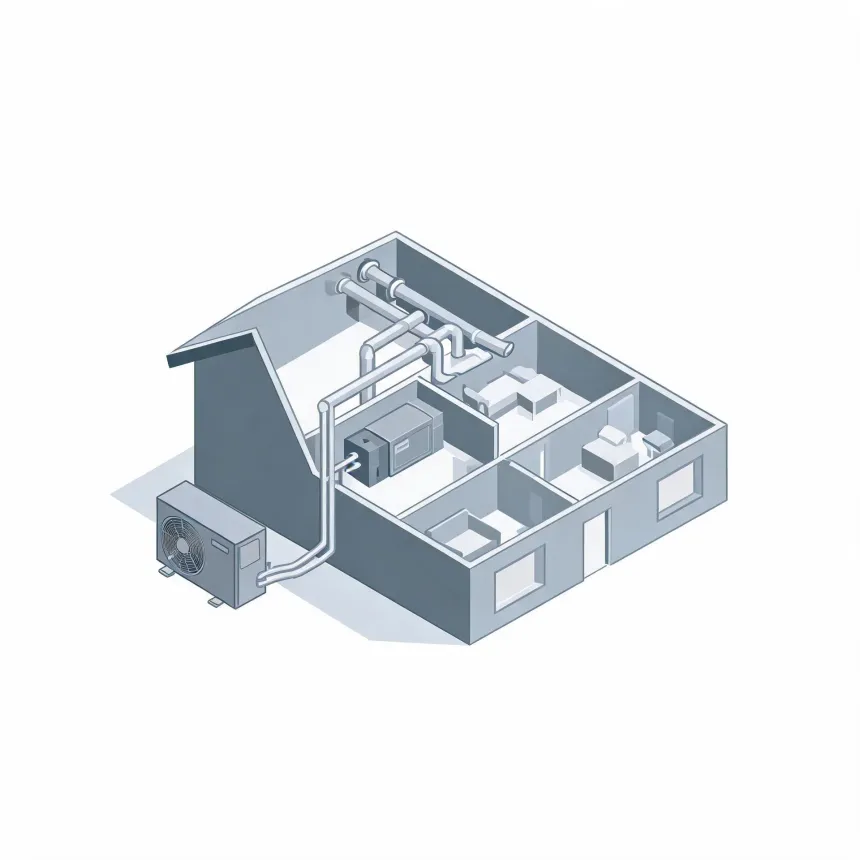
Isometric grayscale illustration of a cutaway house showing interior rooms, ducted air handler and duct runs, connected by pipes to an outdoor condenser unit beside the building.
Your system heats November through March and cools May through October.

NOAA nClimDiv, 1991–2020 normals

Your heat pump starts earning its keep in November, when homes here switch over to heat.

A part that limped along in October can fail outright once the unit is running every night to keep up with lows near 40°F.

Thick, muggy air all summer means the compressor rarely gets a break

Power here costs 13.84 cents per kilowatt-hour
Climate zone 3A
Cooling runs May through October

A compressor that never gets a real break still has to be diagnosed, not just reset. If it's tripping a breaker or icing over, that is usually a sign something underneath is already failing, not a fluke. Running a unit through a short that keeps resetting, or ice that keeps forming, wears down parts that were already strained from the summer. Have a contractor check it before turning it back on and hoping. A proper diagnosis now catches what the long muggy stretch already weakened, instead of letting it fail for good once the cold sets in.

Had a storm come through? Get the unit checked before you need it.

If your unit took wind or hail this year, get it looked at before you lean on it for heat. A tech can check the coil and cabinet for damage that a storm leaves behind, even when the unit still turns on.

Find a contractor
A gray heat pump outdoor unit mounted on a concrete pad next to a residential house with lap siding and stone accents.

Running Every Day, All Year, Wears Different Parts Than a System That Rests Half the Time

A heat pump runs in both directions, so it carries twice the wear of a system that only cools or only heats. The reversing valve is usually the first thing to go. It switches the refrigerant flow between heating and cooling mode, and after enough cycles the valve can stick, leaving the unit stuck blowing cold air when it should be heating. The outdoor fan motor is another common failure point, since it runs almost constantly and the bearings wear out over time. Refrigerant leaks show up at the joints and coils, usually slow at first, and a unit low on charge will run long cycles without quite reaching the set temperature. The defrost control board can also fail, and when it does, frost builds up on the outdoor coil and never clears, which blocks airflow and drags down the whole system. Capacitors wear out from the constant start-and-stop of daily cycling, and a weak one makes the compressor struggle to start, which shortens its life further. None of these parts fail because of one bad day. They fail because a heat pump works year round, with no real off season, and every hour of runtime adds to the wear already there.

What the unit does when something is wrong

A heat pump rarely just quits. It blows air that isn't warm enough, or it runs long cycles without hitting the set temperature. It short cycles, turning off a minute or two after it starts. It makes a hard clicking or a grinding sound from the outdoor unit, or frost builds up on the outdoor coil and stays there. Any of these is the unit telling you a part underneath is already struggling, well before it stops running altogether.
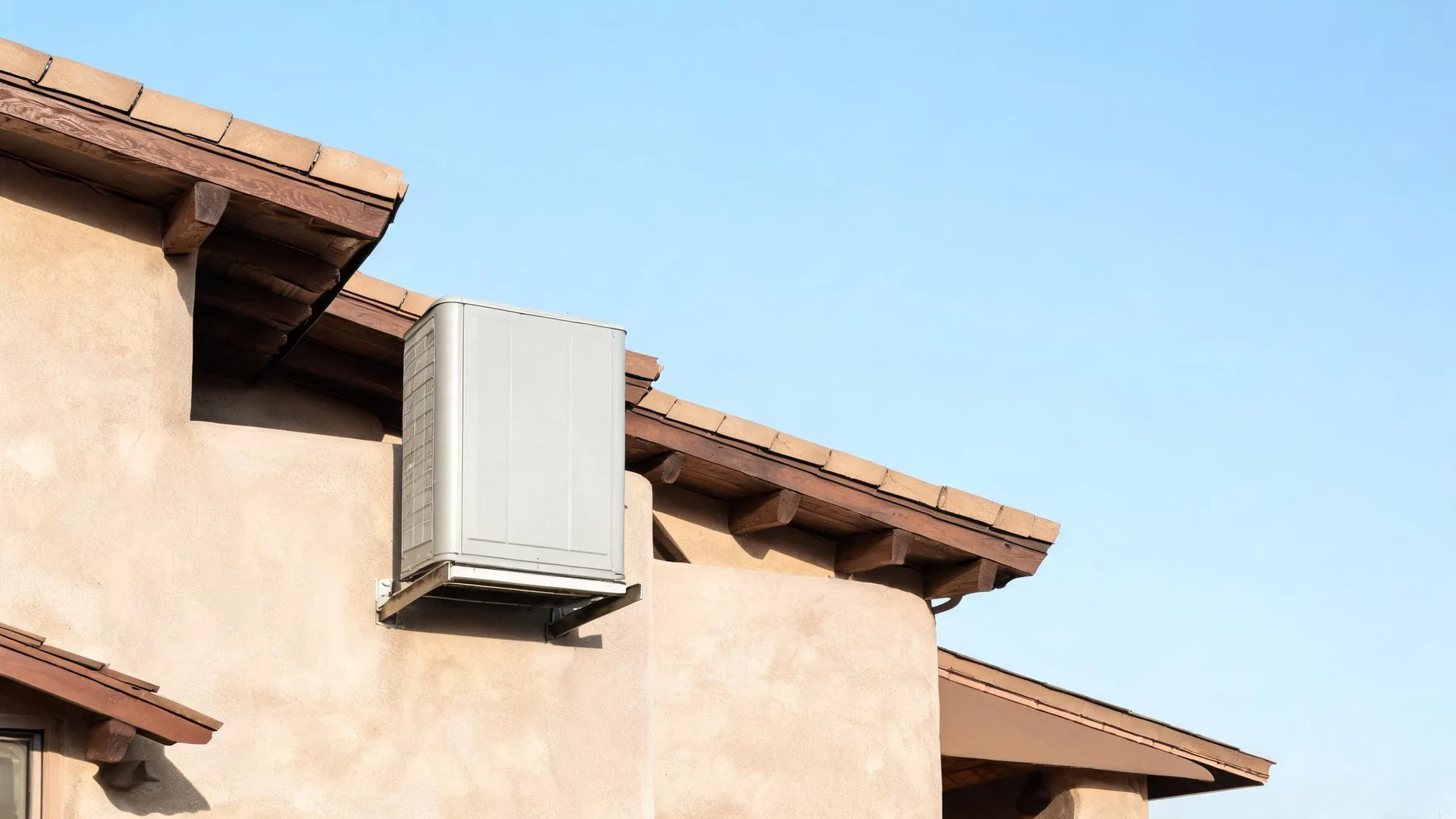
Why waiting makes the repair bigger

A failing part rarely stays contained to itself. A weak capacitor makes the compressor strain to start, and a compressor that strains on every cycle wears out sooner than it should. A slow refrigerant leak left alone starves the compressor of the cooling it needs and can take it out completely. The fix that would have been a single part becomes a compressor replacement, which costs far more than catching the problem at the capacitor or the leak.

Before calling anyone, a few things are worth checking on your own. Look at the thermostat first. Make sure it's set to heat and the set temperature is actually above room temperature, since a setting bumped by accident can look exactly like a broken unit. Check the breaker panel for a tripped switch. A heat pump that lost power during a storm or a surge will sometimes trip and just sit there until someone resets it. Go outside and look at the unit itself. Clear away leaves, branches or anything piled against the cabinet, since blocked airflow around the outdoor coil can make the whole system struggle. Check your air filter too. A filter clogged with dust chokes airflow from the other end and can cause a lot of the same symptoms as a failing part. If the breaker trips again after you reset it, stop and leave it off. That's not something to keep resetting on your own, and it means a part underneath needs a real look.

A diagnostic visit starts outside at the unit itself, not with a part swapped in and hoped for. A tech checks the refrigerant charge with gauges, since a system low on charge shows some of the same symptoms as a bad compressor but needs a completely different fix. They'll test the capacitor and the contactor, run the unit through a heating and a defrost cycle to see if the reversing valve actually switches, and check the amp draw on the outdoor fan motor while it's running. Electrical connections get checked too, since a loose wire can cause a fault that looks like a failed part but isn't one. The point of walking through all of this is to find the actual failure instead of replacing whatever looks the most worn. A unit that gets a real diagnosis gets fixed once, not fixed, then fixed again a month later for the thing that actually caused it.