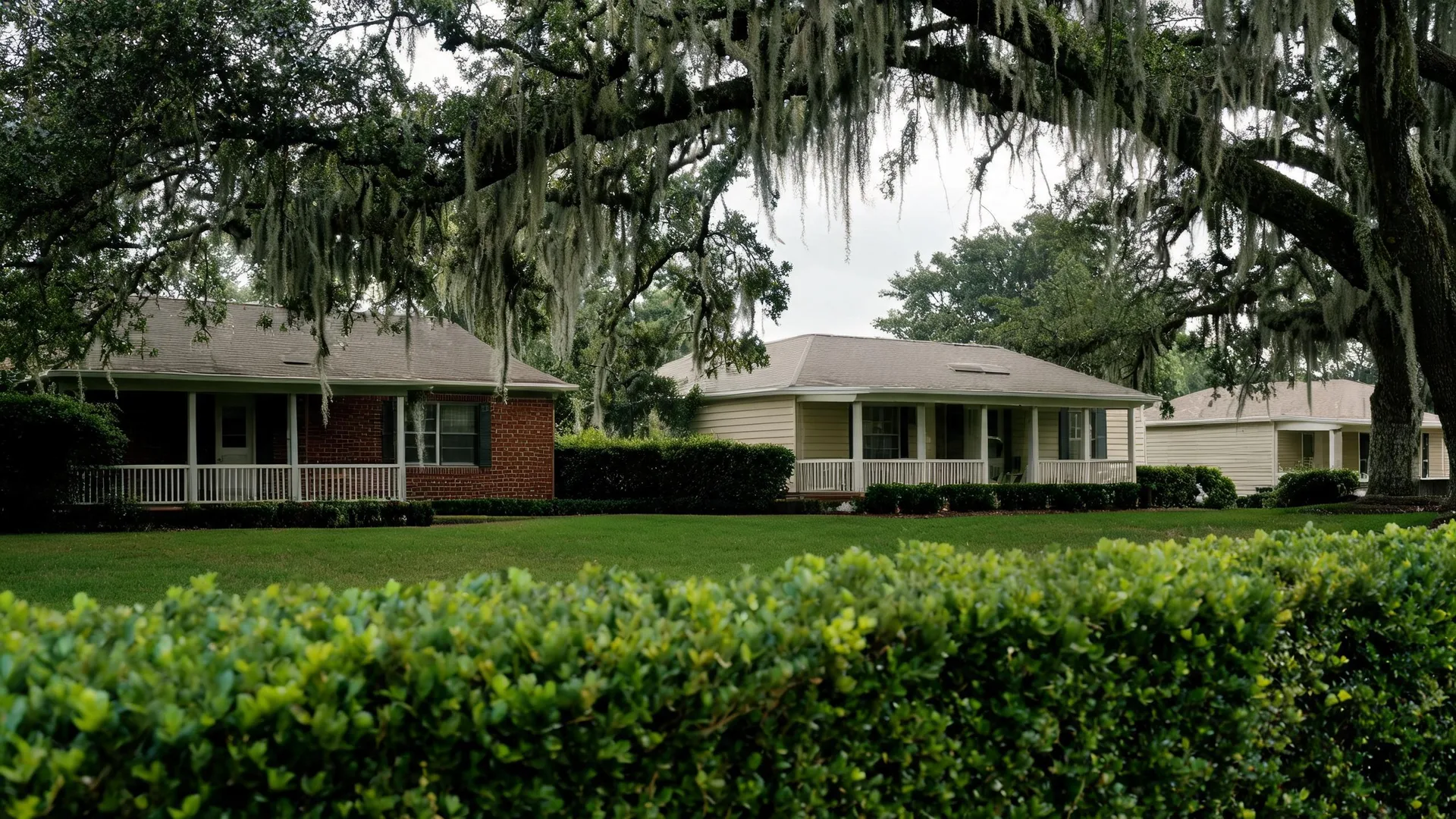
Single-story houses, one brick and one with light siding, both with covered porches, behind a mowed lawn and trimmed hedge, under large moss-draped oak branches.

Heat Pump Repair in Mansfield, LA

Tell us about the job

Takes about a minute. No obligation.

RepairHeat PumpDe Soto Parish, LA
Step 1 of 2

What ZIP code is the job in?

De Soto Parish sees serious weather

De Soto Parish logged 118 severe weather events between 2015 and 2024. That includes 65 damaging wind events, 30 tornadoes and 18 hail events. A heat pump's outdoor unit sits outside through all of it, with no wall to protect it.


The power doesn't always hold

Almost half of Louisiana households went at least 24 hours without power in 2024. A heat pump needs electricity to run, for heat or for cooling. When the power is out that long, so is the heat pump, no matter what shape it's in.

5 months
November through March, your system heats
6 months
May through October, it cools
38°F
the average winter night it heats against
92°F
the average summer afternoon it cools against
Isometric illustration of a cutaway house showing interior rooms, ceiling ductwork and an air handler, connected by lines to an outdoor condenser unit on a pad beside the building.
Your system heats November through March and cools May through October.

NOAA nClimDiv, 1991–2020 normals

November is when heat kicks on here after months of running nothing but the outdoor unit for cooling.

A heat pump that limped through summer gets found out fast once it has to carry the house down to a 38°F night.

Half the homes here were built by 1990, and the heat pump often shows it

Half the homes here were built by 1990
Power here costs 13.87 cents per kilowatt-hour
Climate zone 3A

A heat pump here runs the house through a long, muggy summer, then switches over to carry it through winter nights. That's more total runtime than a furnace and a separate AC would log in a milder state, and it's all going through the same compressor and the same coils. De Soto Parish averages a 70°F dew point across June, July and August, among the highest in the country, which means the system is pulling moisture as hard as it's pulling heat out of the air. That kind of load adds up on the parts that move: the compressor, the fan motor, the reversing valve. When one of them is struggling, it usually isn't bad luck. It's the weather here doing what it does, and a tech who knows that will check those parts first instead of guessing.

If the outdoor unit took a hit, get it looked at

If your heat pump sat through hail or wind this year, have the outdoor unit checked even if it's still running. Bent fins and debris around the coil don't always stop the system right away, but they make it work harder than it should.

Find a contractor
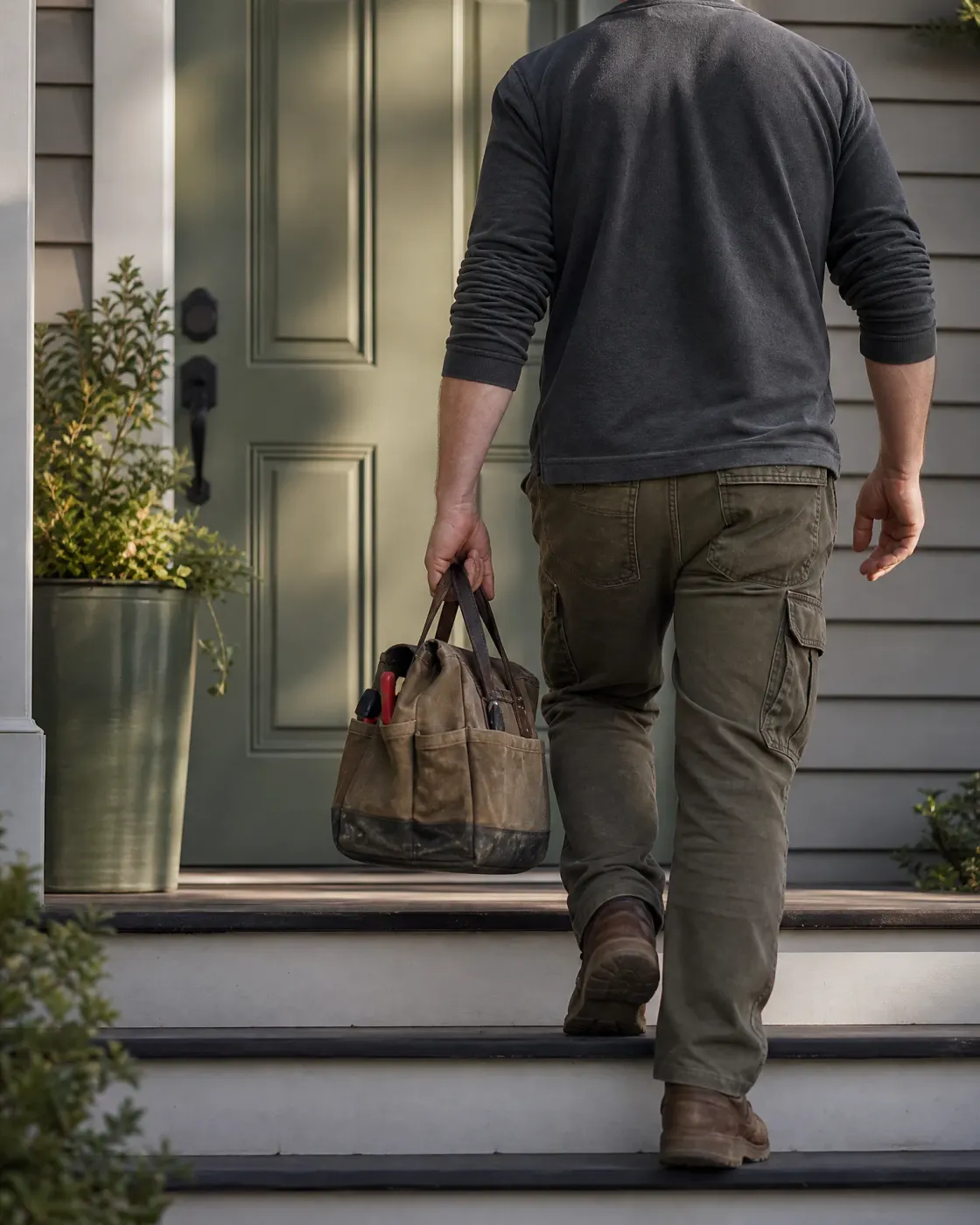
A man in a dark long-sleeve shirt and olive cargo pants, seen from behind, carries a waxed canvas tool bag up porch steps toward a green front door of a gray clapboard house.
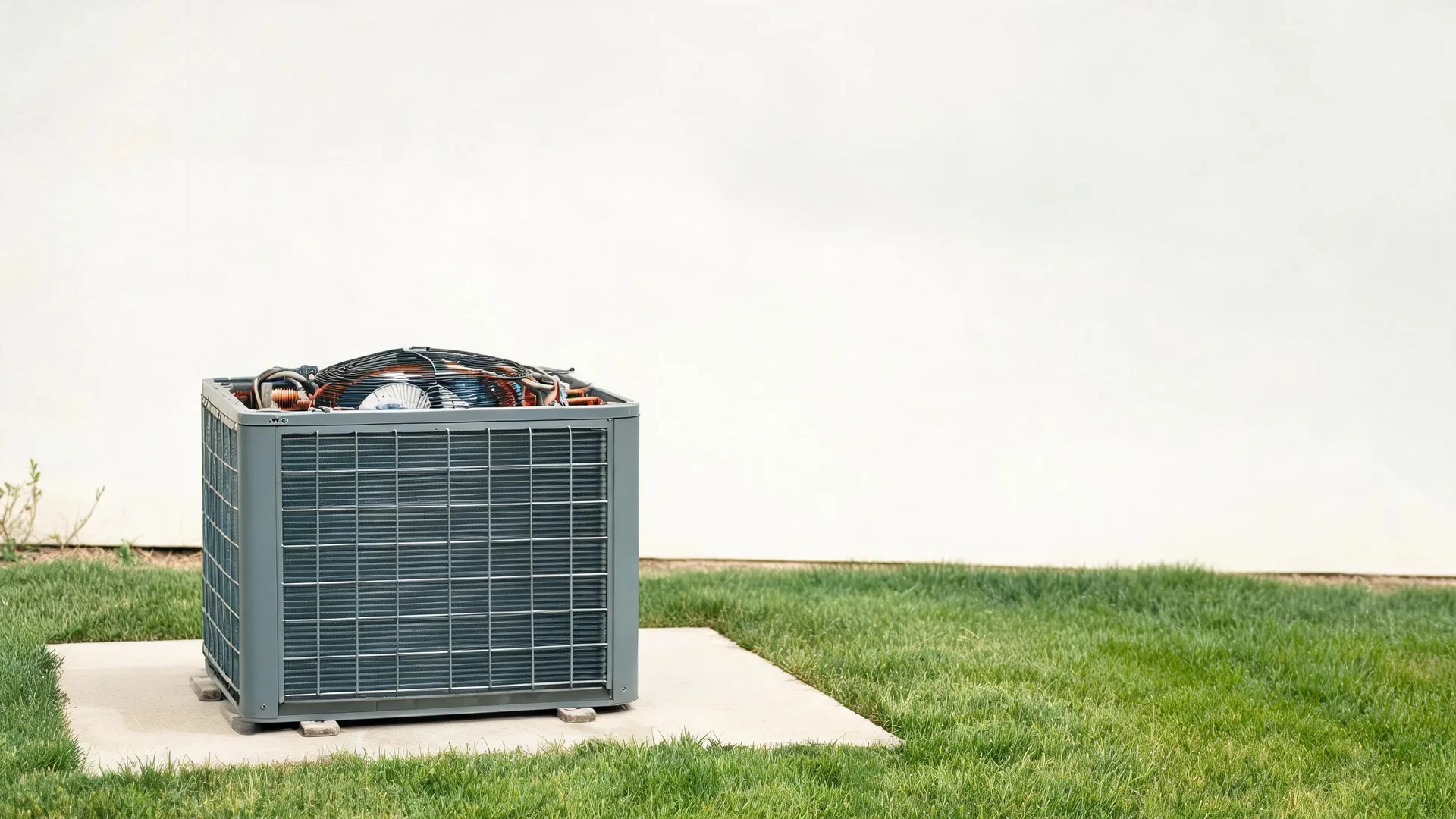
A white mini-split heat pump outdoor unit mounted on a concrete pad beside a gray-sided house, surrounded by gravel and green shrubs.

It's been running since spring. Find out what that cost it.

Get the actual part named before anything gets replaced. A compressor that's struggling and a reversing valve that's stuck can look the same from the thermostat, a system that won't get the house to temperature, but they're different repairs. If this is the first rough patch after a long summer and the unit's outdoor coil came through clean, that's worth telling the tech. If it took a beating from wind or hail, say that too. Either way, the fix only lasts if it's going after what's actually worn.

It won't hold the temperature it used to

A heat pump losing its grip shows up as a house that runs a few degrees warmer or colder than the thermostat says, or one that takes much longer to get there. Short cycling, where the unit kicks on and off in quick bursts instead of running a full cycle, points to a refrigerant problem or a failing sensor. Ice building up on the outdoor coil when it shouldn't, or the unit blowing air that isn't as warm or cool as it used to be, both mean something inside has worn down.

Strange sounds and smells mean something specific

A clanking or grinding noise from the outdoor unit usually means a fan motor or compressor part is wearing out, not just loose. A hissing sound can mean refrigerant escaping from a line it shouldn't be leaving. A burning smell from the indoor unit means a tech needs to look at the wiring or the motor before it's run again. None of these fix themselves, and running the system while they're happening usually turns a repair into a bigger one.

A few checks are safe to do before anyone comes out. Look at the thermostat first. Make sure it's set to the mode you want, heat or cool, and that the setting is actually past room temperature, not sitting right at it. Check the breaker box. A heat pump trips its own breaker sometimes, and if it's tripped, that tells you something, so don't just flip it back on and walk away if it trips again. Look at the air filter. A filter clogged with dust chokes off airflow and can make the system struggle or freeze up, and it's something you can pull out and look at yourself. Walk outside and look at the outdoor unit. Clear away leaves, grass clippings or anything piled against it, since it needs open space around it to move air. If you see ice on the outdoor coil, don't chip at it or run a hose on it. Switch the system off and let it sit. Anything past that, a system that won't come on at all, warm air blowing when it should be cold, or ice that keeps coming back, is a job for someone who can get inside the unit.

Half the homes here were built by 1990, which means a lot of heat pumps are old enough to be on borrowed time even when they're still running. A unit nearing the end doesn't always die outright. It runs longer to do less, trips more, and costs more to keep going than it did five years ago. Before paying for a big repair, like a compressor, ask the tech straight out how many years they'd expect to get out of it after the fix. If the unit came with the house and nobody's touched it since, that answer matters more than the repair bill does.