Storms come through often
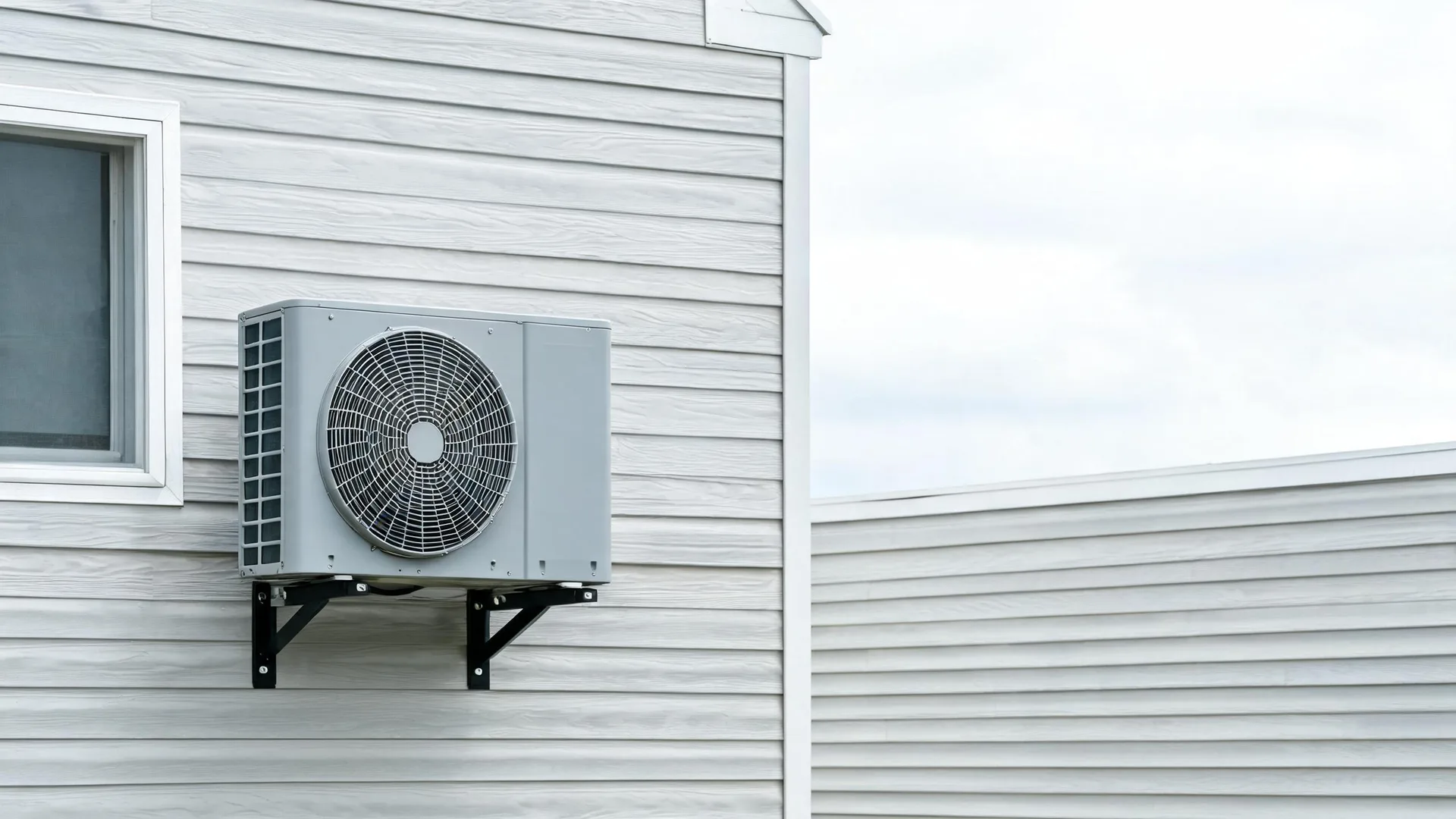
Sabine Parish recorded 90 severe weather events between 2015 and 2024, including 38 with damaging wind and 30 with hail. That's the outdoor unit's exposure, sitting outside year round.
Takes about a minute. No obligation.
Sabine Parish recorded 90 severe weather events between 2015 and 2024, including 38 with damaging wind and 30 with hail. That's the outdoor unit's exposure, sitting outside year round.
Hail and flying debris can bend fins or nick the coil without stopping the heat pump outright. It'll run rough or lose efficiency before it quits, so a unit that still turns on isn't necessarily one that came through fine.

NOAA nClimDiv, 1991–2020 normals
November is when heat here switches on for the season.
A heat pump that struggled in October won't make it through a 39 degree night.



A heat pump here runs cooling almost nonstop through the summer because the air isn't just hot, it's heavy. Sabine Parish averages a 71 degree dew point in June, July and August, higher than most of the country sees. That kind of humidity means the system is pulling moisture out of the air on top of cooling it, and the compressor and coil carry that extra load every time they run. A unit working that hard for months wears sooner than one in a drier climate, even if nothing's visibly wrong with it. When something does act up, it's rarely random. It's usually a part that's been carrying more than it should for a long time, so the fix needs to account for why it wore out, not just what broke.
A heat pump that took hail or wind damage can keep running for a while before it fails outright. If yours has been through a storm, have it looked at now, even if it seems fine.
Find a contractor
Get the actual cause checked before you pay for a repair. A worn contactor or a compressor that's been overworking all summer can show the same symptoms on the thermostat, and only one of those is a quick fix. Tell whoever comes out how long the problem's been building, not just what it's doing right now. That's what points to the part that gave out first instead of just the one that quit loudest.
A heat pump in trouble will tell you. Air coming from the vents that's cool when it should be warm, or warm when it should be cool. Ice forming on the outdoor unit that doesn't melt off during the defrost cycle. A click at the outdoor unit when it tries to start, then nothing. Short cycling, where it kicks on and off every few minutes instead of running a full cycle. Any of these means something inside has already failed or is about to.
A heat pump that's struggling doesn't fail one part at a time and stop there. A failing capacitor makes the compressor work harder to start. A refrigerant leak makes the compressor run hotter than it should. Run it in that state and a part that was fine keeps carrying the load until it isn't fine anymore. The sooner a tech sees it, the fewer parts have been dragged down with the one that started it.
A compressor that's low on refrigerant doesn't just cool poorly, it runs hotter than it's built to. Every cycle after that bakes the windings a little more. A failing bearing in the outdoor fan motor changes the same way. The motor slows, airflow across the coil drops, and the compressor behind it starts working against heat it can't shed. None of this shows up as a sudden stop. It shows up as the system running longer to do the same job, then losing capacity, then taking the next part down with it. Shutting it off when something first seems off costs you nothing. Letting it run on a bad part almost always costs you a second one.
Most heat pump failures trace back to the reversing valve or the defrost control, since those are the two parts unique to a heat pump instead of a straight AC system. A reversing valve that sticks will leave you with heat when you want cooling, or the other way around. It gets stuck from the inside, usually built-up grime or a solenoid that's lost its pull, and once it sticks it tends to stick again. The defrost board is the other common point of failure. It's supposed to sense when frost builds on the outdoor coil and run a short cycle to melt it off. When the sensor goes bad or the board itself fails, the unit either never defrosts and ices over, or defrosts constantly and can't keep up with the load. Outside of those two, a heat pump fails the same way any compressor-driven system does: a capacitor weakens, a contactor's contacts burn and pit, a fan motor's bearings wear until it slows down or seizes. Whatever the actual part, the compressor is usually what pays for it, since it keeps running to cover for whatever upstream of it has already failed.