






A row of single-story houses, one brick and others with pale siding and covered porches, behind a trimmed hedge and lawn, under large oak trees draped with Spanish moss.

Heat Pump Repair in Marksville, LA

Tell us about the job

Takes about a minute. No obligation.

RepairHeat PumpAvoyelles Parish, LA
Step 1 of 2

What ZIP code is the job in?

A heat pump here moves heat in both directions almost all year, and summer is the harder half of that job. The dew point around Marksville averages 72°F across June, July and August, which is heavy even by Louisiana standards. Air that heavy means the system has to pull more moisture out along with the heat, every time it runs. That's extra load on the compressor and the coil, cycle after cycle, month after month. When a heat pump here starts short cycling or blowing air that isn't as cold as it should be, that kind of strain is usually part of the story. Worth having someone trace it back to the actual part before anything gets replaced.

5 months
November through March, your system heats
7 months
April through October, it cools
41°F
the average winter night it heats against
92°F
the average summer afternoon it cools against
Isometric line illustration of a cutaway single-story house showing interior rooms, ceiling ductwork, an indoor air handler unit, and an outdoor condenser connected by a line set.
Your system heats November through March and cools April through October.

NOAA nClimDiv, 1991–2020 normals

A struggling compressor still runs even when it's losing the fight.

Let it keep cycling like that and the compressor is usually what fails for good.

61 severe weather events in Avoyelles Parish add up to a hard decade for an outdoor unit

61 severe weather events from 2015 to 2024
49% of homes statewide lost power a day or more in 2024
25 damaging wind events from 2015 to 2024
The First Cold Snap Finds the Weak PartHeat runs November through March here, and November is when a struggling heat pump gets found out.

If the outdoor unit sat through a hailstorm or had debris come through during high wind, get it looked at even if it's still running. Hail dents fins and bends them shut, and bent fins block the airflow the coil depends on. Debris can nick a fin or hit the coil hard enough to cause a slow leak that won't show up for weeks. A unit that still turns on after a storm can be running on a damaged coil or a fan blade knocked slightly out of balance, and that kind of damage gets worse with every cycle, not better. This parish saw 20 tornadoes and 25 damaging wind events between 2015 and 2024, so a check after severe weather is worth doing on its own, separate from whatever repair brought you here.

Your Heat Pump Has Been Working Harder Than Most. Get It Diagnosed Right.

A heat pump pulling that much moisture out of the air all summer is going to show wear before a system in a milder climate would. If yours is short cycling or not cooling like it should, that's worth tracing to the actual part now, before the strain reaches the compressor. A proper diagnosis tells you what's actually worn and what the repair involves.

Find a contractor
A gray outdoor HVAC unit mounted on a concrete pad beside a house with gray lap siding and a stone foundation.

The Machine Tells You Before It Fails

A heat pump that's wearing out doesn't usually just quit. It tells you first. Warm air out of the vents when the thermostat is set to cool means the system is losing the fight somewhere, maybe the reversing valve, maybe the charge. Ice on the outdoor unit in the middle of a mild day points to airflow trouble or refrigerant running low, not cold weather doing what cold weather does. Short cycling, where it kicks on and off every few minutes instead of running a full cycle, puts a lot of wear on the compressor fast and usually gets worse on its own. A low hum with no fan movement is often a seized motor or a failed capacitor. And if the outdoor unit is noticeably louder than it used to be, grinding or rattling instead of a steady hum, something inside has worked loose or worn through. None of these fix themselves, and all of them get more expensive to ignore than to check.

Most Failures Start With the Reversing Valve or the Contactor

The reversing valve is what lets a heat pump switch between heating and cooling, and it's the part most specific to this machine. Its coil burns out, or the valve itself sticks partway between positions, and the system stops switching modes cleanly even though everything else runs fine. The contactor is a simpler part but fails just as often. It's the switch that sends power to the outdoor unit, and its contacts pit and burn every time it closes, cycle after cycle, until it stops closing reliably or welds shut.
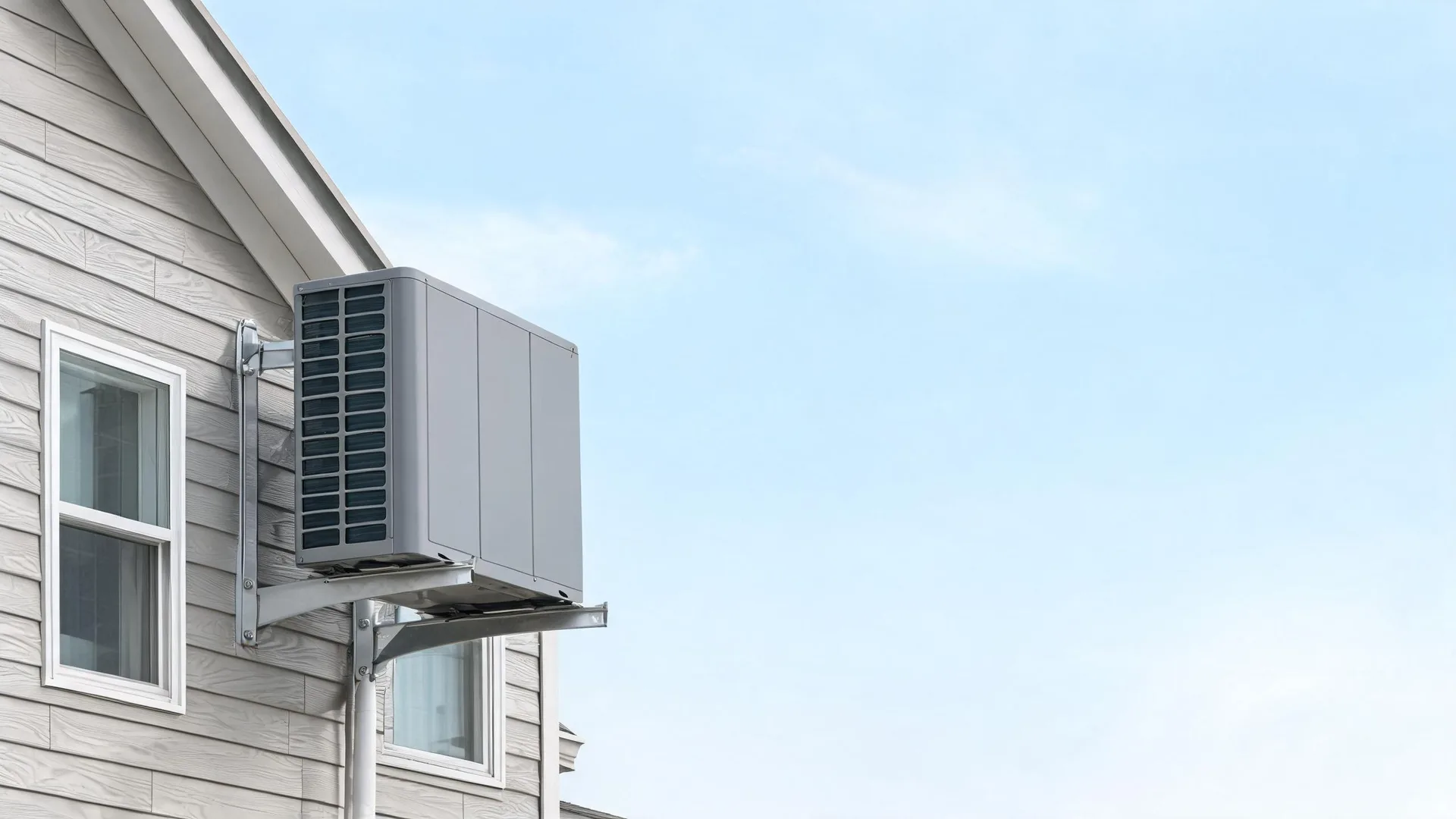
Outdoor Coil Damage Shows Up as a Slow Leak

The outdoor coil sits exposed to everything the yard throws at it, and a bent fin or a small dent does more than block airflow. It can thin the metal enough to start a refrigerant leak that takes weeks to show up as weaker heating or cooling. By the time the system is noticeably underperforming, the charge has usually been dropping for a while. A coil that looks fine from a few feet away can still have a leak starting at a spot no one's checked.

Before anyone comes out, there are a few things worth checking yourself. Look at the thermostat first. Make sure it's set to cool or heat as intended and the batteries aren't dying, since a dim or blank display can look like a bigger problem than it is. Check the air filter next. A filter clogged with dust chokes the airflow the whole system depends on, and that alone can cause weak air out of the vents or ice building up on the outdoor unit. Walk outside and look at that outdoor unit. Clear away leaves, grass clippings or anything piled against it, since it needs open air on all sides to move heat properly. Check the breaker panel too. A tripped breaker will shut the whole system down and looks exactly like a dead unit from inside the house. None of this fixes a failing reversing valve or a worn contactor, but it rules out the simple stuff before anyone starts taking the system apart.

A diagnostic visit starts with questions, not tools. What's the system doing, when did it start, does it happen in heating mode or cooling mode or both. Then comes the gauges, checking refrigerant pressure on both the high and low side, because that one reading points toward a dozen different problems depending on what it shows. The tech checks the capacitor's output, since a weak capacitor still lets the fan spin but not at full strength, and that kind of partial failure is easy to miss without testing it. They'll check the contactor's contacts for pitting, test the reversing valve's coil for continuity, and watch how the system responds when it's told to switch between heating and cooling. Airflow gets checked at the vents and across the indoor coil, because restricted airflow mimics a refrigerant problem closely enough to send someone chasing the wrong fix. A good diagnosis ends with the failed part named specifically, not a guess, and an explanation of why that part failed rather than a different one.