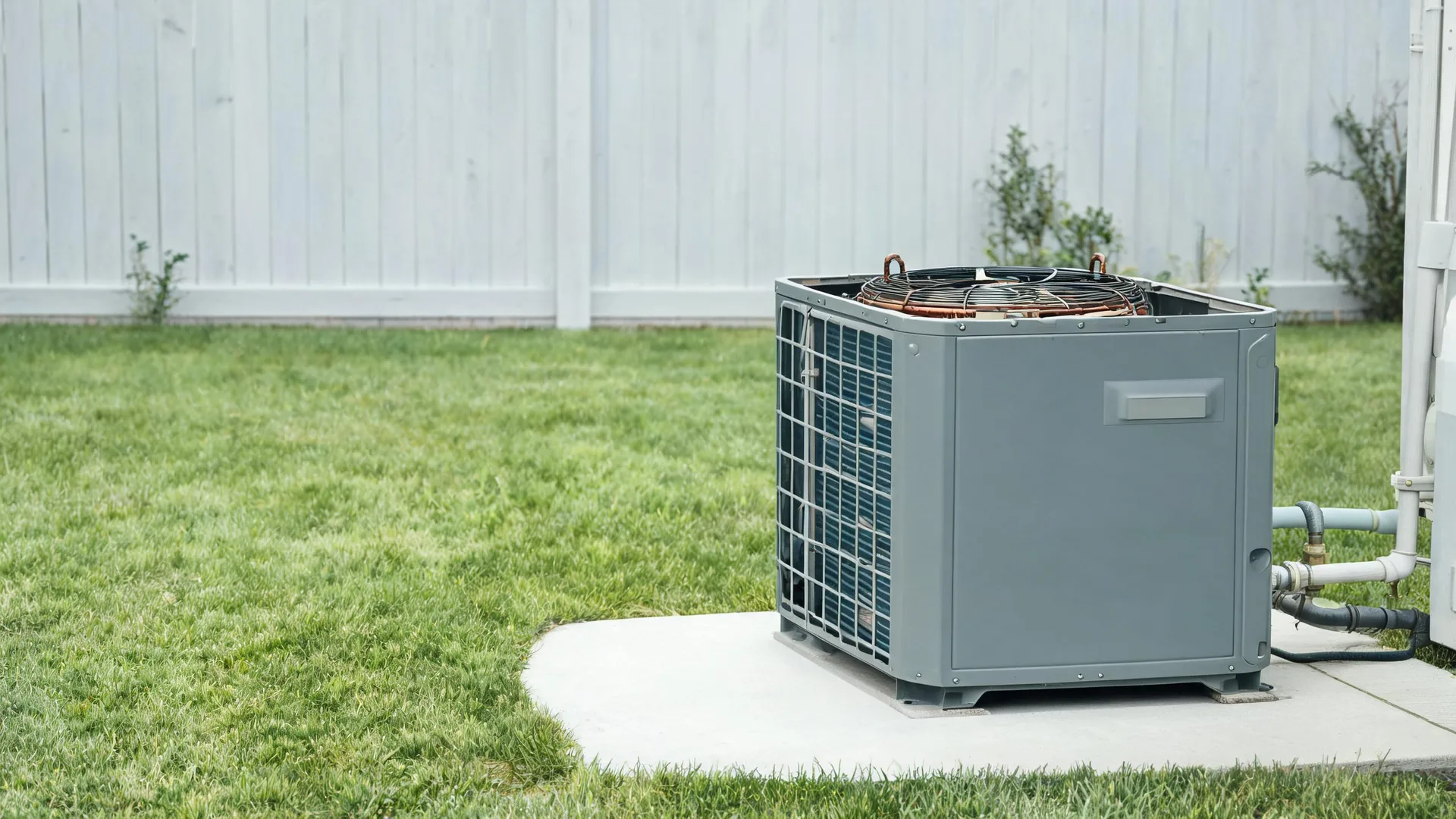
The air here is heavy
Morgan City averages a 74°F dew point through June, July and August. That's higher than most of the country sees. A heat pump pulling moisture out of air that heavy runs longer hours just to keep up.

Takes about a minute. No obligation.
Morgan City averages a 74°F dew point through June, July and August. That's higher than most of the country sees. A heat pump pulling moisture out of air that heavy runs longer hours just to keep up.
Long run times mean the compressor and coil see more cycles than they would in a milder climate. Problems that show up as age-related elsewhere can show up early here, so a repair call deserves a real diagnosis, not a guess.

NOAA nClimDiv, 1991–2020 normals
St. Mary Parish logged 29 severe weather events between 2015 and 2024, counting wind, hail, tornadoes and tropical storms.
An outdoor unit that took a hit from any of those can keep running for a while before the damage shows up as a repair call.
If the outdoor unit sat through a windstorm or a hail event in the past few years, mention it to the technician when they come out. Bent fins or a cracked fan blade don't always stop a heat pump from running. They just make it work harder and wear faster, which is the kind of thing that turns into a repair call months later. St. Mary Parish saw 16 damaging wind events and 6 hail events between 2015 and 2024, so a hit is more a matter of odds than bad luck. Worth a look even if the unit sounds fine right now.
Whatever is wrong with it, running long hours in heavy air for months at a time is likely part of why. A technician can tell you whether it's a worn part, a low charge, or something else, and get it fixed right.
Find a contractor
A heat pump that's struggling usually tells you before it quits. The air coming out of the vents feels warm when it should feel cold, or barely warm at all in the winter. That's often refrigerant charge or a failing compressor. Short cycling, where the unit kicks on and off every few minutes instead of running a full cycle, points to a bad sensor or a thermostat that's lost touch with the system. Ice on the outdoor coil during the day, not just overnight, usually means airflow is blocked or charge is low. A hissing or bubbling sound near the lines is refrigerant escaping somewhere it shouldn't. Grinding or squealing from the outdoor unit is a motor bearing giving out. Higher bills with no change in how the system is used mean it's working harder to do the same job, which is usually a part on its way out rather than the whole system failing at once. None of these mean the unit is done. Most of them are a single part, caught early.
A heat pump switches between heating and cooling with a reversing valve, and that part isn't in a furnace or a straight air conditioner. It can stick in one position from a bad solenoid or built-up wear, and when it does, the system keeps running but stops switching modes. That's often why a heat pump blows cold air when it should be heating, rather than a refrigerant problem.
In winter, the outdoor coil can frost over, so the system has to reverse itself briefly and run heat outside to melt it off before switching back. That cycle depends on a defrost sensor and a control board telling it when to run. If the sensor reads wrong or the board misfires, the coil can stay frosted or the unit can short cycle trying to defrost when it doesn't need to. Either way, it's a control problem, not a sign the compressor is failing.
Before calling anyone, check the thermostat batteries and the setting itself. A thermostat that's switched to the wrong mode, or one with dead batteries running on backup memory, can make a perfectly good heat pump act broken. Next, look at the air filter. A filter clogged with dust chokes off airflow, and a heat pump starved for airflow will ice up or struggle to keep temperatures steady. Walk outside and look at the unit itself. Clear away leaves, grass clippings or anything piled against it, since the outdoor coil needs open air on all sides to do its job. Check the breaker box too. A tripped breaker will shut the whole system down without any other warning sign. None of this fixes a bad capacitor or a stuck reversing valve, but it rules out the simple stuff first, and it's the same information a technician will ask for on the phone.
Once a technician has found the problem, the question is whether it's worth fixing. A single failed part, like a capacitor, a contactor, or a fan motor, is usually a straightforward repair on a system that's otherwise sound. The compressor is different. It's the most expensive part in the unit, and if it's failing, the cost of replacing it alone starts to compete with a new system. Age matters alongside the part. A unit near the end of its expected life that needs a major repair is a worse bet than the same repair on a younger unit, since another part is likely to fail soon after. A pattern of repair calls over the past year or two is worth more than any single breakdown. One fix is a fix. Three fixes for three different parts in two years means the system as a whole is wearing out, even if each repair was small on its own.