




Single-story brick and white-sided buildings with covered porches behind a trimmed hedge and lawn, framed by overhanging oak branches draped with Spanish moss.

Heat Pump Repair in Napoleonville, LA

Tell us about the job

Takes about a minute. No obligation.

RepairHeat PumpAssumption Parish, LA
Step 1 of 2

What ZIP code is the job in?

Assumption Parish saw 22 severe weather events between 2015 and 2024. That includes 4 damaging wind events, 7 hail events, and 6 tornadoes touching down. A heat pump's outdoor unit sits outside through all of it, taking whatever comes across the yard. Hail dents fins and bends the cabinet. Wind-driven debris can nick the coil or jam the fan without stopping it outright. A unit that still runs after a storm isn't necessarily a unit that came through fine.

5 months
November through March, your system heats
7 months
April through October, it cools
45°F
the average winter night it heats against
91°F
the average summer afternoon it cools against
Isometric illustration of a cutaway single-story house showing interior ductwork and vents connected to an outdoor condenser unit beside the building, on a white background.
Your system heats November through March and cools April through October.

NOAA nClimDiv, 1991–2020 normals

Half the homes in Assumption Parish were built in 1983 or earlier.

A heat pump that came with one of those houses is old enough that a repair bill is worth weighing against what's left in the unit.

One system, year-round work, little room for a slow repair

Cooling runs April through October
Heat runs November through March
Power here costs 12.16 cents per kilowatt-hour

A heat pump here spends summer pulling moisture out of air that's already heavy with it. The dew point averages 74°F across June, July and August, among the highest in the country. That number decides how hard the system has to work to make a house feel dry, not just cool. More runtime means more cycles on the compressor and more wear on every moving part inside the unit. When a heat pump here starts short cycling, or blows air that's cool but not dry, that load is usually part of the story. Worth having someone diagnose it properly rather than guess at a fix.

If a storm hit this unit, get it checked before it fails

If your outdoor unit came through a storm and still runs, that's not the same as running right. Hail can dent the fins enough to cut airflow, and debris can nick the coil without stopping the fan. Worth having it looked at before a small problem turns into a breakdown.

Find a contractor
A dark gray heat pump unit mounted on a concrete pad next to a house with gray siding and a stone veneer wall.

Before you pay for the repair, ask what it's buying you

If your heat pump came with the house and the house dates to 1983 or earlier, ask the contractor straight out how much life is left in it before you pay for the repair. A unit running on borrowed time might limp through this fix and fail on the next one. That's worth knowing before the money goes out, not after.

The sounds that mean something's wrong

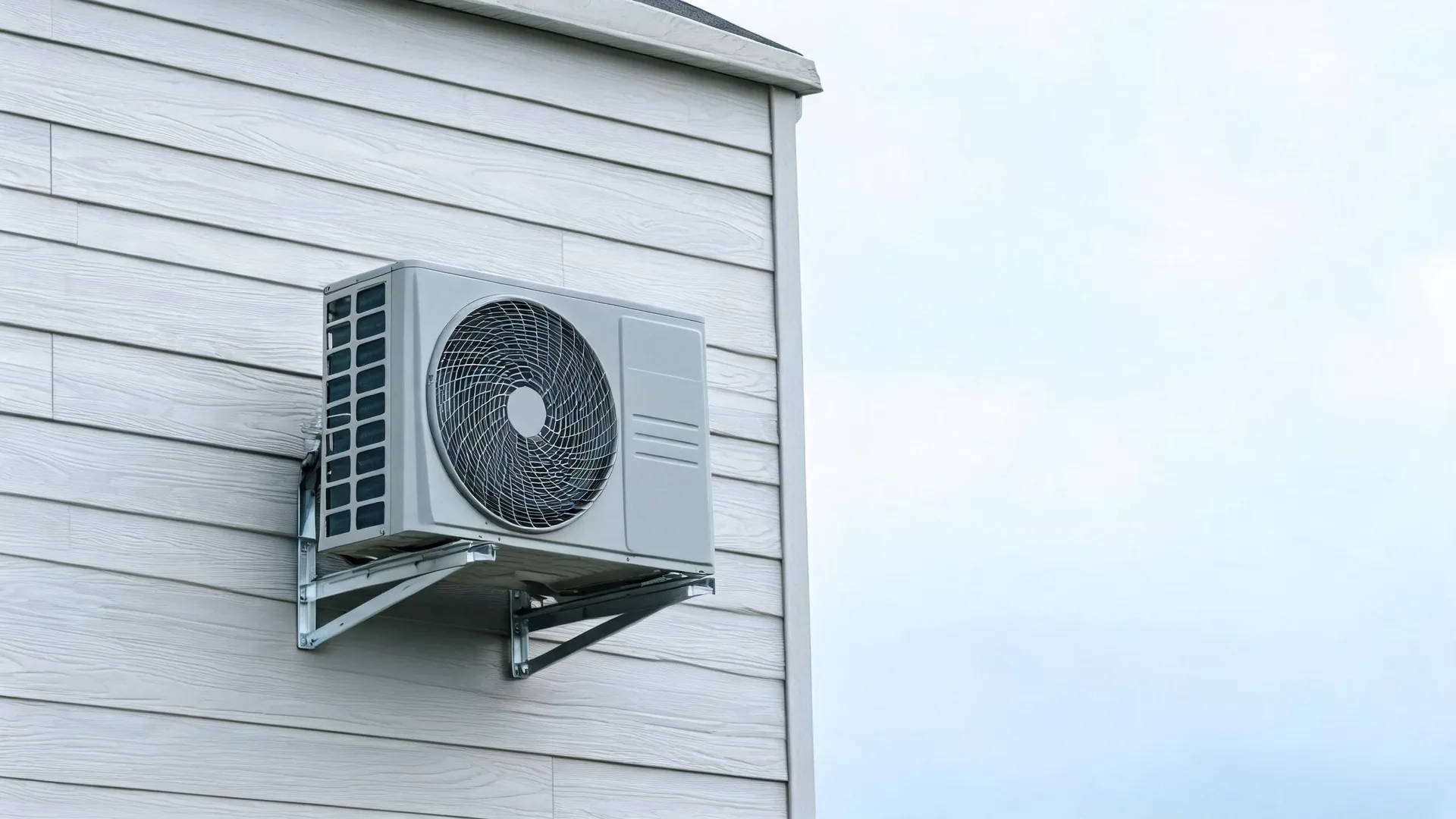
A heat pump that starts clicking repeatedly before it gives up on starting is struggling with the compressor or the capacitor behind it. A hissing or bubbling sound near the lines can mean refrigerant escaping where it shouldn't. Grinding or squealing from the outdoor unit usually points to the fan motor bearings wearing out. None of these get quieter on their own.
When it runs but doesn't deliver

A heat pump blowing air that feels room temperature instead of warm or cool is often low on refrigerant or losing the fight with a failing reversing valve. Ice building up on the outdoor coil when it shouldn't be there points to airflow trouble or a defrost control that isn't cycling right. If the air moves but the house never catches up, the problem is in how the system is conditioning that air, not just pushing it.

Most heat pump failures trace back to a handful of parts, not the whole system giving out at once. The capacitor that kicks the compressor and fan motors into motion weakens with age and heat cycling, and when it goes, the unit hums but won't start, or starts and stalls. The reversing valve, the part that switches the system between heating and cooling, can stick in one position, so the unit runs but only does half its job. Refrigerant doesn't get used up, so a low charge almost always means a leak somewhere in the lines or coil, and that leak won't seal itself. Outdoors, the fan motor bearings wear from running in the weather year-round, which shows up as grinding or squealing before the motor quits. The defrost control board can fail too, leaving ice to build on the outdoor coil until airflow stops. Catching any of these early, before the compressor itself is pulled into the failure, is usually what keeps a repair a repair instead of a replacement.

Power cuts out here more than most places, and a heat pump doesn't store up heating or cooling for later. It starts over the moment power comes back, pulling hard to catch the house up to the thermostat setting. That extra pull lands on the same capacitor and compressor that storm wear and summer humidity are already working on. A unit that was already weak going into an outage is the one that fails coming out of it, not during. If the power at your house has been flickering or cutting out and the heat pump has been acting up since, tell the contractor that when they come out. It points them straight at what to check first.