






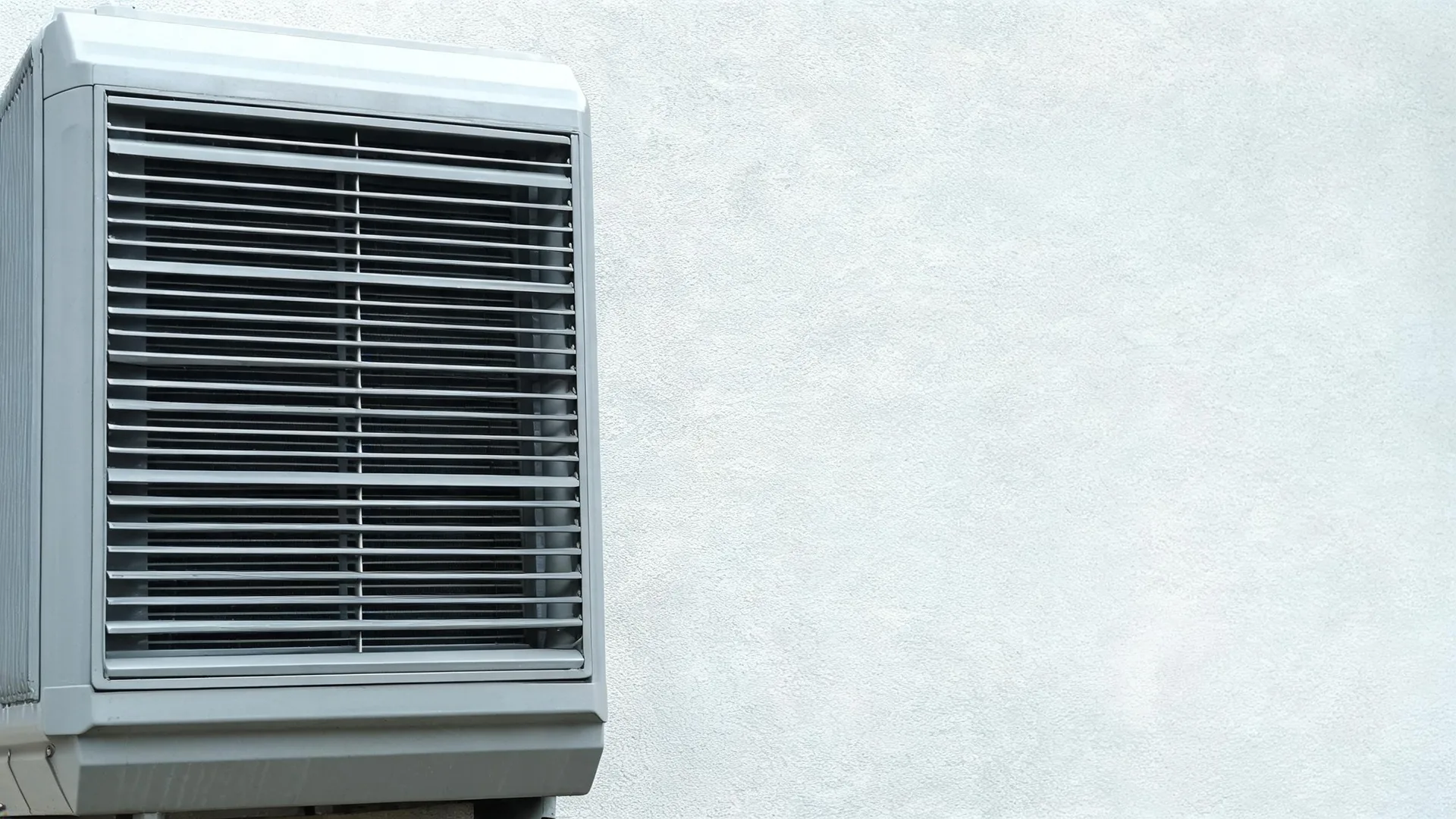
A grey heat pump outdoor unit mounted on a concrete pad against the exterior wall of a house with grey siding and stone veneer.

Heat Pump Repair in Natchitoches, LA

Tell us about the job

Takes about a minute. No obligation.

RepairHeat PumpNatchitoches Parish, LA
Step 1 of 2

What ZIP code is the job in?

Natchitoches Parish logged 173 severe weather events between 2015 and 2024. Most of that was wind, 107 events, with 42 hail events mixed in and 18 tornadoes on top of that. A heat pump's outdoor unit sits outside through all of it, with coil fins and a fan exposed to whatever blows through. Hail dents fins and bends the fan cage even when the unit keeps running afterward. Almost half of Louisiana households lost power for a day or more in 2024, and a heat pump does nothing for heat or hot water until that power is back. If your outdoor unit took a hit, running fine today doesn't mean it will hold up through the next storm.

5 months
November through March, your system heats
6 months
May through October, it cools
39°F
the average winter night it heats against
92°F
the average summer afternoon it cools against
Isometric cutaway illustration of a single-story house showing interior ductwork, an indoor air handler, and an outdoor condenser unit connected by lines along the exterior wall.
Your system heats November through March and cools May through October.

NOAA nClimDiv, 1991–2020 normals

Your heat pump switches over to heat in November.

A weak part that made it through summer on mild loads can fail in the first cold snap.

Cooling runs May through October in air this heavy, and that wears a heat pump down

Power here costs 12.21 cents per kilowatt-hour
Climate zone 3A
Cooling runs May through October

A heat pump that runs hard all summer doesn't always show its weak spots right away. A capacitor losing strength or a coil caked with condensation can still keep the house cool enough to get by. It won't give out as quietly once the system switches over to heat and asks the same worn parts to run a different direction. Have it looked at while it's still running in cooling mode, before the switchover finds the part that's closest to failing.

Had the outdoor unit through a storm? Get it checked before it fails.

If your outdoor unit took a hit this year, don't wait for it to fail outright. A tech can check the coil fins and fan cage for damage that a running system can hide.

Find a contractor
A man in a dark long-sleeved shirt and olive pants carries a canvas tool bag as he walks up wooden porch steps toward a green front door, with a potted shrub to the left.
A dark gray heat pump unit mounted on a concrete pad next to a house with gray siding and a stone veneer wall.

What a failing heat pump sounds and feels like before it quits

A heat pump that's starting to fail doesn't usually just quit. It tells you first. Air coming from the vents that's warm when it should be cool, or barely moving at all, often means the reversing valve is stuck or the outdoor fan has stopped turning. Ice building up on the outdoor coil when it shouldn't be there points to a refrigerant leak or a defrost control that isn't cycling right. Short cycling, where the system kicks on and off every few minutes instead of running a full cycle, puts extra wear on the compressor every time it happens. A hissing or bubbling sound near the lines usually means refrigerant escaping somewhere it shouldn't. Grinding or screeching from the outdoor unit is almost always a motor bearing giving out. None of these fix themselves, and most get more expensive the longer the system keeps running in that condition.

Most failures start outside

The outdoor unit carries the compressor, the fan motor, and the reversing valve that switches the system between heat and cooling. Those parts sit through sun, rain, and debris year round, and they take the brunt of the wear. A capacitor weakens slowly until it can no longer start the compressor or fan. A contactor pits from arcing every time it closes. Bearings in the fan motor dry out and start grinding before they seize.
The reversing valve is the part unique to a heat pump

A furnace or straight air conditioner doesn't have one. It's what lets a heat pump move heat in either direction, and it only moves a few times a day, which makes it easy to overlook until it sticks. A stuck valve shows up as heat when you called for cooling, or air that never gets warm once the system switches over. It's worth asking about by name when a tech comes out, since it won't always announce itself the way a dead capacitor does.

Before calling anyone, check the thermostat is actually set to heat or cool, not sitting in fan-only mode, and that the batteries aren't dead if it has them. Go to the breaker panel and look for a tripped breaker on both the indoor air handler and the outdoor unit, since a heat pump draws from two separate circuits and either one can trip on its own. Walk outside and look at the unit itself. Leaves, pine straw, and grass clippings packed against the coil fins block airflow and can make the system struggle or ice up. If the outdoor fan isn't spinning at all while the indoor blower runs, that's worth noting for the tech rather than trying to fix yourself. Check the air filter too. A filter clogged with dust and pet hair starves the system of airflow and can cause the exact warm-air or icing problems that feel like bigger failures. None of this involves opening the unit's cabinet or touching electrical or refrigerant lines, and it shouldn't. Those checks are for finding what you can safely rule out, not for doing the repair.

A diagnostic visit starts with gauges, not guesses. A tech connects them to the service ports and checks refrigerant pressure on both the low and high side, since too little or too much points to different problems entirely. They'll test the capacitor under load rather than just looking at it, because a capacitor can read fine sitting still and still fail to start the compressor. The contactor gets checked for pitting, the fan motor for the amp draw it's actually pulling versus what it should pull. If the system is stuck in one mode, the reversing valve gets tested directly, usually by checking the temperature of the line on either side of it rather than guessing from the symptom. Electrical connections get checked for looseness and corrosion, since a connection that's heating up under load will fail again soon even if it's working today. None of this takes apart the compressor itself. A sealed system problem gets diagnosed from the outside, through pressures and temperatures, not by opening something that's built not to be opened.