





A nighttime street scene featuring a row of lit white colonial-style houses with wrap-around porches, flanked by oak trees draped in Spanish moss.

Heat Pump Repair in New Iberia, LA

Tell us about the job

Takes about a minute. No obligation.

RepairHeat PumpIberia Parish, LA
Step 1 of 2

What ZIP code is the job in?

Iberia Parish saw 40 severe weather events between 2015 and 2024. Damaging wind came through 25 times in that span, hail fell 8 times, and the parish took 3 tornadoes and 2 tropical storms or hurricanes on top of that. Your outdoor unit sits right out in that path, with coils and fins exposed to whatever the wind throws at it. A branch or a chunk of hail can dent the cabinet or bend the fins without stopping the system right away. Statewide, almost half of households went at least a day without power in 2024, and a power cut puts the same strain on a heat pump as a storm does on the unit outside. If your system has been through one of these and is still running, that's not the same as it being fine.

5 months
November through March, your system heats
7 months
April through October, it cools
46°F
the average winter night it heats against
90°F
the average summer afternoon it cools against
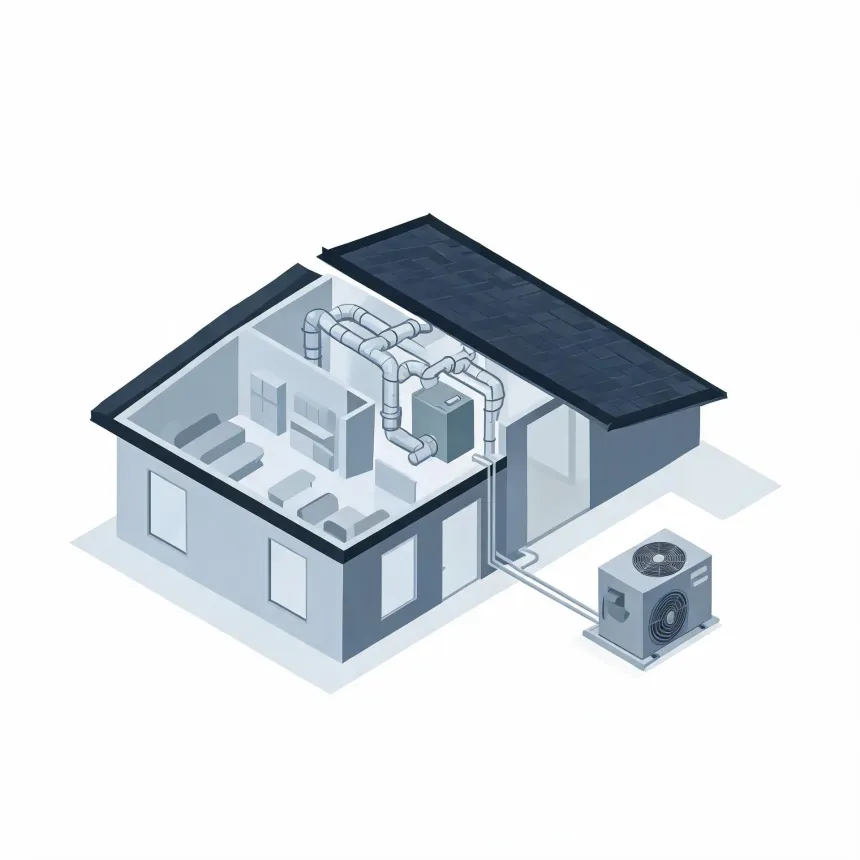
Isometric illustration of a cutaway single-story house showing interior ductwork and an air handler connected by lines to an outdoor condenser unit on a pad beside the building.
Your system heats November through March and cools April through October.

NOAA nClimDiv, 1991–2020 normals

The summer dew point around New Iberia averages 74°F, among the heaviest air in the country.

A heat pump fighting that air all summer wears down sooner, so when it starts acting up, the cause is worth finding before you just fix the symptom.

Switch the season here and a weak part finally gives out

Cooling runs April through October
Heat runs November through March
Power here costs 12.86 cents per kilowatt-hour

A technician checking a heat pump that's acting up should be looking for what wore the part down, not just swapping it. If the unit took a hit from wind or hail and nobody caught it at the time, that's often where the strain started. A bent fin or a dented cabinet changes how hard the system has to work from then on, and months later it shows up as a part failing. The same goes for a system that rode out a power cut. Find the real cause and the fix holds. Replace the part alone and something else gives out next.

Had the unit been through a storm. Get it checked before the next one.

If your outdoor unit has been through wind, hail or a power cut and is still running, get it looked at now, before the next one finds the weak spot. A technician can check the fins, the cabinet and the parts that take the strain, and catch what's already wearing thin.

Find a contractor
A man in a cap, dark shirt and brown work pants, seen from behind, climbs wooden porch steps toward a green front door while carrying a worn canvas bag.
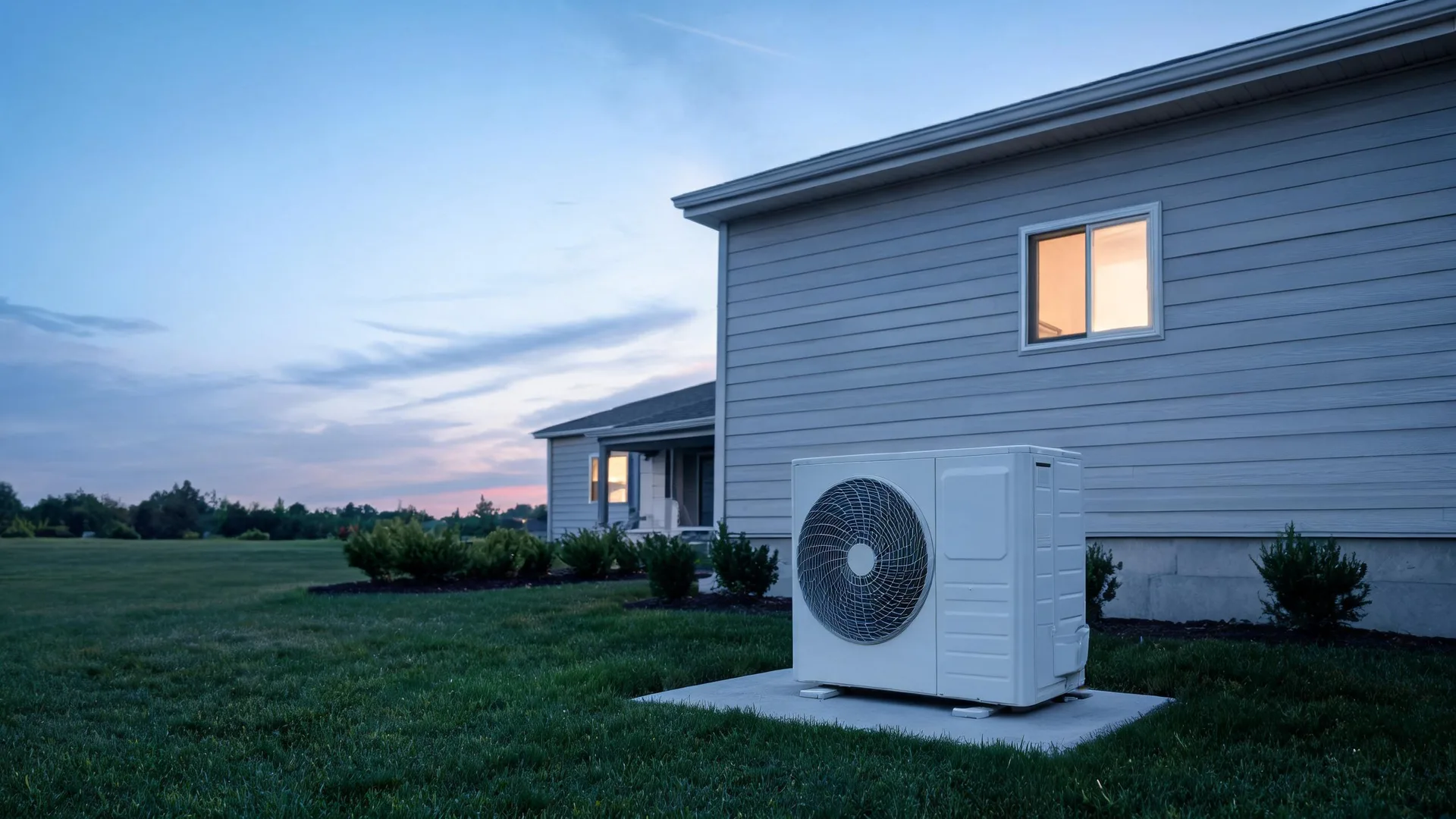
A gray heat pump outdoor unit mounted on a concrete pad next to the stone-accented exterior wall of a house.

What You Can Check Before You Call

A heat pump runs most of the year, not just in the hardest months of summer or winter, because it's the only system handling both. That means the contactor, the capacitor and the compressor are cycling on and off far more than a furnace or an AC unit that only works half the year ever would. Before calling anyone, check the obvious things first. Look at the outdoor unit and clear away leaves, grass clippings or anything blocking the fins, since restricted airflow makes the whole system work harder and can trip it off. Check the air filter inside and swap it if it's gray with dust. Look at the thermostat and make sure it's set to the right mode and the batteries aren't dead. If the outdoor unit is caked in ice outside of a normal defrost cycle, or if it's making a grinding or screeching noise, stop and call someone rather than letting it keep running. A system that's been cycling nonstop for years without any of this basic care is the one most likely to have a part finally give out.

A failing part rarely fails alone

A heat pump compressor leans on the capacitor and contactor to start and run smoothly. Once one of those weakens, the compressor draws harder to make up for it. Keep running the system in that state and the compressor takes the damage next, and a compressor failure costs far more than the part that started the trouble.
Ice and strain feed each other

A refrigerant leak or a weak run capacitor can show up first as frost building on the outdoor coil. Frost blocks airflow, so the system pulls harder to move heat across a coil that's already half covered. The harder it pulls, the faster the ice builds. Left alone, that cycle ends with a frozen coil or a compressor that's been straining for days before anyone notices.

A heat pump works year round, so its parts wear on a different schedule than a furnace or an AC unit that gets half the year off. The reversing valve is the part unique to this system, and when it sticks, the unit blows the wrong temperature air or gets stuck defrosting. Outdoors, the fan motor and the compressor take the brunt of the weather, since they sit exposed in the cabinet while the coil around them collects dirt and debris. A dirty coil can't shed heat properly, so the compressor runs longer and hotter than it should. Low refrigerant from a slow leak does the same thing from the inside, starving the compressor of the cooling it needs to survive its own operation. Most failures trace back to one of these parts straining quietly for a long time before it finally quits.

Repair makes sense when the cabinet, the coil and the compressor are sound and only one part has failed. A contactor, a capacitor or a blower motor can be replaced on its own, and the rest of the system keeps running the way it did before. Replacement starts to make more sense when the compressor itself is the one failing, since that part costs the most and the rest of the system was built around it. Age matters too, though not in a fixed way. A unit that has taken repeated damage, whether from weather or from strain nobody caught early, tends to need the next repair sooner than the last one. If a technician is replacing the same part twice in a short span, that is usually a sign something upstream is still causing it, and the better fix may be the whole outdoor unit rather than another part.