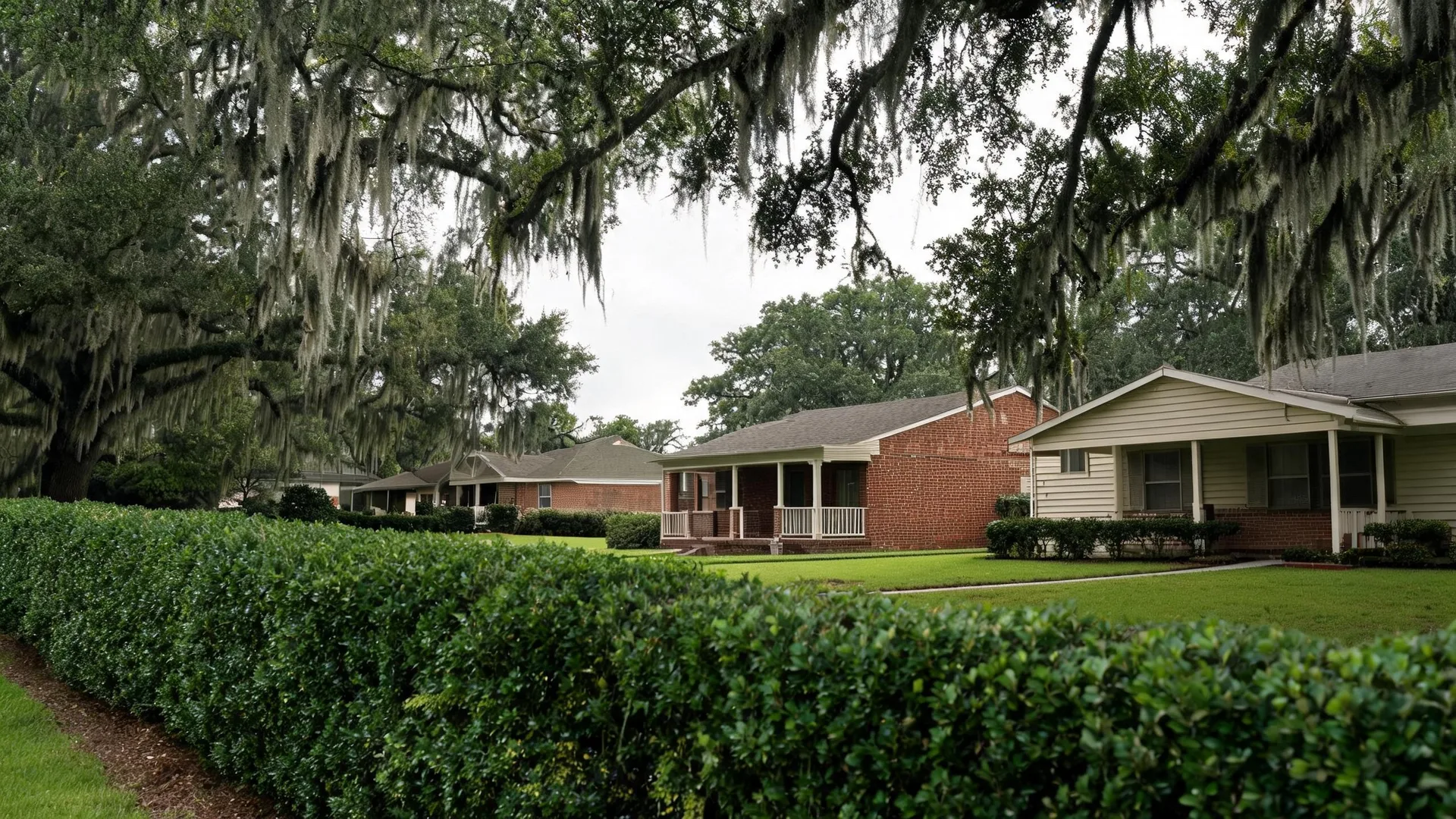





Single-story brick and siding houses with lawns behind a long trimmed hedge, framed by large oak branches draped with Spanish moss under an overcast sky.

Heat Pump Repair in Opelousas, LA

Tell us about the job

Takes about a minute. No obligation.

RepairHeat PumpSt. Landry Parish, LA
Step 1 of 2

What ZIP code is the job in?

A heat pump around Opelousas spends the summer pulling moisture as heavy as 73 degrees of dew point out of the air, and that's a heavier load than most of the country asks of this equipment. The compressor runs longer to do it. The coil stays wetter, longer, which gives it more chances to pick up dirt and grime between cleanings. Run a machine that hard for that many months and the parts under strain, the capacitor, the contactor, the compressor itself, wear down sooner than the manual assumes. That's usually what's behind a heat pump acting up here before you'd expect it to. Worth having it diagnosed properly rather than guessed at, so whatever gets fixed actually holds.

5 months
November through March, your system heats
7 months
April through October, it cools
43°F
the average winter night it heats against
91°F
the average summer afternoon it cools against
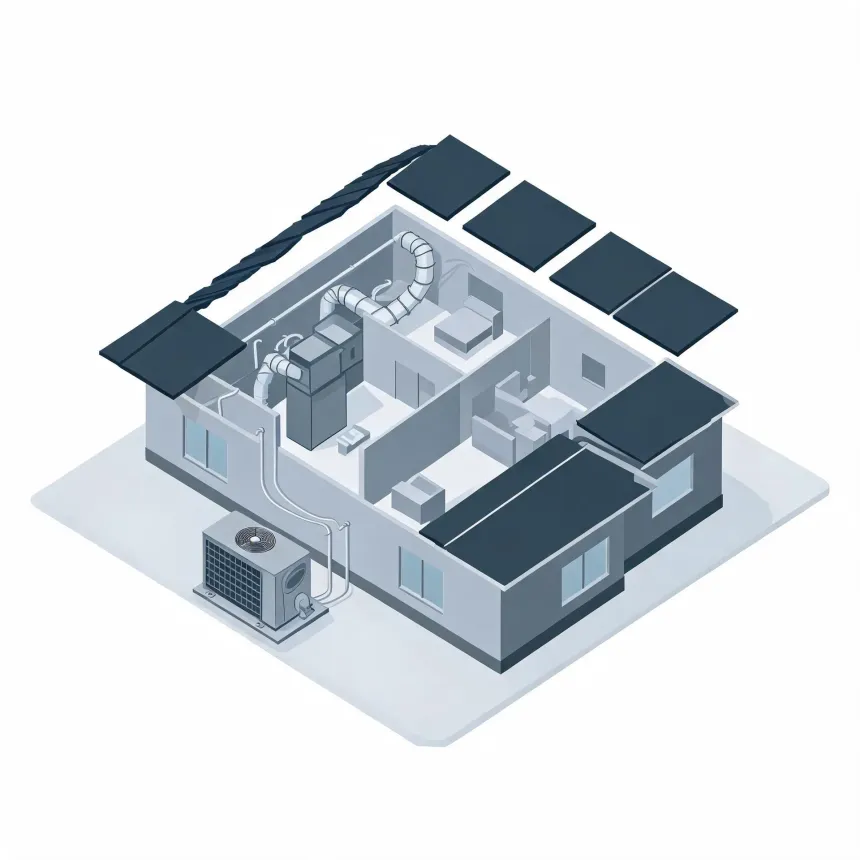
Isometric grayscale illustration of a cutaway single-story house showing interior rooms, ductwork and an air handler, an exterior condenser unit connected by lines, and dark solar panels on the roof.
Your system heats November through March and cools April through October.

NOAA nClimDiv, 1991–2020 normals

A heat pump that won't switch between heating and cooling usually has a stuck reversing valve.

Check the air coming from the vents before calling, since knowing whether it's warm or cool when it shouldn't be tells the tech where to start.

This county sees more storms than most, and the outdoor unit sits right in it

79 severe weather events from 2015 to 2024
49% of homes statewide lost power a day or more in 2024
52 damaging wind events from 2015 to 2024
Early Trouble, Right on ScheduleHeat runs November through March here, and November is when a weak part finally gives out.

If your heat pump has been acting up since the last bad storm, don't assume it's fine just because it still runs. Hail dents the fins on the outdoor coil and that blocks airflow the unit needs to work right. Wind-driven debris can bend the fan or jam it without stopping it outright. A tech can check the coil, the fan, and the refrigerant charge in one visit and tell you whether the storm did any harm that's going to cause a bigger failure later. That's worth doing even if the system seems to be keeping up for now.

Have It Looked At Before You Decide What It Needs

A heat pump acting up here is usually wear catching up with it faster than the manual expects. Get it diagnosed before you decide whether it's worth fixing, so whatever gets repaired actually holds.

Find a contractor
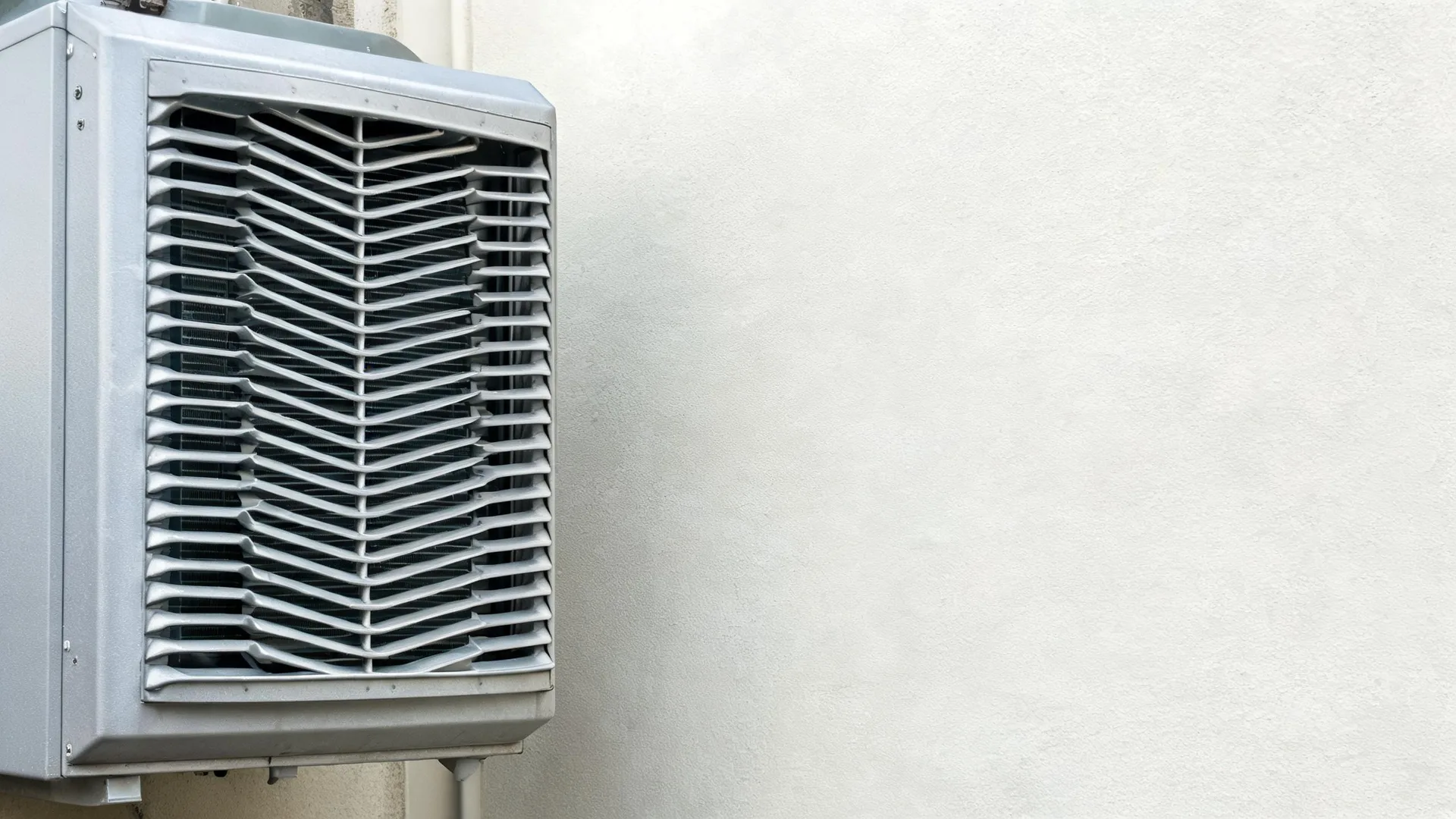
A residential heat pump outdoor unit mounted on a concrete pad next to a house with gray vinyl siding.

Why These Parts Fail

A heat pump fails the same handful of ways no matter whose yard it sits in. The capacitor gives out, and the compressor or fan motor won't start or won't stay running. The contactor pits from arcing every time it cycles, until it sticks or stops making contact. The reversing valve, the part that switches the system between heat and cooling, can get stuck from a bad coil or years of wear and leave you heating when you want cooling or the other way around. Refrigerant leaks show up at fittings and joints over time, and a system low on charge has to run longer to do the same job, which puts more hours on everything else. None of these come from one bad day. They come from the ordinary cycling on and off, start after start, year after year, until the part that was always going to wear out does.

What You'll Notice First

A heat pump in trouble rarely just quits. It runs longer than it used to and the house still doesn't feel right, or air comes out lukewarm instead of hot or cold. You might hear it clicking as it tries to start, or notice ice building up on the outdoor unit when it shouldn't be there. A hissing sound near the lines can mean refrigerant escaping. Any of these is the system telling you a part is struggling before it fails outright.
Why Waiting Costs More

A heat pump straining to do its job doesn't stay at that one problem. A failing capacitor makes the compressor pull harder to start, which shortens the compressor's life. A low refrigerant charge makes the system run longer to reach the same temperature, putting more hours on the fan motor and contactor. The part acting up now is rarely the only one under stress. Getting it looked at while it's one repair keeps it from becoming several.

A heat pump that's struggling doesn't fix itself by staying on. Low refrigerant means the compressor runs longer to move the same amount of heat, and heat builds up inside it that the system isn't designed to handle for that long. A weak capacitor forces the motor to draw more current every time it tries to start, and each hard start wears the windings a little more. Ice on the outdoor coil blocks airflow, so the system works harder to pull heat from air it can barely reach, which only makes the ice thicker. None of these get better with more run time. The machine doesn't know it's hurting itself. It just keeps trying to hit the temperature on the thermostat, however long that takes.

At some point every heat pump owner asks whether a repair is worth it or whether the money should go toward a new system instead. Age is part of it, but not the only part. A unit that's been maintained, with clean coils and a charge that's been kept correct, holds up differently than one that's been run hard without much attention. The pattern of repairs matters more than any single one. A capacitor swapped out on its own is routine. A compressor failure on a unit that's already had the fan motor and the contactor replaced is a different conversation, because the parts around the compressor have been under strain for a while and the compressor is usually the most expensive part in the system. If the repair in front of you is small and the system has been otherwise sound, fixing it is usually the right call. If you're looking at a major component on a system that's needed several repairs already, that's when it's worth asking a tech to lay out what else is likely to go, and when, before you spend on the first thing.