





Low-angle view along a red brick wall with trimmed shrubs and a mulch bed beside a mown lawn, with a single-story house with a garage door and tall pine trees under an overcast sky in the background.

Heat Pump Repair in Slidell, LA

Tell us about the job

Takes about a minute. No obligation.

RepairHeat PumpSt. Tammany Parish, LA
Step 1 of 2

What ZIP code is the job in?

A tech starts outside at the condenser, checking the refrigerant charge and the reversing valve, since that valve is what lets a heat pump switch between heating and cooling and it's a common failure point. Next comes the compressor and the fan motor, listening for noise and checking that the fan actually spins freely. Inside, they'll pull the filter and look at the air handler, checking the coil for ice or dirt and the blower motor for wear. They'll also check the defrost control board, since a heat pump that won't come out of defrost mode will blow cold air even though nothing else is wrong. Thermostat wiring gets checked too, because a miscommunication there can look exactly like a failed part when it isn't. By the end, the tech should be able to point to the actual part causing the problem rather than guessing.

5 months
November through March, your system heats
7 months
April through October, it cools
43°F
the average winter night it heats against
91°F
the average summer afternoon it cools against
Isometric cutaway illustration of a single-story house showing interior rooms with furniture, an attic duct system connected to an indoor air handler, and an outdoor condenser unit linked by lines along the exterior wall.
Your system heats November through March and cools April through October.

NOAA nClimDiv, 1991–2020 normals

Half the houses in St. Tammany Parish were built in 1995 or later.

A heat pump that came with a newer house still has years in it, and that's usually a reason to repair it.

November is when a weak heat pump finally gives out

Cooling runs April through October
Heat runs November through March
Power costs 11.73 cents a kWh statewide
St. Tammany sees more storms than most places88 damaging wind events hit St. Tammany Parish between 2015 and 2024

If the heat pump came with the house and the house is newer, get the actual part named before anyone talks about replacement. A reversing valve, a defrost board, a bad capacitor, these are repairs on a system that still has years ahead of it. Replacement makes sense when a unit is old and failing in more than one place at once, not when one part quit on a system that's otherwise sound. Ask the tech what failed and let that answer, along with the age of your system, decide the rest.

Repair it

If your system came with a newer house, it likely has plenty of life left. Repair is usually the right call.

Find a contractor
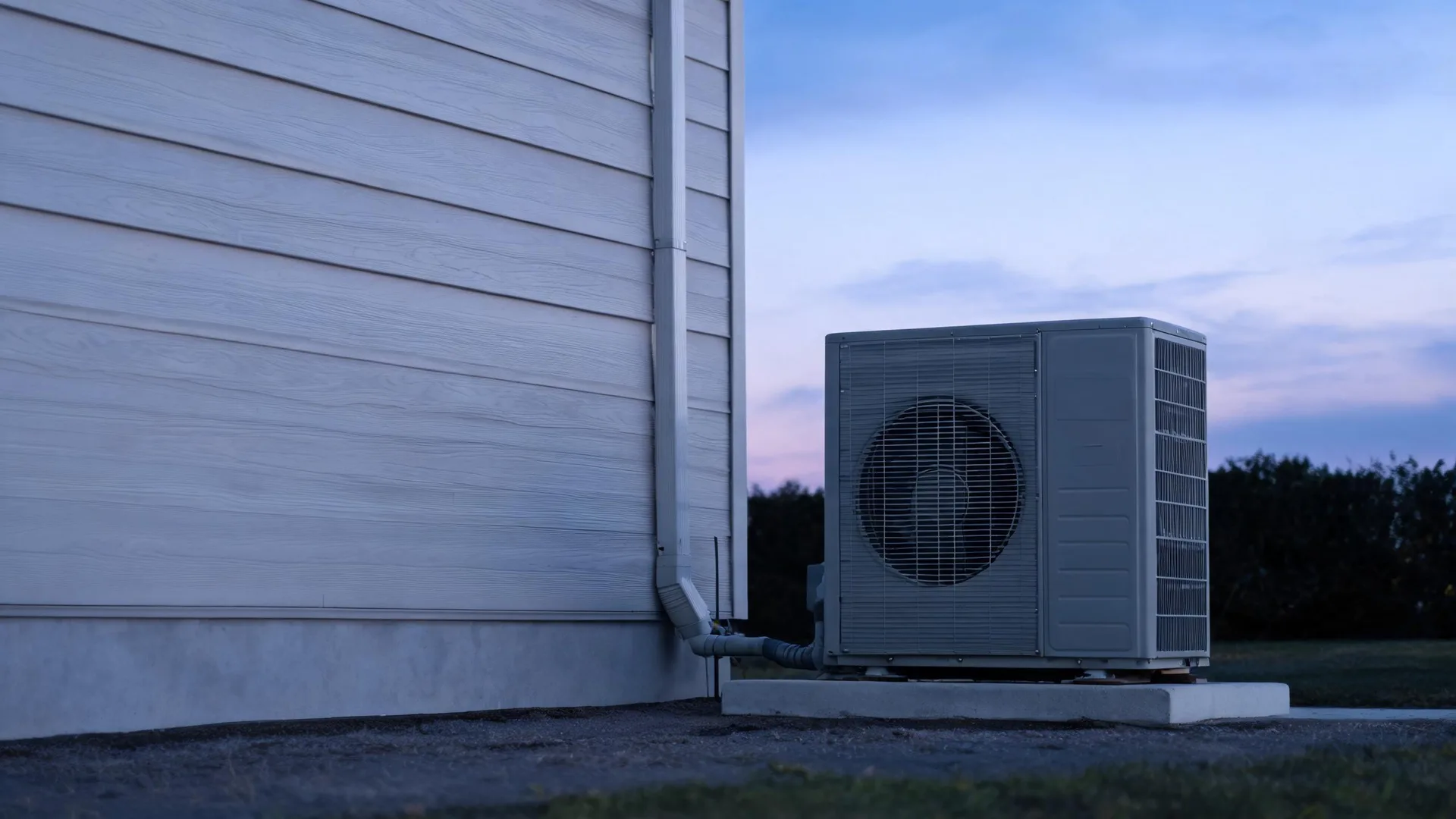
A residential heat pump outdoor unit mounted on a concrete pad next to a house with gray vinyl siding.

Running it while something's wrong rarely helps

A heat pump that's struggling doesn't rest when you leave it running. It works harder to move the same amount of heat, and that extra strain lands on the parts already showing wear. A reversing valve that's starting to stick gets worked through more cycles. A compressor running low on charge runs hotter than it should, every time it kicks on. Ice on the outdoor coil, if the defrost cycle isn't keeping up, just builds thicker. None of that heals itself by continuing to run. The honest move when something's off is to shut it down and get the part identified, not to keep asking a weak system to push through.

Blowing air that isn't warm or isn't cold enough

A heat pump stuck in the wrong mode, or one that's lost refrigerant charge, will run constantly and still miss the temperature on the thermostat. The air coming out of the vents feels close to room temperature instead of warm or cool. That's usually the reversing valve not switching fully, or a charge that's dropped below what the system needs to move heat properly.
Short cycling or a system that won't stop

A heat pump should run a full cycle and shut off. One that kicks on and off every few minutes is short cycling, often from a failing capacitor or a control board misreading the system's temperature. One that runs nonstop without ever satisfying the thermostat is usually losing the fight against a bad part, not just working through a tough day.

A few things are worth checking before anyone comes out. Look at the outdoor unit and clear away any leaves, mulch or ice built up around it, since a blocked condenser can mimic a much bigger problem. Check that the thermostat is set to heat or cool as intended and that the batteries aren't dead, because a thermostat stuck on the wrong mode or losing power looks exactly like a failed part. Pull the air filter and hold it up to light. If you can't see through it, replace it, since a clogged filter starves the system of airflow and can freeze the coil. Walk through the house and check that no vents are closed or blocked by furniture. None of this fixes a bad reversing valve or a failing compressor, but it rules out the simple stuff first.

A part can fail on its own, or it can fail because something else made it work harder than it should have. Those are different situations. A capacitor that just wears out after years of starting the compressor is an isolated failure. A compressor that's overheating because the system has been low on charge for months is a symptom of something upstream not getting fixed. Before deciding a repair is worth it, it helps to know which kind of failure this is. A tech who checks charge, checks the reversing valve, and checks the defrost board before replacing the failed part is looking for the cause, not just the symptom. Fixing the part that broke without finding why it broke sometimes means fixing the same thing again next year.