






A row of single-story houses, one of red brick and others with light siding and a covered porch, behind a mown lawn and a trimmed hedge, under large moss-draped tree branches and an overcast sky.

Heat Pump Repair in St. Gabriel, LA

Tell us about the job

Takes about a minute. No obligation.

RepairHeat PumpIberville Parish, LA
Step 1 of 2

What ZIP code is the job in?

A heat pump here spends summer pulling moisture out of air that holds a lot of it. The average dew point across June, July and August in Iberville Parish is 73 degrees, higher than most of the country sees. That's heavy air, and the system has to work through it for months at a stretch to keep a house comfortable. All that runtime adds up on the parts that do the work, the compressor, the fan motor, the coil. A unit under that kind of load wears sooner than the same unit somewhere milder, and small problems show up earlier because there's less slack in the system to begin with. If yours is acting up, there's usually a real reason tied to how hard it's been running.

5 months
November through March, your system heats
7 months
April through October, it cools
44°F
the average winter night it heats against
91°F
the average summer afternoon it cools against
Isometric illustration of a cutaway single-family house showing interior ductwork and an air handler, with an outdoor condenser unit connected by lines along the exterior wall.
Your system heats November through March and cools April through October.

NOAA nClimDiv, 1991–2020 normals

Iberville Parish logged 39 severe weather events between 2015 and 2024, including 14 with damaging wind and 12 with hail.

A heat pump's outdoor unit sits outside through all of it, so a system that looks fine can still have a bent coil fin or a cracked fan blade from the last storm.

Two switchovers a year, and the first cold snap or first heat wave finds whatever was already worn

Cooling runs April through October
Heat runs November through March
Climate zone 2A

If a storm came through recently, walk out and look at the outdoor unit before you assume the noise or the weak airflow is just wear. Bent fins on the coil cut down airflow without stopping the unit, so it keeps running, just worse. A fan blade that took a hit from flying debris can throw the fan out of balance, and that shows up as a rattle or a hum that wasn't there before. None of this stops the system from turning on, which is why it gets missed. Have it looked at even if it still cools or heats the house fine, since a cracked blade or a bent coil fin tends to get worse with time, not better.

Get it diagnosed, not just patched

Whatever's going on with your heat pump right now is probably tied to how much work it's done this summer, not bad luck. A contractor can tell you whether it's a worn part, a storm-damaged coil fin, or something else, and fix the actual problem instead of just the symptom.

Find a contractor
A man in a cap, dark jacket and tan work pants, seen from behind, carries a canvas tool bag up porch steps toward a green front door beside a potted shrub.
A white mini-split heat pump outdoor unit mounted on a concrete pad beside a gray-sided house, surrounded by gravel and green shrubs.

What a heat pump sounds like and acts like right before it needs a repair

A heat pump that needs attention usually tells you before it quits outright. Short cycling is one of the first signs, where the unit kicks on, runs for a few minutes, and shuts off again before it's done the job. That puts extra wear on the compressor every time it starts. Ice on the outdoor coil in weather that isn't cold enough to explain it points to a refrigerant problem or a failing defrost control. Warm air coming out of the vents when it should be cooling, or cool air when it should be heating, often means the reversing valve isn't switching like it should. Listen for a grinding or squealing from the outdoor unit, that's usually the fan motor bearing going. A hissing sound can mean refrigerant escaping from a line. If the system runs constantly and never seems to catch up, something is making it work far harder than it should to hold the temperature you set. Any of these is worth a call before it turns into a bigger repair.

The compressor is almost never the first thing to fail

Most compressor failures trace back to something else going wrong first, a refrigerant leak that let it run low on charge, or a failing capacitor that made it strain to start. The compressor just takes the damage. By the time it's the problem, something smaller and cheaper already failed and went unfixed.
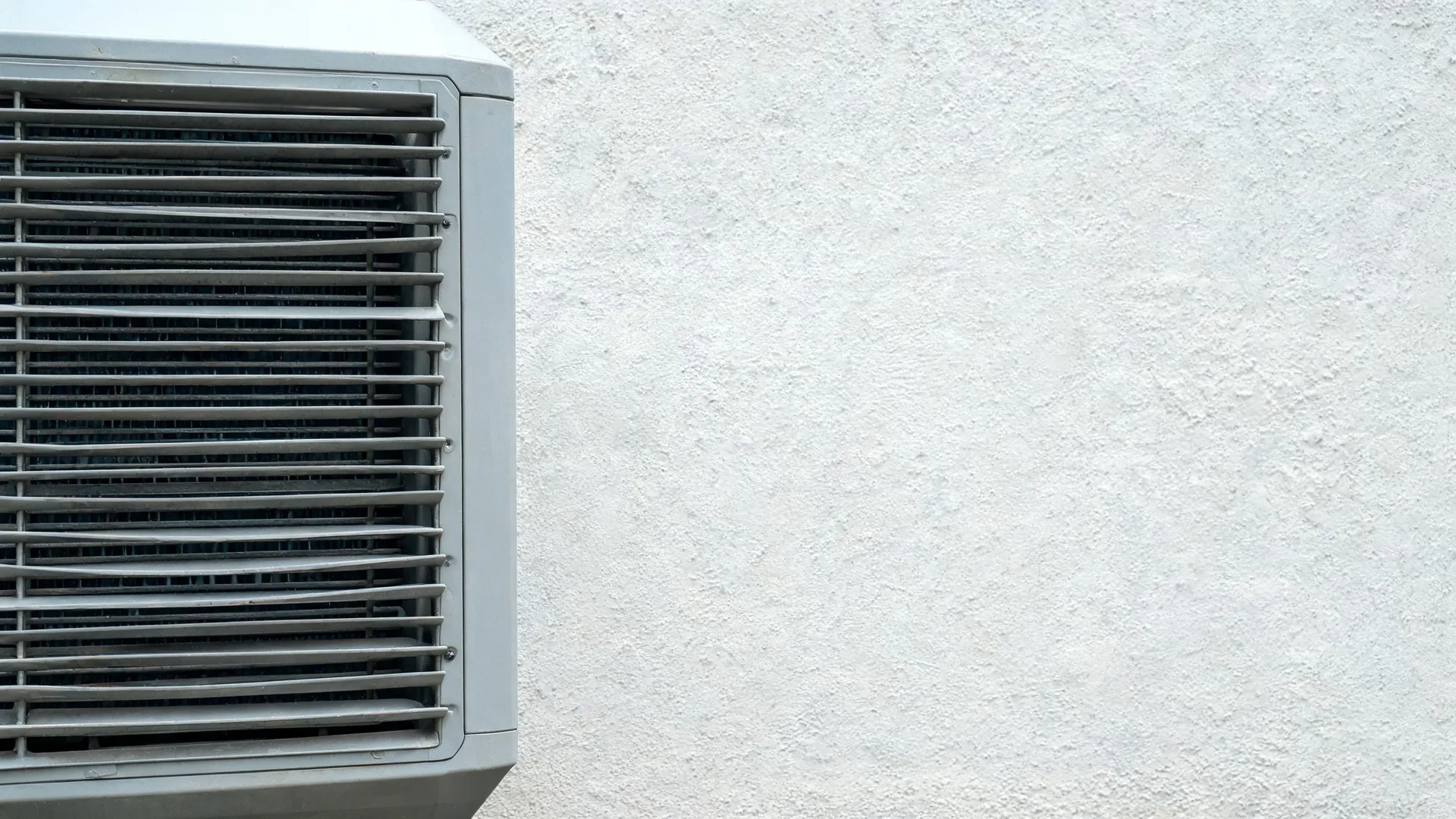
The parts under the most stress are the easiest to check

A contactor pitted from constant cycling, a capacitor that's lost its charge, a dirty coil choking off airflow, these are things a tech can look at directly instead of guessing. Catching one of these before it takes out the compressor or the fan motor is the difference between a repair and a replacement.

A few things are worth checking before you call anyone out. Go to the thermostat first and make sure it's set to the mode you think it's in, and that the batteries aren't low, since a thermostat acting strange can look exactly like a unit that won't respond. Check the air filter next. A filter clogged with dust chokes off airflow across the indoor coil, and that alone can cause weak airflow, ice buildup, or a system that runs constantly without catching up. Walk outside and look at the outdoor unit. Leaves, grass clippings, or anything piled against it blocks the airflow it needs to work, and clearing that space is something anyone can do safely. Check the breaker panel too. A tripped breaker will shut the whole system down and looks like a dead unit, but it's a five-minute fix if that's all it is. If you've checked these and something still seems off, that's the point to call someone rather than keep guessing.

A diagnostic visit starts with questions, not tools. A tech wants to know what the system is doing, when it started, and whether it's constant or comes and goes. From there it's gauges on the refrigerant lines to check the charge, a meter on the capacitor and contactor to see if they're holding up, and a look at the amp draw on the compressor and fan motor while they're running. The outdoor coil gets checked for airflow and for physical damage, since a bent fin or a dirty coil changes the readings everywhere else. Indoors, the tech checks the air handler, the filter, and the temperature split between the air going in and the air coming out. That split tells you a lot. A system low on refrigerant or choked on airflow won't hit the numbers it should, even if everything looks fine from the outside. The point of all this is to find which part is actually failing instead of swapping parts and hoping.