






Low-angle view across a lawn and pine-needle mulch toward a single-story brick house with a dark hipped roof and covered porch, framed by pines and a moss-draped oak branch.

Heat Pump Repair in Ville Platte, LA

Tell us about the job

Takes about a minute. No obligation.

RepairHeat PumpEvangeline Parish, LA
Step 1 of 2

What ZIP code is the job in?

Evangeline Parish saw 37 severe weather events between 2015 and 2024. Most of that was damaging wind, 18 times in that span, with 11 tornadoes and a couple of hail events mixed in. A heat pump's outdoor unit sits right in the path of all of it, with coil fins and a fan exposed to whatever blows through. Hail dents fins and slows the coil down. Debris can bend the fan or jam it without stopping it outright. Louisiana also had the kind of year in 2024 where about half of households lost power for a full day or more, and a heat pump that's already struggling costs you more when the power comes back on. If your unit has been through a storm, have it looked at even if it's still running.

5 months
November through March, your system heats
7 months
April through October, it cools
42°F
the average winter night it heats against
92°F
the average summer afternoon it cools against
Isometric line illustration of a cutaway single-story house showing interior rooms with ducted air distribution, an indoor air handler, furniture, and an outdoor condenser unit connected by lines outside the wall.
Your system heats November through March and cools April through October.

NOAA nClimDiv, 1991–2020 normals

The dew point here averages 73°F through June, July and August, among the heaviest air in the country.

Your heat pump pulls that moisture out of the air all summer long, and that load wears on it faster than it would almost anywhere else.

Heat pump trouble shows up fast once a season starts

Cooling runs April through October
Heat runs November through March
Power here costs 13.25 cents per kilowatt-hour

If your heat pump has been running rough, that steady moisture load is the likely reason, not a one-time glitch. A system that's been pulling hard all summer is more likely to be low on charge, or running a coil that can't shed heat the way it used to. Guessing at a fix on a machine that's already worn down tends not to hold. Have a licensed contractor check the charge and the coil before anything gets replaced. That's what tells you whether this is a quick repair or the start of bigger trouble.

Had a storm come through? Get the outdoor unit checked

After wind, hail or a tornado comes through, get the outdoor unit checked before you assume it's fine. A bent fan or dented fins won't always stop it from running, but they'll keep it from working right, and that catches up with you.

Find a contractor
A man in a dark shirt and tan work pants, seen from behind, carries a canvas tool bag up wooden porch steps toward a green front door of a shingled house with a potted shrub beside it.
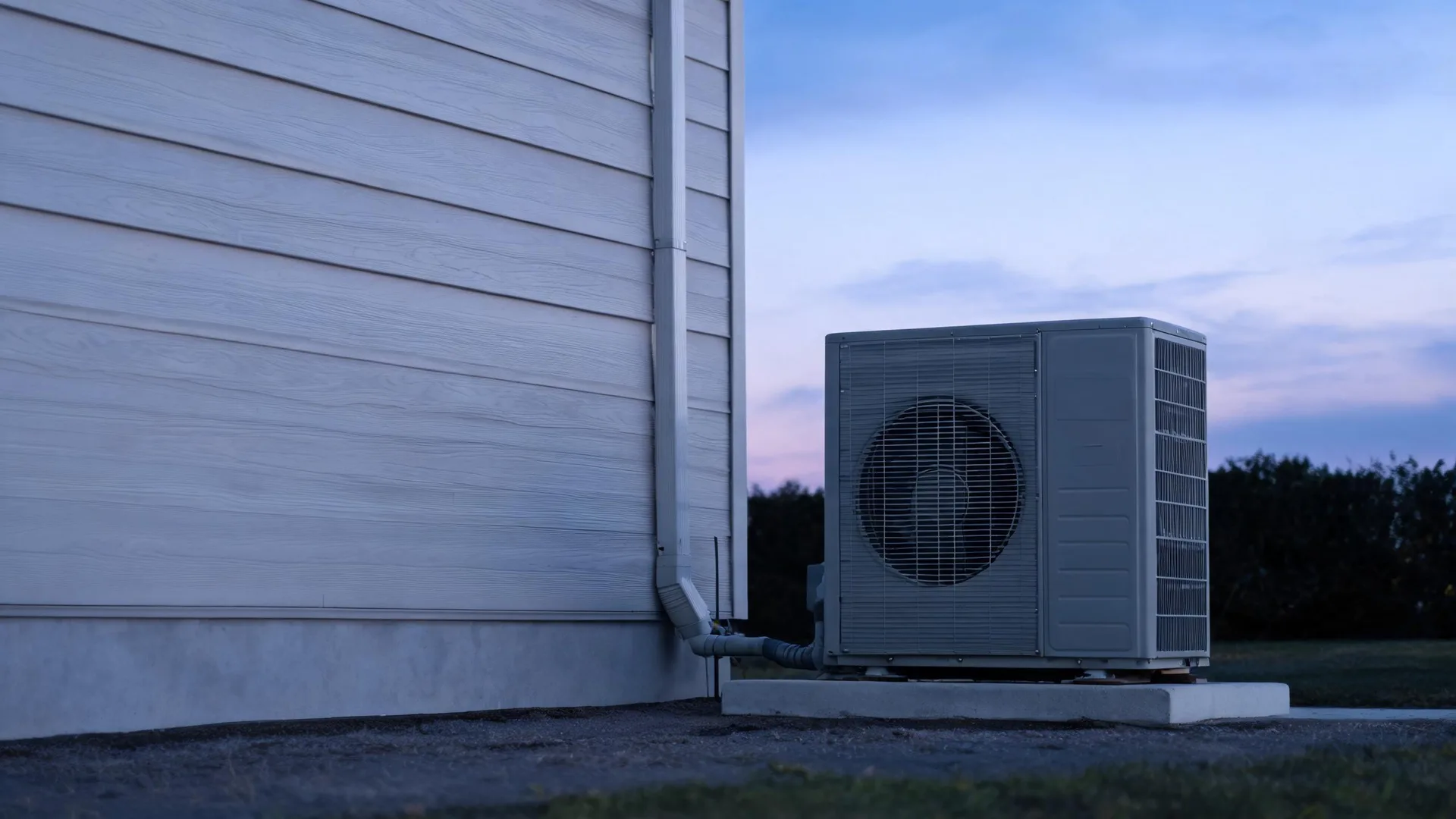
A residential heat pump outdoor unit mounted on a concrete pad next to a house with gray vinyl siding.

What you can check yourself before the service call

Before you call anyone, take a look at the thermostat first. Make sure it's set to heat or cool as needed and the batteries aren't dead. Check your breaker panel for a tripped switch. A heat pump that won't start at all is sometimes just that simple. Next, go outside and look at the outdoor unit. Clear away leaves, grass clippings or anything else blocking the fan or stacked against the coil. Airflow in and out of that unit matters, and a few inches of clearance on all sides makes a real difference. Look at the fan blade itself. If it's bent or won't spin freely by hand with the power off, that's not something to force. Inside, check your air filter. A filter clogged with dust chokes the airflow the whole system depends on, and a dirty filter can mimic a lot of other problems, from weak airflow at the vents to ice forming on the outdoor coil. If you do see ice or frost on that outdoor unit, don't chip at it. Switch the system off and let it thaw on its own, then call if it builds back up once you turn it on again. One more thing worth checking: the condensate drain line, usually a PVC pipe near the indoor unit. If it's clogged, you may see a float switch that's shut the whole system down as a safety measure. None of this requires opening the refrigerant lines or touching electrical components. That part is a licensed contractor's job, and it's not worth the risk of doing it yourself.

Low charge gets worse when the compressor keeps working

A heat pump low on refrigerant still tries to hit the temperature you set, so the compressor keeps cycling and running longer each time. That extra strain builds heat inside the compressor itself, and a compressor that overheats enough times can fail for good. What starts as a slow leak you could have caught early turns into a full compressor replacement.
A frozen coil needs a thaw, not a push

Once ice builds up on the outdoor coil, the system can't pull heat through it the way it needs to, so it works harder and still falls behind. Running it anyway spreads the ice further across the coil fins. Shutting it off and letting the coil thaw fully, then finding out why it froze in the first place, protects the compressor from the strain a running system under ice puts on it.

A heat pump that's struggling gives you warning signs before it quits outright. Air coming from the vents that's lukewarm instead of properly warm or cool often means the system is running but not doing its job well. Short cycling, where it kicks on and off every few minutes instead of running a full cycle, puts wear on the compressor and the contactor both. Listen for new noises too. A hard clunk at startup can mean a failing capacitor, and a hissing sound near the lines can mean refrigerant escaping somewhere it shouldn't. If one room never gets comfortable while the rest of the house is fine, that's worth mentioning when you call, since it can point to a duct or airflow problem rather than the unit itself. None of these mean the whole system is done for, but ignoring them tends to turn a small repair into a bigger one.

A repair is worth doing when the problem is one part acting up on a system that's otherwise kept pace, a capacitor, a contactor, a fan motor. Those fail on their own timeline and swapping one doesn't tell you much about the rest of the unit. Replacement starts to make more sense once the compressor is the thing in question, since that's the part that's expensive to replace on its own and often costs close to a new system once labor's figured in. Age matters too, not as a number but as a pattern: a unit that's needed a few different repairs for a few different reasons in a short stretch is telling you it's wearing down generally, not failing at one point. A contractor can tell you which situation you're in by checking the compressor and the coil before anything else, and that's worth knowing before you spend money on a part that won't be the last one you need.