



Filter clean, coil never touched
Airflow looks fine at first glance, but the coil behind the filter is still collecting the dust the filter never catches. Your unit runs longer than it should to cool the same room.
One form instead of hunting for a pro who does mini split tune-ups.
Start one formClean the filters on your mini split once a month, April through October, when it runs almost every day in Baton Rouge humidity. The coil behind that filter needs a real cleaning from a contractor once a year, and twice a year is better if the unit runs most months and the outdoor coil sits near grass clippings or a dryer vent. Humid air feeds mold and mildew inside the indoor head faster than it builds up in a dry climate, and a dirty filter makes the unit work harder to pull moisture out of the air, which shows up as a higher power bill before it shows up as a repair. A coil caked with dust and pollen loses its ability to transfer heat, so the system runs longer to cool the same room. Keep the filters clean yourself between visits, and have the coils, drain line and refrigerant checked once a year by someone who services these units all season long.
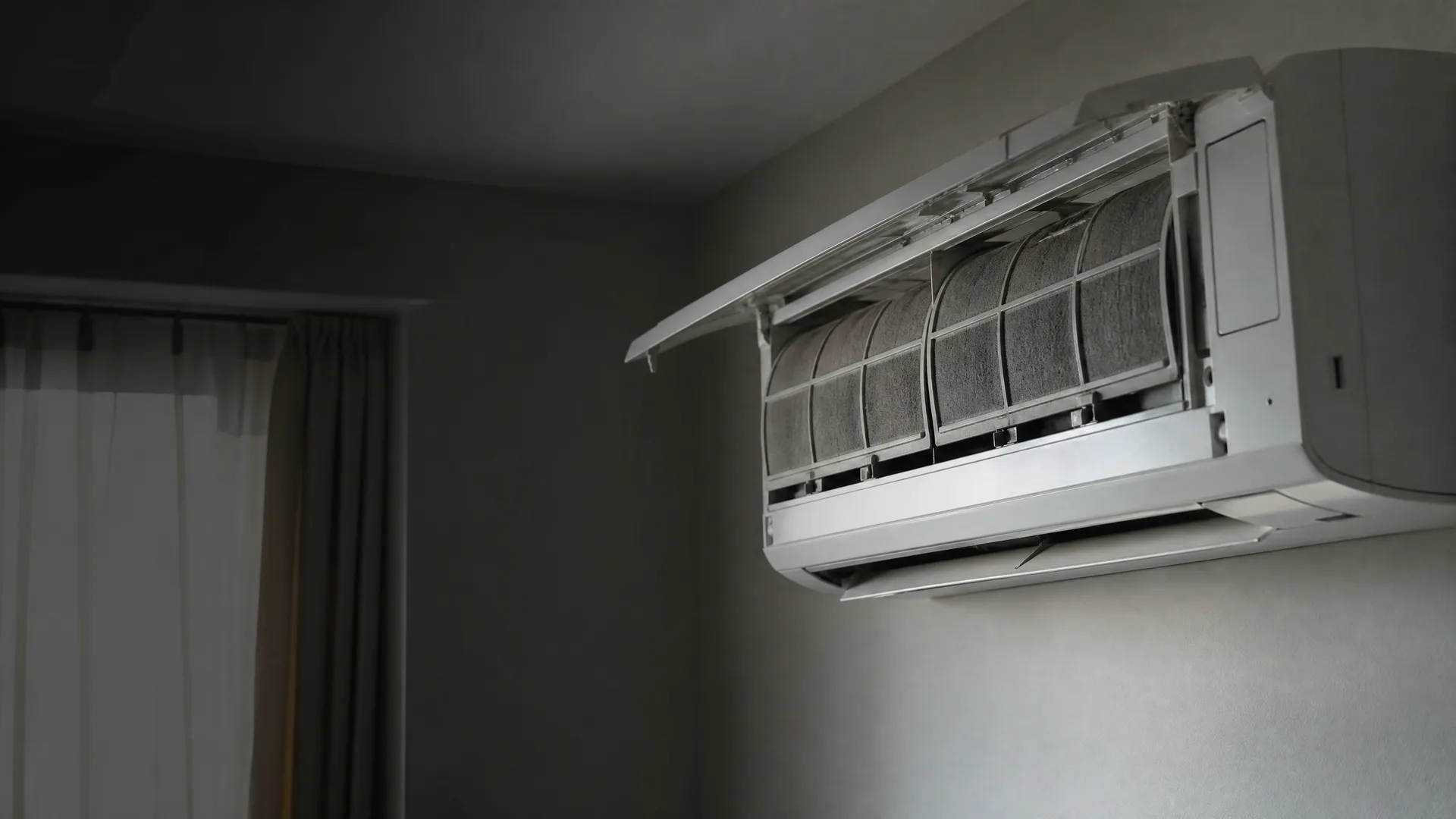
You pop the cover off the indoor unit in the bedroom before anyone's awake, because it kept running without pulling the room down past seventy-four last night. The filter screen underneath is gray, matted with the kind of dust that's been sitting since last fall. It's a warm morning already, that early-spring stretch where Baton Rouge humidity starts creeping back in before summer really lands. You hold the screen up to the window light and can barely see through the mesh. The unit's been working harder than it should to push air through that. You set it in the sink to rinse, thinking you should've checked it back in March instead of waiting for the room to feel off.
A unit that used to cycle off now runs almost straight through the afternoon. The air coming out feels weaker on your hand, even right up close to the vent. You might notice a musty smell when it first kicks on, or water pooling near the indoor unit that wasn't there before. Sometimes the outdoor unit hums louder than usual, straining to move heat out into Baton Rouge air that's already thick with it. None of this means the unit is broken. It usually means the filter or coil hasn't been cleaned in a while, and the system is working through dirt instead of just moving air. Left long enough, that strain is what shortens how many summers the unit has in it.
A mini split pulls room air across the filter before it ever reaches the coil. In Baton Rouge, that air is carrying more moisture than it would almost anywhere else, and moisture holds dust and pollen against the mesh instead of letting it pass through. Run the system daily from April through October and that screen builds up in weeks, not months. A clogged filter forces the unit to pull harder for the same airflow, which is the extra strain you feel as higher bills.
Behind the filter sits the coil, and no filter catches everything. Fine dust and a thin film of moisture work past it over a season, and that film is exactly what mold needs to grow on. A contractor cleaning that coil once a year is clearing what months of humid runtime left behind, not fixing a defect. Skip it and the coil loses its grip on heat, so the compressor runs longer to cool the same room, which is where that musty smell starts.
Cooling runs April through October
Seven months of cooling means the filter and coil are working almost every day, not just on the hot stretch in August.
Heat runs November through March
Five months of heat still puts the same indoor unit to work pulling air across that filter all winter long.
Power here costs 12.50 cents per kilowatt-hour
At 12.50 cents a kilowatt-hour, a dirty coil making the unit run longer to cool the same room shows up on the bill.
NOAA nClimDiv 1991-2020 · EIA-861 2025
Room air gets pulled across the filter before it reaches the coil.
Dust and pollen build up on the filter mesh week by week.
A dirty filter forces the blower to work harder to push air through.
Airflow drops and the coil behind the filter starts collecting grime too.




The pro who gets in touch is licensed in Louisiana and works in East Baton Rouge Parish.
You only hire the pro if you want to.
Wiping down the filter and checking the drain line is something you can do on a Saturday. The mesh comes out, you rinse it, you let it dry, you put it back. That part doesn't need a contractor and doing it monthly through the summer keeps the blower from straining against a clogged screen. What you can't do is get behind the coil, check the refrigerant charge, or clear a drain line that's already slow. That takes someone who works on these units for a living and has the tools to pull the housing apart without cracking a fin or pinching a line.
A mini split that goes a year without a coil cleaning in Baton Rouge usually still runs. It just runs longer to hit the same temperature, and the coil builds up a layer that blocks airflow the same way a dirty filter does, except you can't reach it with a rag. Stay on an annual or twice-a-year schedule and a local contractor sees the unit before small problems turn into a service call. Someone who works on this equipment all summer knows which part on your model tends to go first, instead of you explaining the symptoms over again to three different companies while the problem gets worse.


Airflow looks fine at first glance, but the coil behind the filter is still collecting the dust the filter never catches. Your unit runs longer than it should to cool the same room.
Someone who works on these units every summer opens the cabinet, checks the coil and the drain line, and catches what a filter wipe-down can't reach before it costs you airflow.



Wipe the filter yourself once a month from April through October. Get the coil cleaned by a contractor once a year, twice if the unit runs most months the way it does around Baton Rouge. That's the whole answer.
Finding someone to do that coil cleaning is its own chore. You end up searching, calling a few places, explaining the same thing about your unit each time, then sitting with quotes trying to tell them apart. A contractor who works on mini splits in this area all season knows what that coil looks like after a Baton Rouge summer before he even takes the cover off. Match with him once and the rest of that work is off your plate.


Skip the search