Dirty coil, lower output
A filter that's overdue lets dust reach the coil behind it. Once that's coated, the mini split pulls less moisture out of the air and runs longer to do it.
Clean the filters on a mini split every two to four weeks through a Louisiana summer. The system runs almost nonstop from April into October pulling moisture out of the air, and that humidity loads the filters with mold and dust far faster than a dry climate ever would. A clogged filter cuts airflow across the indoor coil, so the unit works harder and cools less, and a damp, dirty filter is where mold starts growing and gets blown into the room. Beyond the filters, the coil, the condensate drain, and the outdoor unit need a full inspection and cleaning once a year, ideally before the heat sets in. If your mini split also carries the heating load through winter, that same yearly service checks it before the cold snaps hit. Skipping it means the drain can clog and back up into the house, and a dirty coil loses efficiency that shows up on the power bill month after month.




A filter that's overdue lets dust reach the coil behind it. Once that's coated, the mini split pulls less moisture out of the air and runs longer to do it.
No calling around, no explaining the humidity problem twice. Send the form and a contractor who services mini splits in Louisiana takes it from there.


Rinsing filters keeps the air moving, but it doesn't touch what's behind them. The evaporator coil sits sealed inside the indoor unit, and moisture collects on it all summer long, every summer, since that's how the system pulls humidity out of the air in the first place. Dust from the air that gets past the filter lands on that wet coil and stays there, and wet dust is what mold needs. Behind the coil is the blower wheel, and it collects the same fine layer, then throws it into every room the fan reaches. Neither one gets cleaner on its own, and neither one is something you can reach without opening the unit.
The condensate the coil pulls out of the air has to go somewhere, and it leaves through a drain line. Algae grows in that line over a Louisiana summer the same way it grows in anything that stays wet and warm, and once it builds up enough, the line backs up. Water that should've drained out starts dripping from the indoor unit instead.
Outside, the condenser coil spends the summer collecting pollen and grass clippings, and that buildup makes the outdoor unit work harder to move the same heat. A contractor handles all of this in one visit, usually once a year: flushing the drain line, washing both coils, cleaning the blower wheel, rinsing the outdoor coil from the inside out so debris doesn't get pushed deeper into the fins.


Fill out one form instead of calling around for a mini split tune-up.
It costs nothing to send, and you don't have to hire anyone.
A filter you keep pushing off doesn't stay a filter problem. The mold and dust it's holding back start reaching the coil, the drain line, and the air moving through your house.
By the time you notice the smell or the water on the floor, a contractor is opening the unit anyway. Booking the cleaning now costs you a form, not a weekend of calling around.
At 12.52 cents a kilowatt-hour, a mini split that's pulling moisture through a clogged filter is running longer to move less air, and you pay for every extra hour. Keeping the filters clean keeps that number from creeping up on you.
EIA-861 2025 statewide residential average
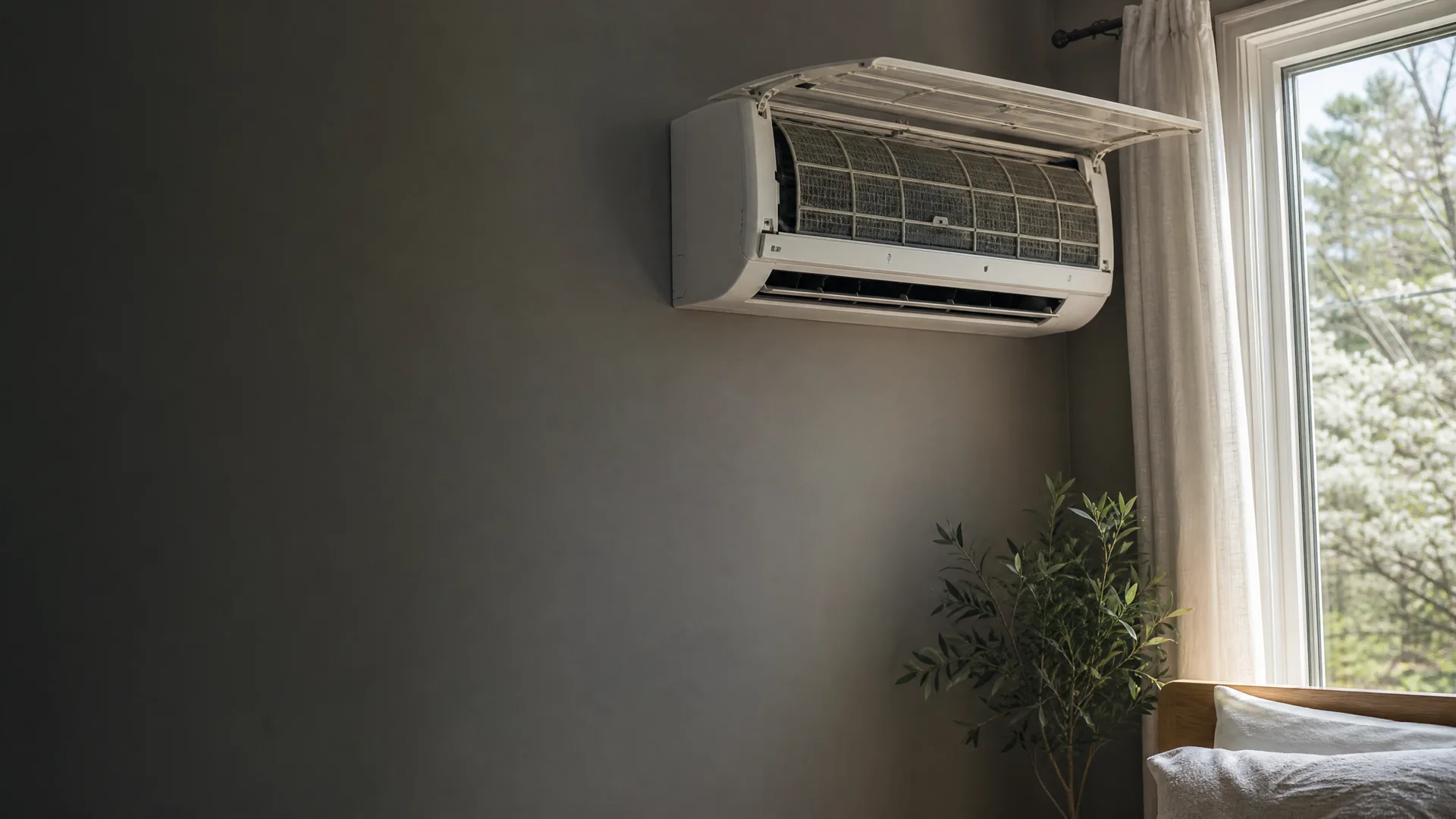
It's a Saturday afternoon in spring, light coming through the bedroom window. You've got the front cover of the mini split popped open, checking it before the summer humidity really sets in. The filter screen underneath is greyer than you expected, a felt-like layer of dust sitting on the mesh. You slide it out to get a better look, holding it up to the window. This is the one that's supposed to catch the mold before it gets to the coil. You're thinking about April through October, about how many weeks this thing has been running since you last had it apart, and whether it's been closer to four than two.
You've gotten the filters down to a routine every few weeks, and the unit seems fine. But you've noticed the vents look a little dusty even with clean filters in, and you're wondering if there's more to this than pulling out two screens and rinsing them off, especially with how hard the mini split runs through a Louisiana summer.
The filters catch dust before it gets further in, but they don't catch everything. Behind them sits the evaporator coil, and over a Louisiana summer that coil picks up dust and mold the filters missed, along with moisture it's pulling out of the air almost nonstop. The blower wheel behind it does the same. There's also the condensate drain, where algae builds up and can back up into the house if nothing clears it. None of that is reachable by popping off the front cover. A contractor opens the unit, cleans the coil and blower wheel directly, and flushes the drain line, which is the part of the job that keeps the mini split actually pulling moisture out of the air instead of just moving it around.
A Louisiana summer holds a dew point around 73°F, averaged across June, July and August, according to NOAA climate data. That's thick air, the kind where a shirt stays damp walking from the car to the door. Your mini split has to wring that moisture out before it can cool the room at all, which is why it runs long stretches instead of cycling on and off. A clean filter moves through that job easily. A dirty one makes the system strain for hours to pull out the same water, and that strain is what pushes dust past the filter and onto the coil behind it.
NASA POWER T2MDEW county cells weighted by homes
That smell when the unit first starts up is mold on the vents or the coil behind them, and it's usually the first sign you notice before anything else goes wrong. You might also see the airflow weaker than it used to be, or the room taking longer to cool than it did last summer. Water spotting the wall or floor under the indoor unit means the condensate drain is backing up, likely algae growing in the line. None of these show up overnight. They build over a season of a filter that got rinsed less often than it should have, and by the time you can smell it or see it, the coil behind the filter has mold on it too.
Dust and mold build up on the filters first.
Dirty filters let dust reach the coil behind them.
A fouled coil drips less moisture into the drain line.
Algae grows in the drain line and backs up.



That's the answer. Filters every two to four weeks through the summer, and the coil, blower wheel, and drain line get opened up and cleaned by someone who does this for a living, before the humidity sets in each year. One without the other leaves part of the system running dirty no matter how often you rinse a filter.
Finding that someone is the part that eats a Saturday. Calling a few places, explaining the musty smell and the water you found on the floor, waiting on callbacks, sorting through quotes that all sound different for reasons you can't quite tell. Send the form here and that search is done. You're not vetting contractors or repeating the same explanation to the third person who answers the phone. You're just waiting to hear back from someone who already knows what a mini split needs in a Louisiana summer.


Send one request and you're done looking