
Why your mini split isn't cooling in Louisiana

RepairMini-splitLouisiana
Step 1 of 2

What ZIP code is the job in?

Why isn't my mini split cooling in this heat?

Louisiana summers push a mini split hard for months at a stretch, and once it stops keeping up you notice fast. Maybe it's running constantly and the air coming out isn't as cold as it should be, or one room stays warm no matter how long it runs. Before you assume the unit is worn out, it helps to know what's actually causing it, because a few things can look the same from your side of the wall but mean very different repairs.

Most often it's a dirty filter, a low refrigerant charge, or a frozen coil

A mini split that's lost cooling power is almost always dealing with one of three things. The indoor filter is clogged with dust, which chokes off airflow over the coil. The refrigerant charge has dropped from a slow leak, so the system can't pull enough heat out of the air. Or the coil has iced over, which happens when airflow or charge is already low and makes the problem worse. With Louisiana humidity running high most of the year, these units work long hours all summer, and any one of these issues shows up as warm air, short cycling, or a unit that runs nonstop without catching up. A frozen coil or low charge needs a licensed technician with gauges to fix, not a filter swap.

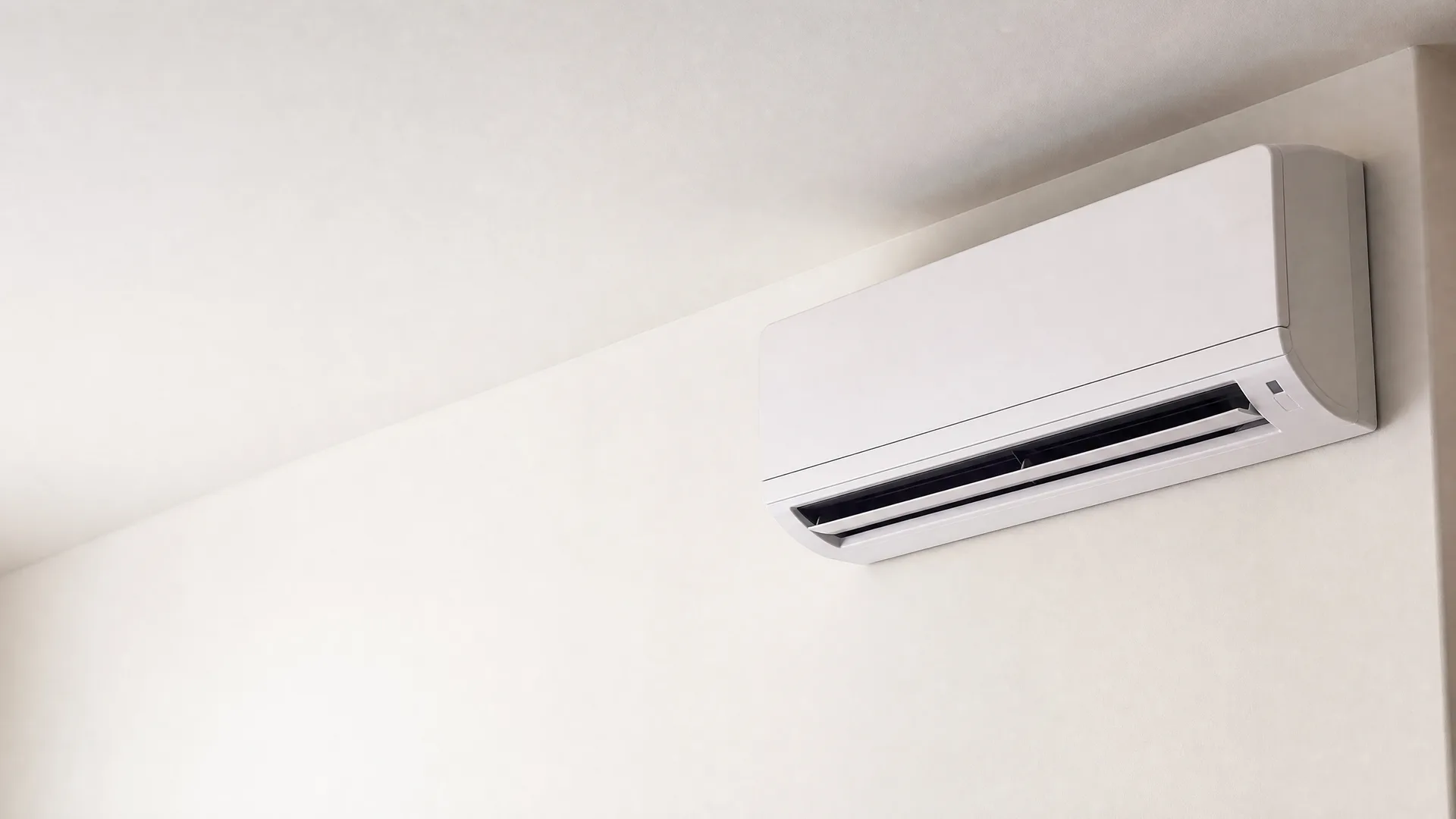
A white wall-mounted mini-split air conditioner installed high on a beige interior wall near the ceiling molding, with a light curtain and curtain rod at the left edge.

Running right

Air coming off the indoor unit is noticeably cold within a minute or two of switching on. The room cools evenly and the unit cycles off once it hits the set temperature instead of running nonstop. The casing stays clean and the vents move air freely.

A wall-mounted mini-split air conditioner indoor unit with a discolored cream plastic casing and dusty outlet vanes, installed high on a plain light-colored interior wall near the ceiling.

Losing the fight

The unit runs constantly and never quite catches up, especially by afternoon. Air from the vents feels closer to room temperature than cold. Dust has built up on the casing and the louvers, and the plastic has yellowed, both signs it hasn't been serviced in a while.

Two Reasons Your Mini Split Falls Behind

Low on refrigerant

  • The line set has a slow leak somewhere between the outdoor unit and the indoor head, and the charge has dropped below what the system needs to pull heat out of the room.
  • The outdoor unit keeps running but the coil can frost up even when it's 95 degrees outside, because the refrigerant pressure is too low.
  • Air still comes out of the indoor unit, but it's barely cool, and the gap between set temperature and room temperature never closes.
  • Adding refrigerant without finding the leak first just means the same drop happens again in a few months.
  • A gauge set on the service ports tells a contractor the charge is low before they ever open up the line set to look for the leak.

Dirty outdoor coil or blocked airflow

  • The outdoor unit sits outside all year, and pollen, cut grass and coastal humidity build a film on the coil that keeps it from shedding heat.
  • When the coil can't release heat outside, the refrigerant stays warmer than it should, and the indoor unit blows air that's cool but not cold.
  • A fence, shed wall or overgrown shrub set too close to the outdoor unit cuts off the airflow it needs to work.
  • The compressor often runs longer than normal trying to make up for the lost airflow, and the electric bill shows it before the comfort does.
  • Washing the coil out and clearing a couple of feet around the unit is something a contractor checks before looking at anything more involved.
A white wall-mounted mini-split air conditioner near the ceiling of a room with plain beige walls and a pale curtain at the left edge.

Why the outdoor unit matters most

The outdoor unit is doing the hard part, pushing heat from inside your house into air that's already near 95 degrees some afternoons. Its coil needs full airflow to do that, and anything blocking it, grass clippings, a fence too close, a cover left on from a storm, cuts into how much heat it can dump. A mini split working against a clogged coil will run long hours and still lose ground once a Louisiana afternoon peaks.

A white wall-mounted mini-split air conditioner indoor unit installed near the ceiling on a plain off-white interior wall.

What the indoor head can't fix alone

The indoor head only blows the air across whatever coil and refrigerant charge it's given. If the charge is low or the line set has a kink, no setting on the remote changes what comes out of the vents. A tech checking the system has to look at both ends, the outdoor coil and the indoor coil, along with the line connecting them, because a problem on one side shows up as weak cooling on the other.

Power costs 12.52 cents per kilowatt-hour statewide

At 12.52 cents per kilowatt-hour, running a mini split that's struggling costs you more than one that isn't. A unit low on charge or fighting a dirty coil draws power without delivering cold air, so you're paying for work it isn't finishing.

EIA-861 2025 statewide residential average

How a mini split actually cools

  • The indoor unit's thermistor reads room air temperature and tells the system how hard to run, so a drifting sensor can cut cooling even with a full charge.
  • Mini splits modulate the compressor speed instead of switching on and off, so a failing inverter board shows up as weak cooling rather than no cooling at all.
  • The reversing valve that lets a heat pump model switch between cooling and heat can stick partway, sending warm refrigerant to the indoor coil.
  • Refrigerant flows through a copper line set that's sized and charged for one specific outdoor and indoor pairing, so any kink or added length throws off performance.
  • The condensate pump or drain line clears water pulled out of humid Louisiana air, and a clog there can trip a float switch that shuts the whole unit down.
  • Each indoor head has its own expansion valve metering refrigerant, so a problem in one zone doesn't always show up in another on the same outdoor unit.

A mini split does more adjusting than a central system does. Instead of a single thermostat calling for cool air and shutting off, the thermistor inside the indoor head is reading the room constantly and telling the compressor how fast to turn. When that sensor drifts, the system still runs, it just runs on bad information, so the unit can cycle at the wrong times or never ramp up enough to pull the humidity down. The compressor itself works on an inverter board that varies its speed rather than snapping on and off like an older system. When that board starts failing, you don't lose cooling outright. You lose the top end of it, so the unit runs long and never quite gets there. On heat pump models, a reversing valve controls whether refrigerant flows one way for cooling or the other way for heat, and if it sticks partway, the indoor coil can end up with warm refrigerant moving through it even though the outdoor unit is working. Refrigerant itself travels through a line set cut and charged for that specific pairing of indoor and outdoor units, so a kink from installation or extra length added later changes the pressure the whole system depends on. If you've got more than one indoor head, each one meters its own refrigerant through its own expansion valve, which is why one room can struggle while another stays cold. And since Louisiana air carries so much moisture, the condensate drain or pump has real work to do removing water the system pulls out of the air. A clogged line trips a float switch and shuts the unit down entirely, no matter how well everything else is working.

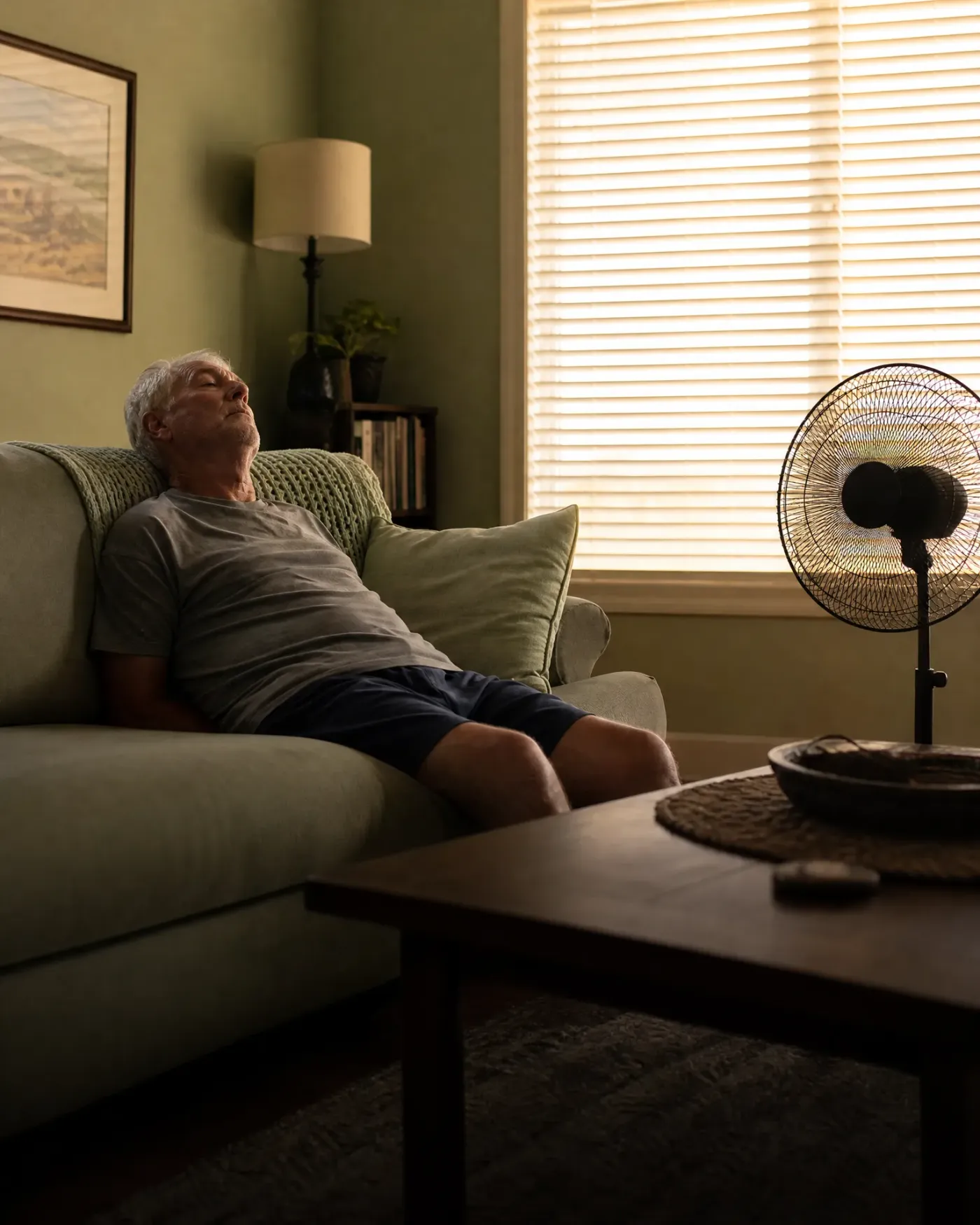
A middle-aged man with grey hair and a beard, wearing a grey knit sweater, sits on a light sofa in a sunlit living room with a houseplant, wooden cabinet and framed landscape picture behind him.
A man with greying hair and a beard in an olive sweater sits on a sofa in a living room, looking to his left, with an armchair, round side table and large glass doors onto trees behind him.
A gray-haired bearded man in a dark blue shirt over a white t-shirt sits on a leather sofa in a living room with built-in shelves, a floor lamp, an armchair and large windows, looking off to the side.
A man with gray-brown hair and stubble in a dark sweater sits on a light-colored sofa in a living room, looking off to the side, with a houseplant, framed picture, shelving and a sunlit window behind him.

One form, no calling around

By now you've probably got a guess at what's going on with your mini split, but guessing isn't fixing it. Finding someone who actually works on these systems in Louisiana takes real effort, calling around, explaining the symptoms over and over, waiting on callbacks, then trying to weigh quotes from people you've never met against each other. A mini split that's lost charge or has a failing inverter board needs someone who works on this equipment all summer long here and knows which of those it usually is before they even open the unit up. Submitting your request here sends it to one licensed local contractor, not a handful of companies competing for your callback. That's one call to make, one person to explain the problem to, while your mini split keeps struggling in the heat.

A mini split that can't keep up runs for hours at a time without the compressor ever cycling off, and your electric bill shows it before the heat does.

Meanwhile the room it serves stays warm, humid, and uncomfortable through the exact months in Louisiana when you need it working most.

A dusty white wall-mounted mini-split air conditioner installed high on a beige interior wall below a molded ceiling trim.
Before you get your mini split repair
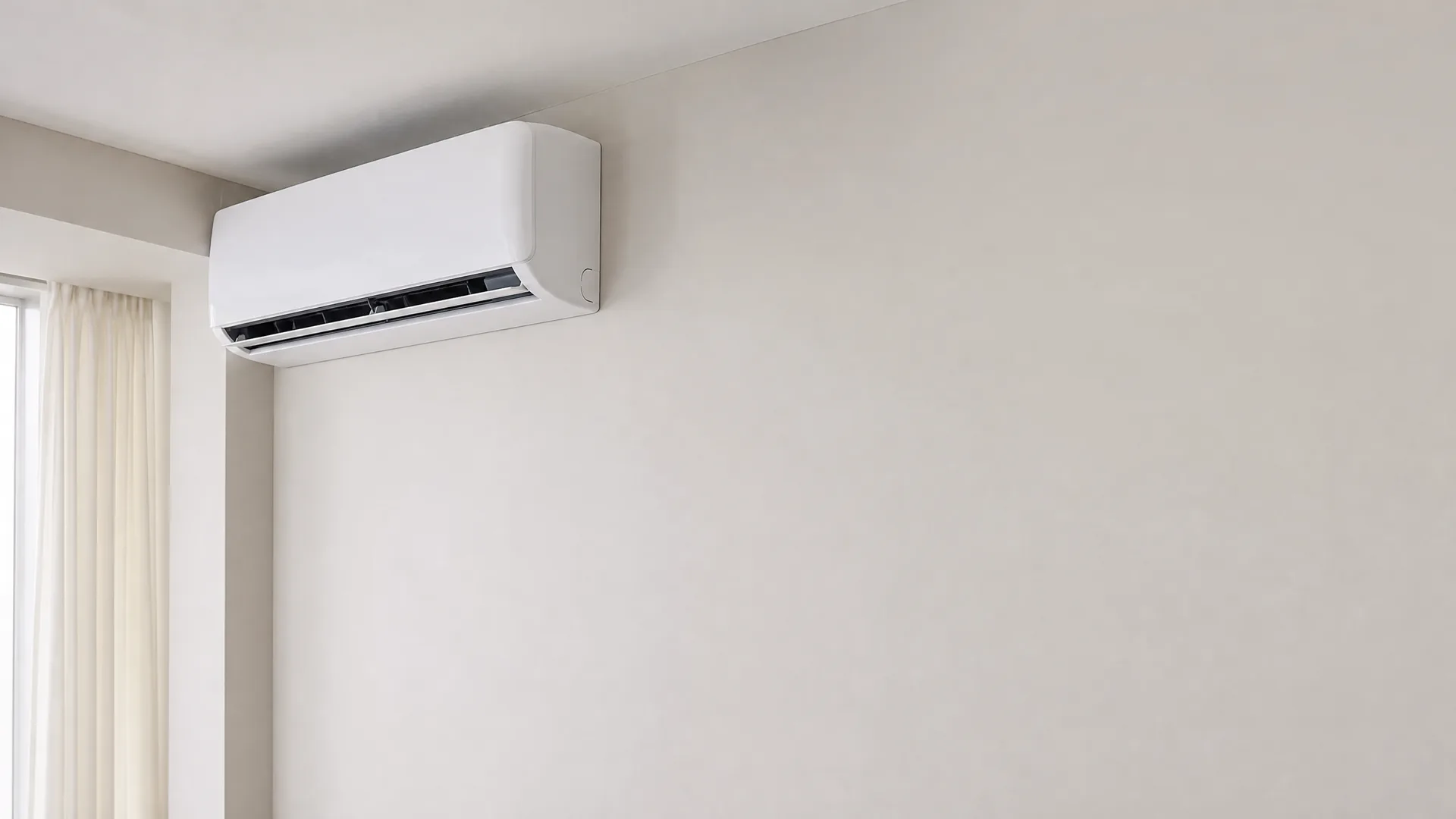
A white wall-mounted mini-split air conditioner unit installed high on a light gray interior wall near the ceiling, with a white-framed window and green foliage visible at the left edge.
After you get your mini split repair

Calling around on your own

You could start listing mini split companies near you and working the phone, explaining the symptoms to each one, how long it's been running warm, whether the coil ices up, what the outdoor unit sounds like. Some won't call back. Some will quote you over the phone without seeing the unit. Some don't work on your brand of indoor head at all. You end up with three or four estimates that aren't really comparable, each from someone who spent five minutes on the phone instead of time in front of your system. Then you're the one deciding which quote to trust, with no way to check any of their work against the others except price.

Matched to one contractor here

Request service through this page and it goes to one licensed contractor working in Louisiana, not a list you have to sort through yourself. Someone who works on mini splits all summer here knows the usual culprits before they walk in, a slow refrigerant leak, a coil packed with cottonwood, a thermistor reading wrong. You explain the problem once. No stack of competing quotes to weigh against each other, no second or third call from companies you never asked to hear from. Just the person qualified to look at your unit and tell you what's actually wrong with it.

A woman with shoulder-length graying hair, wearing a light knit cardigan over a striped shirt, sits in an upholstered armchair and looks off to the side, with a bookshelf and houseplant behind her.
A woman and a child wrapped together in a thick knitted beige blanket on a sofa, both with eyes closed, beside a lit table lamp in a dim room.
A single-story red brick ranch house with a low shingled roof, white-framed windows and a central glass door, fronted by a large empty asphalt parking area with sun glare, surrounded by green deciduous trees under a pale overcast sky.

A National Weather Service reading of the air here puts the summer dew point at an average of 73°F across June, July and August. That's thick, heavy air, the kind where sweat doesn't dry and a mini split has to wring out a lot of moisture before the room feels cool at all. When the system's low on refrigerant or the coil's dirty, it can't pull that moisture out fast enough, so the thermostat might hit your set temperature while the air still feels damp and heavy. That clinging humidity is often the first sign something's off, before the unit ever stops blowing cold.

NASA POWER T2MDEW county cells weighted by homes

A closed laptop and a ceramic mug of dark coffee sit on a wooden table, with a blurred kitchen counter, potted plant, wooden utensils and cutting boards, and a large window in the background.

A mini split that isn't cooling has a reason, and it's findable

A mini split running flat out in a Louisiana summer without cooling the room is low on charge, choked by a dirty coil, or losing the signal somewhere between the thermistor and the compressor. None of that clears up on its own, and none of it is guesswork once someone's hands are on the unit.

What it saves you is the part that has nothing to do with the repair itself. You won't be listing contractors, telling three or four of them the same story about the ice on the coil and the warm air at the vent, then sitting on hold waiting to hear back. One licensed contractor who works on these systems in Louisiana all summer gets the call, already knowing roughly what turns up a lot in this heat. You wait on one callback, not four.

A mug and a small round vase sit on a wooden windowsill beside sheer and heavier curtains, with blurred autumn trees seen through the rain-speckled window and a sofa with cushions and a throw in the foreground.
A white gabled house with a dark metal roof and chimney seen among dense trees draped with Spanish moss, with a tall pine and layered hazy mountain ridges in the background under a pale cloudy sky.

Skip the search

Skip the calls

No charge to send it. You decide if you hire them.

A mini split that keeps losing the fight against a Louisiana summer isn't going to fix itself. One call to a local contractor who works on these systems every season beats sorting through companies on your own, and gets a straight answer about what's actually wrong.