
32°F and dropping
Below freezing, a mini split leans hardest on its reversing valve and outdoor coil. If either is already struggling, this is when you'll feel it fail to keep up.
Cold snaps here don't last long, but when one comes through, you expect the mini split to keep up. Instead it's blowing air that feels room temperature or barely warm, and the house isn't holding heat the way it should. Since most homes here heat with electricity and power is cheap, you're not worried about the bill. You just want it fixed before the next cold morning.
A mini split moves heat from the outside air into your house, and that only works if the outdoor unit can pull heat out of the cold air efficiently. If refrigerant has leaked out, the system can't move enough heat no matter how long it runs. If the outdoor coil has iced over, the unit may be stuck in defrost, or failing to defrost at all, and blowing cold air while it tries to clear the ice. A bad sensor or control board can cause the same thing. Louisiana winters don't stay cold for long, but on the nights that do get near freezing, these problems show up fast, and the house won't hold its temperature until the unit is repaired.
Thermostat calls for heat and sends power to the unit
Reversing valve switches so the system pulls heat from outside
Outdoor coil absorbs heat even from cold winter air
Refrigerant carries that heat inside to the indoor coil




Below freezing, a mini split leans hardest on its reversing valve and outdoor coil. If either is already struggling, this is when you'll feel it fail to keep up.
Calling around, explaining the system twice, and comparing quotes eats the time you'd rather spend keeping the house warm. Get matched with a contractor who already knows the problem.
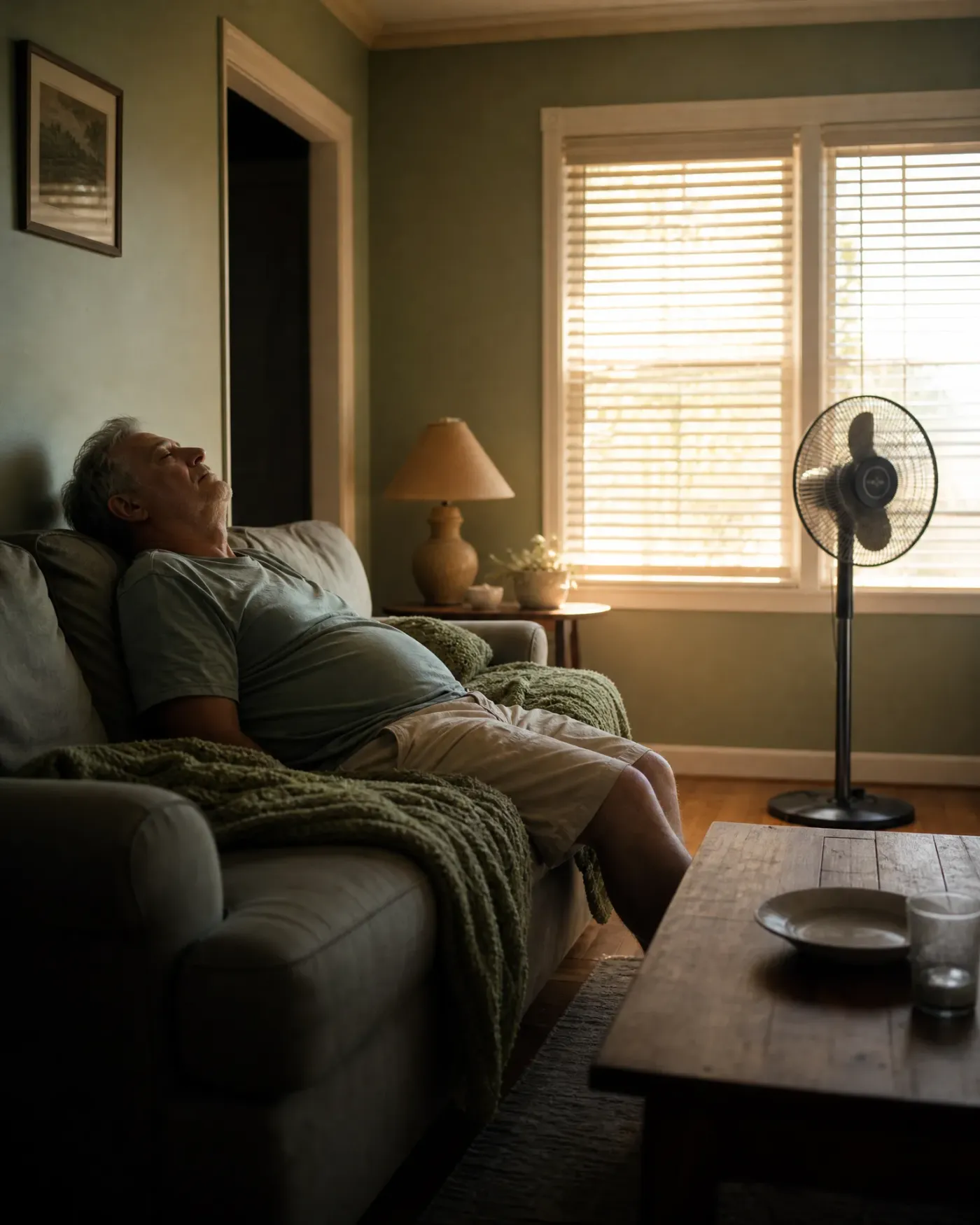
Walk through the rooms it's supposed to heat. The air coming out feels lukewarm instead of hot, and the unit may run constantly without the house ever catching up. You might hear it cycling on and off more than usual, or notice the outdoor unit caked in ice instead of just frost. Some homes get a faint burning smell when the blower motor is straining, or a musty smell if condensation is backing up instead of draining outside. If this is the only heat for that part of the house, a system that can't keep up means the room stays cold through the night, and anyone relying on it, kids, older family members, someone who's sick, feels that cold directly.
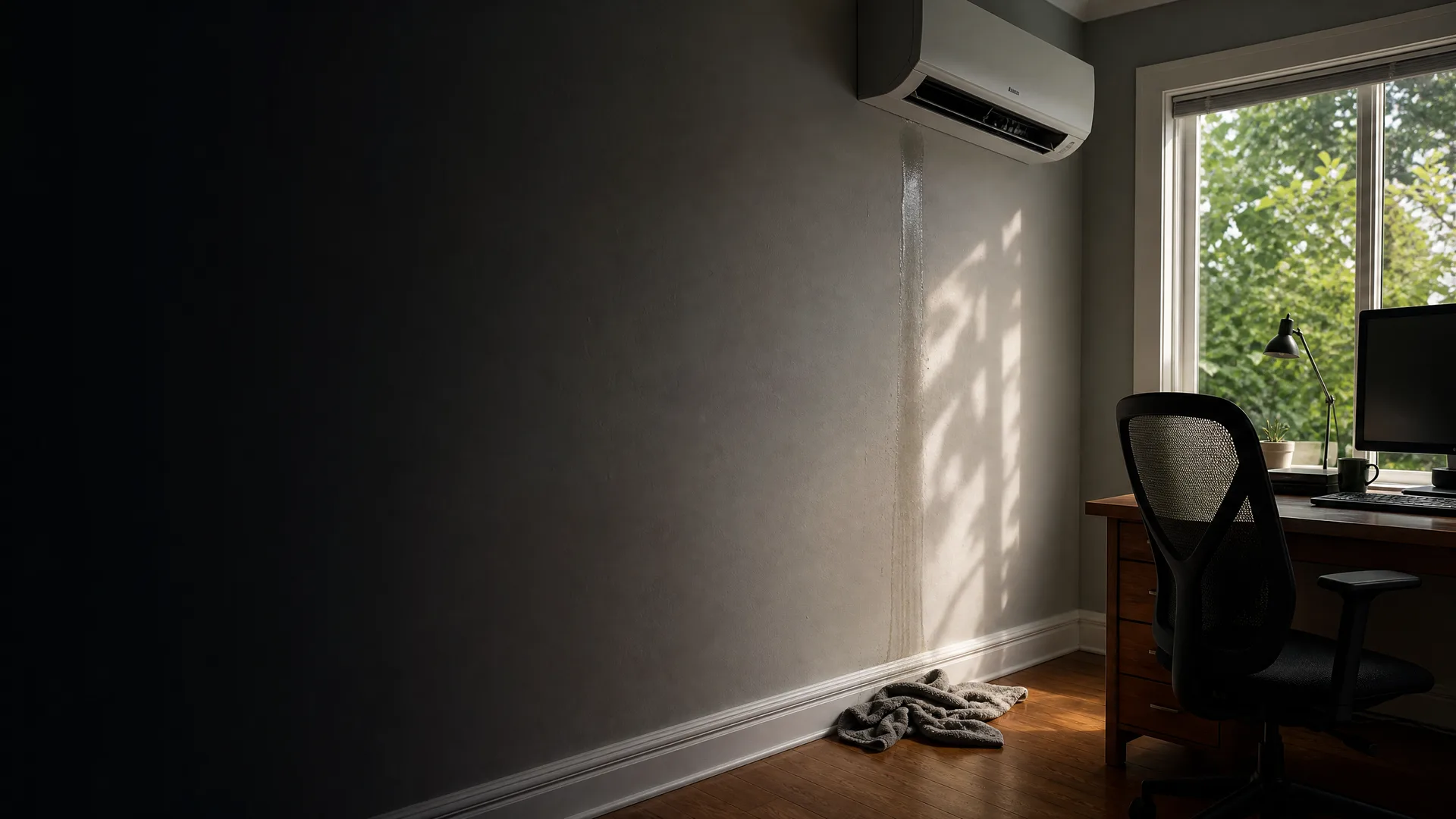
It's late afternoon in January, and you're in the home office trying to get warm while you work. The mini split overhead has been running since morning but the air coming off it barely feels different from the room. Then you notice the wall underneath it, a wet streak running down from the indoor unit, and a towel already soaked on the floor where someone laid it down earlier. Outside it's cold enough that you needed the heat in the first place. Now you're wiping up water instead, wondering if the unit even has a straight answer for what's wrong with it, or if you're about to start calling around to find out.
Answer a few questions instead of calling shop after shop.
Asking costs nothing, and the choice to hire stays yours.
That same humidity works against the mini split outside of winter too. Louisiana summers average a dew point of 73°F from June through August, according to NOAA climate data, which means the outdoor coil spends months pulling moisture as hard as it pulls heat. That's extra wear on the same reversing valve and coil you depend on when a cold snap hits. A unit that's been straining all summer has less left to give in January, which is part of why some systems only show their weak spot once the temperature drops.
NASA POWER T2MDEW county cells weighted by homes

The air handler sits high on the wall, blowing heat down into the room without any fuss. You should feel a steady stream of warm air from the vents, and the wall below it stays dry. No grime on the louvers, no dust caked on the front panel.

Dust and grime build up across the vents and louvers until the front panel looks gray instead of white. A coil caked in dust can't move heat the way it should, and a unit that looks like this is already working harder than it needs to.




At 12.52 cents a kilowatt-hour, running the mini split's backup strips or a stuck reversing valve all day adds up fast on your bill. A unit that's actually pulling heat the way it should won't need to lean on that backup heat to keep the house warm.
EIA-861 2025 statewide residential average


A mini split that blows cold air in January isn't a mystery you have to solve yourself. The reversing valve, the refrigerant charge, the outdoor coil, these are the usual places the problem lives, and which one it is changes what gets fixed and how. That's not something to guess at from the couch while the house stays cold and the people in it reach for blankets instead.
What you're spared is the part that has nothing to do with the repair itself. You won't be searching through a list of HVAC companies trying to figure out which ones actually work on ductless systems. You won't be on the phone four times explaining that the unit runs all day and the air still feels lukewarm, then explaining it again to the next company. You won't be sitting with three quotes trying to tell which contractor is being straight with you and which one is padding the estimate.
Getting matched with a contractor means that work is done. Someone who services mini splits in your area gets your situation and reaches out, and the back and forth of finding them is no longer yours to carry. The house is still cold until the valve or the charge or the coil gets looked at, but the search for who does that looking is over.





Describe your mini split job once, to one pro.
No fee to send it, and nothing to sign.