Why mini splits drip inside in muggy Louisiana summers

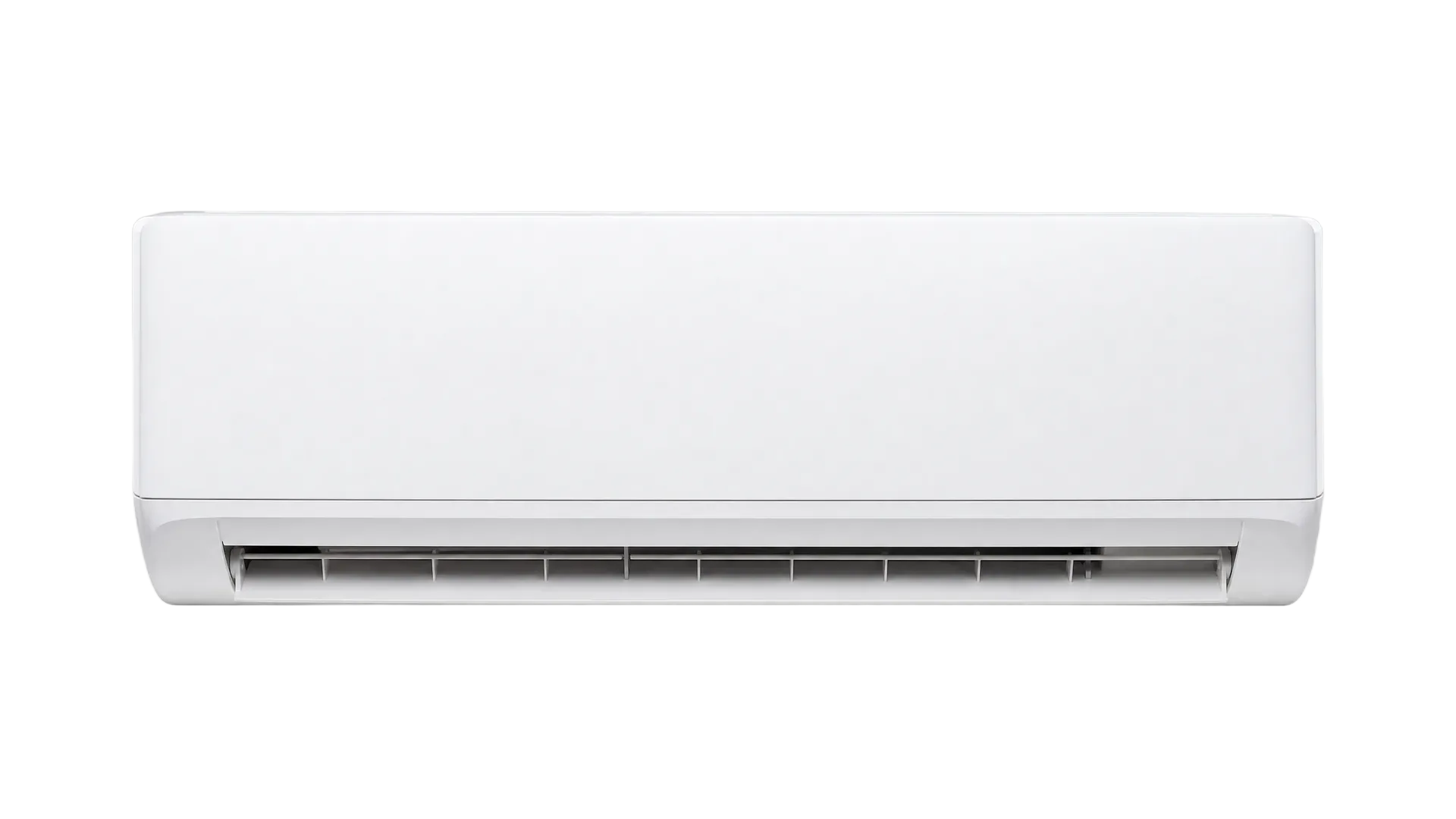
A white wall-mounted mini-split air conditioner indoor unit with a horizontal louvered vent, shown against a plain light gray background.
Send my request

That drip is condensate finding the wrong way out. A mini split pulls moisture off the air at the indoor coil, and in a Louisiana summer the air coming in is loaded with it, so the coil is wringing out far more water than it would somewhere dry. That water is supposed to run down the drain pan into a condensate line and out of the house. When it shows up inside instead, something along that path is blocked or wrong, a clogged drain line, a dirty filter dropping water where it shouldn't, a drain pan cracked or tilted, or a condensate pump that has stopped lifting the water out. It can also mean the line was never pitched correctly to drain by gravity in the first place. None of this fixes itself, and left alone it keeps finding a path onto your floor or into your wall. Figuring out which of these it is takes someone opening the unit up and tracing the line, not guessing from the drip pattern.

Power costs 12.52 cents per kilowatt-hour statewide

At 12.52 cents a kilowatt-hour, running your mini split hard all summer doesn't punish the bill the way it would elsewhere. That's worth knowing before you shut it off to stop a drip. A unit working to keep up, low on refrigerant or iced over, is what sends water where it shouldn't go, and the fix is getting it running right, not running it less.

EIA-861 2025 statewide residential average

The drain line is clogged

Algae and dust build up inside that condensate drain line over a few summers, and in Louisiana it's working hard enough to grow a clog fast. Once it's blocked, water backs up through the pan and finds the nearest gap, usually dripping straight out of the indoor unit. A contractor can clear the line and flush it, and check whether the pan itself has cracked or rusted through, which a flush alone won't fix.


The unit is low on refrigerant

A mini split running low on refrigerant gets cold enough to ice the coil instead of just pulling moisture off it. When that ice melts, it melts faster than the drain pan and line were built to handle, and water runs over the edge. This isn't something to top off and forget. A low charge usually means a leak somewhere in the line set, and a contractor needs to find it before adding refrigerant does any good.

A gray-haired man in a dark green knit sweater sits on a beige sofa with a dark cushion, looking to the side, with a potted plant, shelves and sunlit windows behind him.
A gray-haired man in a dark green sweater sits smiling on a sofa in a sunlit living room, with a houseplant, shelving unit, and dining table visible behind him.
A middle-aged man in a dark denim shirt sits on a light beige sofa in a living room with wooden shelving and a potted plant, looking off to the side.
A gray-haired bearded man in a dark green sweater sits on a light sofa indoors, looking to the side, with a houseplant, framed picture, table lamp and sunlit window behind him.

Water doesn't just appear in the pan and vanish. The coil tilts slightly inside the unit so every drop runs downhill into the pan on its own, no pump needed to start that part. From there, most systems lean on gravity to carry it out through the drain line, and that line needs a steady fall the whole way, not flat stretches where water can sit. When the line can't slope enough to drain itself, a condensate pump takes over and pushes the water out instead. Either way, a float switch sits in the pan or the pump housing, watching the water level, ready to cut power to the unit before it overflows. None of this fails all at once. Dust and the biofilm that forms inside a drain line build up slowly, narrowing the path long before you'd see anything wrong looking at the line from outside. And the insulation wrapped around the suction line is doing its own quiet job, keeping that line from sweating. Tear it or lose a section and that line starts dripping on its own, separate from anything happening in the drain.

How the condensate actually leaves

  • The indoor coil sits on a slight tilt so gravity pulls condensate toward the drain pan instead of letting it pool.
  • A small pump, called a condensate pump, lifts that water out to a drain line or outside when gravity alone can't clear it.
  • The drain line runs with a slow, steady fall the whole way out, and any low spot or sag lets water sit and back up.
  • A float switch in the pan or pump is built to shut the unit down before standing water reaches the point of overflow.
  • Dust and the biofilm that grows in a drain line narrow it from the inside long before the line looks blocked from outside.
  • The suction line insulation stops its own condensation from dripping, and once it's torn or missing that water reads the same as a drain problem.
A white wall-mounted mini-split air conditioner installed near the ceiling on a light-colored interior wall, with a window and green foliage visible at the left edge.
Clean coil, clear drain, condensate leaves through the line like it should.
A dusty white wall-mounted mini-split air conditioner indoor unit installed high on a beige interior wall below a white ceiling and trim.
Dust and grime caked on the vents and intake mean water has nowhere to go but out the front.

What does that water on the floor mean for your house

You'll see it first on the wall or floor under the indoor unit, a damp patch that keeps coming back no matter how many times you wipe it up. Sometimes it's a drip you can hear hitting the floor. Sometimes it's a musty smell before you ever see water, which usually means it's been running down inside the wall a while. Left alone, that moisture softens drywall, warps flooring, and gives mold a place to start, especially in a house that stays shut up and humid most of the summer. None of that gets better on its own. The leak is a symptom, and whatever's causing it inside the unit keeps working against you until someone opens it up and finds it.

A dim room with a wall-mounted mini-split air conditioner above a water stain running down the gray wall to a towel on the wood floor, with a black shelving unit, a desk with a lamp and potted plant by a window, and an office chair at right.

You're at your desk on a July afternoon, air thick outside even with the blinds down, when you notice the streak on the wall below the indoor unit. It's already dried at the edges and wet again near the bottom, like it never fully stops. You grab the towel from the hall closet and lay it on the floor where the drip keeps landing, same spot as last week. The unit is still blowing cold, still humming along like nothing's wrong, which is almost worse. You stand there a second, listening for the next drop, then go back to your desk because the form only takes a minute and then it's not something you have to figure out alone.

Done looking for a mini split pro

Only one pro gets your request, so you hear from one company.

Asking costs nothing, and the choice to hire stays yours.

A single-story brick house with a low hipped shingle roof, a large picture window, a dark front door and shrubs, fronted by a wide asphalt lot with sun glare, surrounded by green deciduous trees under a bright hazy sky.

A dew point of 73°F is what the coil inside your mini split is up against all summer. Anything above 65 feels sticky to a person standing outside; your indoor unit has to condense water out of air that heavy just to cool the room. That's a steady stream running off the coil into the pan for hours at a stretch, not an occasional trickle. Where the drain line has a clog or a slope that's gone flat, this is the pressure that pushes water out over the edge of the pan instead of down the line. The heavier the air, the less margin the system has before a small blockage turns into water on your floor.

NASA POWER T2MDEW county cells weighted by homes

Call a repair tech or wait it out

Call for repair

  • A tech can snake or vacuum out the drain line in one visit instead of you guessing which end is clogged.
  • If the coil is iced over from low refrigerant, that needs a gauge set and a licensed hand, not a wipe-down.
  • A local contractor who services mini splits all summer has usually seen your exact unit fail this same way before.
  • Fixing the slope or pump issue once means you stop re-wiping the same wall every few weeks.
  • One contractor means one visit and one diagnosis, not several opinions to sort through.

Wait it out

  • The drip usually keeps coming back worse as the clog or ice builds through the summer.
  • Water sitting against the wall or floor long enough can stain or soften the surface underneath.
  • A unit icing over from low refrigerant keeps running harder and loses cooling even as the leak continues.
  • Wiping it up daily doesn't clear the line or fix the tilt causing the backup in the first place.
  • The longer a condensate pump runs dry or clogged, the more likely it is to burn out completely.
A white wall-mounted mini-split air conditioner on a light gray wall in an empty room with dark wood flooring, white baseboards, a tray ceiling with recessed lights, and a window at the left.

Running clean

A mini split like this moves air quietly, no streaks on the wall below it, no sound of water hitting the floor. The coil inside is clear, the pan drains, and the line carries that water straight out where it belongs.

A wall-mounted mini-split air conditioner indoor unit with a yellowed plastic casing and dark horizontal vent louvers, installed on a plain light-gray wall.

Running dirty

Dust sits thick on top of the unit and dark residue rings the vents. That buildup is grime the coil has been pulling out of the air for seasons, and it's often what's choking the drain line or coating the coil enough to send water out the front instead.

Why does my mini split only drip when it's humid out

You've noticed the drip shows up on the thick, sticky days and seems to leave you alone when a front comes through and the air dries out for a day or two. That pattern feels like a clue, and it is one. It means the leak isn't random, and it points at how much water the coil is actually handling rather than something broken outright.

Humid air means more water for the coil to shed, and more water finds a leak faster

The indoor coil only pulls out as much moisture as the air brings in. On a dry day it's wringing out a little and a small drain issue might never show itself. On a muggy Louisiana afternoon that same coil is pulling far more water, and all of it has to leave through one line or one pan. A partial clog or a pan that's slightly out of level can handle a trickle without overflowing, but it can't keep up once the load goes up with the humidity. That's why the drip tracks the weather instead of showing up every day. The underlying problem, a slow drain or a tilted pan, is there all along. It just takes a wet day to prove it.

A wall-mounted mini-split air conditioner indoor unit with a dusty, discolored cover, installed near the ceiling on a plain light-colored wall.
Before you get your mini split repair
A white wall-mounted mini-split air conditioner unit installed high on a light gray interior wall below crown molding, with a bamboo-shaded window at the lower left.
After you get your mini split repair

What's really going on

  • The drip is condensate that lost its path out, not a sign the unit is broken beyond use.
  • A clogged drain line, a dirty coil, or a low refrigerant charge each send water somewhere other than the drain.
  • Louisiana's thick summer air means the coil is pulling more water than it would almost anywhere else.
  • A tech can clear a line or check the charge in one visit instead of you guessing at the cause.
  • At 12.52 cents a kilowatt-hour, there's no reason to run the unit less to avoid a drip you can get fixed.
  • A unit that's clean and properly charged runs quiet, with no streak on the wall and no water on the floor.

The water on your wall or floor has one cause: condensate that can't reach the drain it was built to use. Sometimes that's a clogged line, sometimes a coil caked in dust, sometimes a refrigerant charge low enough to ice the coil over and then flood the pan when it thaws. None of those mean the unit is done. They mean something specific is blocking the path that water is supposed to take, and that thing can be found and cleared.

Louisiana summers make the job harder on the equipment than most places would. The coil is already working against heavy, humid air, pulling far more moisture out than it would somewhere dry, so a small blockage shows up as a drip here faster than it would elsewhere. That's not a reason to run the unit less. At 12.52 cents a kilowatt-hour, there's little saved by cutting back, and doing so just means living with the humidity the unit was keeping down in the first place.

A tech who works on this equipment all summer has seen this pattern before and knows where to look first, the drain line, the coil, the charge, rather than guessing. Clearing a line or checking refrigerant pressure takes the right tools and a gauge set, not a wipe-down with a towel. Once that's handled, the unit goes back to doing what it's supposed to: pulling water out of the air and sending it straight out the line, quietly, with nothing left on your wall or floor.

A gray-haired woman in a white top and gray cardigan sits in an upholstered armchair indoors, looking toward a window with a green potted plant, with a bookshelf behind her.
A woman holds a sleeping boy wrapped in a gray knit blanket on a couch, with a lit table lamp and houseplant blurred in the background.

Mini Split Repair

It's off your list after this

Your request stays with one local pro.

A black-framed smartphone standing upright against a plain white background, its screen filled with solid green.
RepairMini-splitLouisiana
Step 1 of 2

What ZIP code is the job in?