












Side profile of a bearded man wearing a dark gray baseball cap and a gray T-shirt against a plain off-white background.

Why your AC keeps tripping the breaker in Louisiana

RepairCentral ACLouisiana
Step 1 of 2

What ZIP code is the job in?

Why does my AC keep tripping the breaker?

It's happened more than once now, and resetting the breaker only buys you an hour or two before it trips again. With the heat and humidity outside, the last thing you want is the AC down while you try to figure out if this is something simple or something you need looked at fast.

Usually the compressor or a weak capacitor, both working harder because of the heat

Most of the time it's the compressor drawing too much current, or a capacitor that's failing and making the motor strain to start. A dirty condenser coil outside can cause the same thing, since the system has to work harder to move heat out of the house and into air that's already hot and heavy with moisture. A breaker that trips repeatedly isn't being overly cautious. It's doing its job, cutting power before something draws more current than the wiring or the unit itself can handle. Running it again and again on a tripped breaker risks damage to the compressor, which is the most expensive part to replace. It's worth having someone qualified check it before that happens, rather than after.

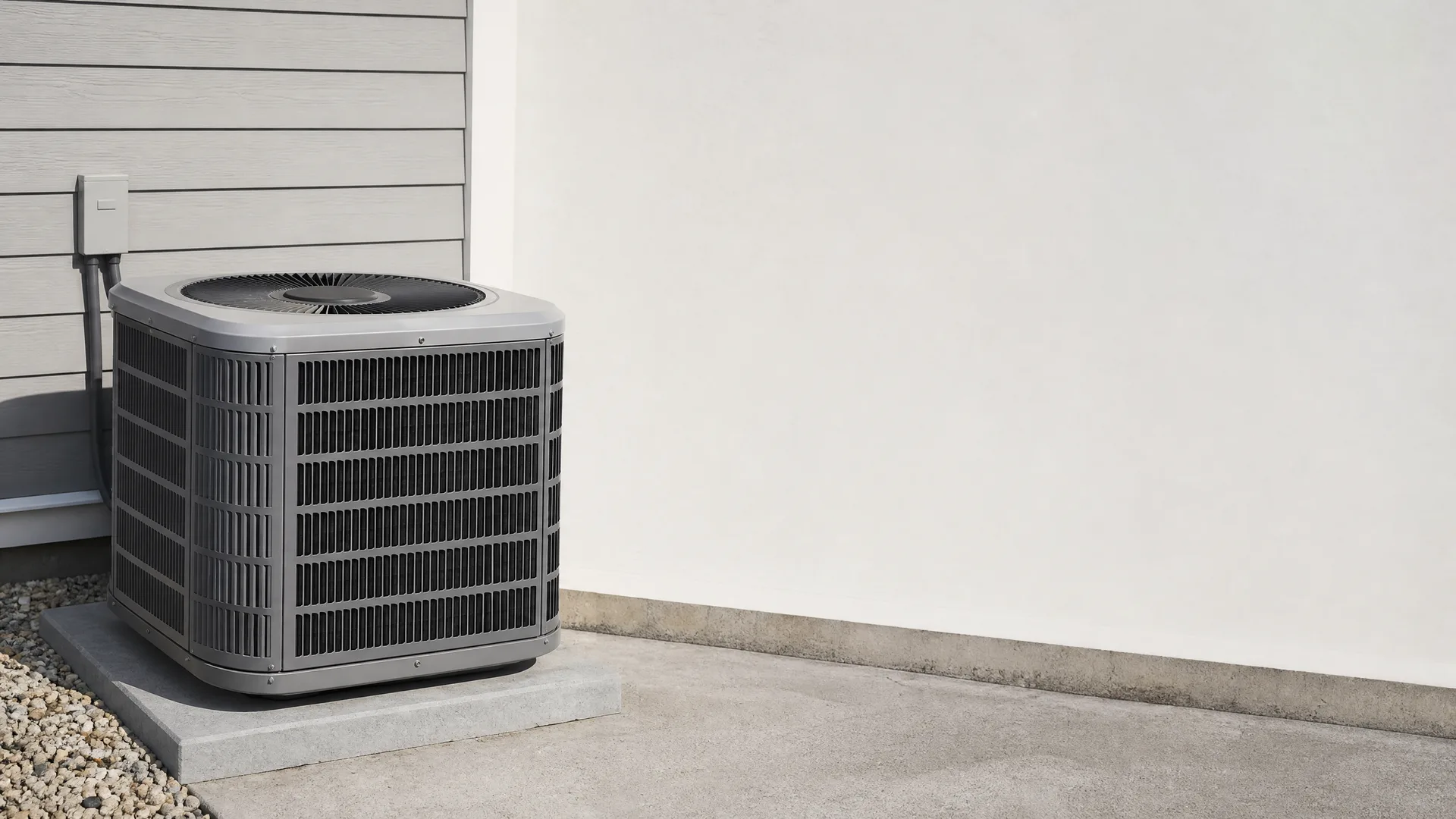
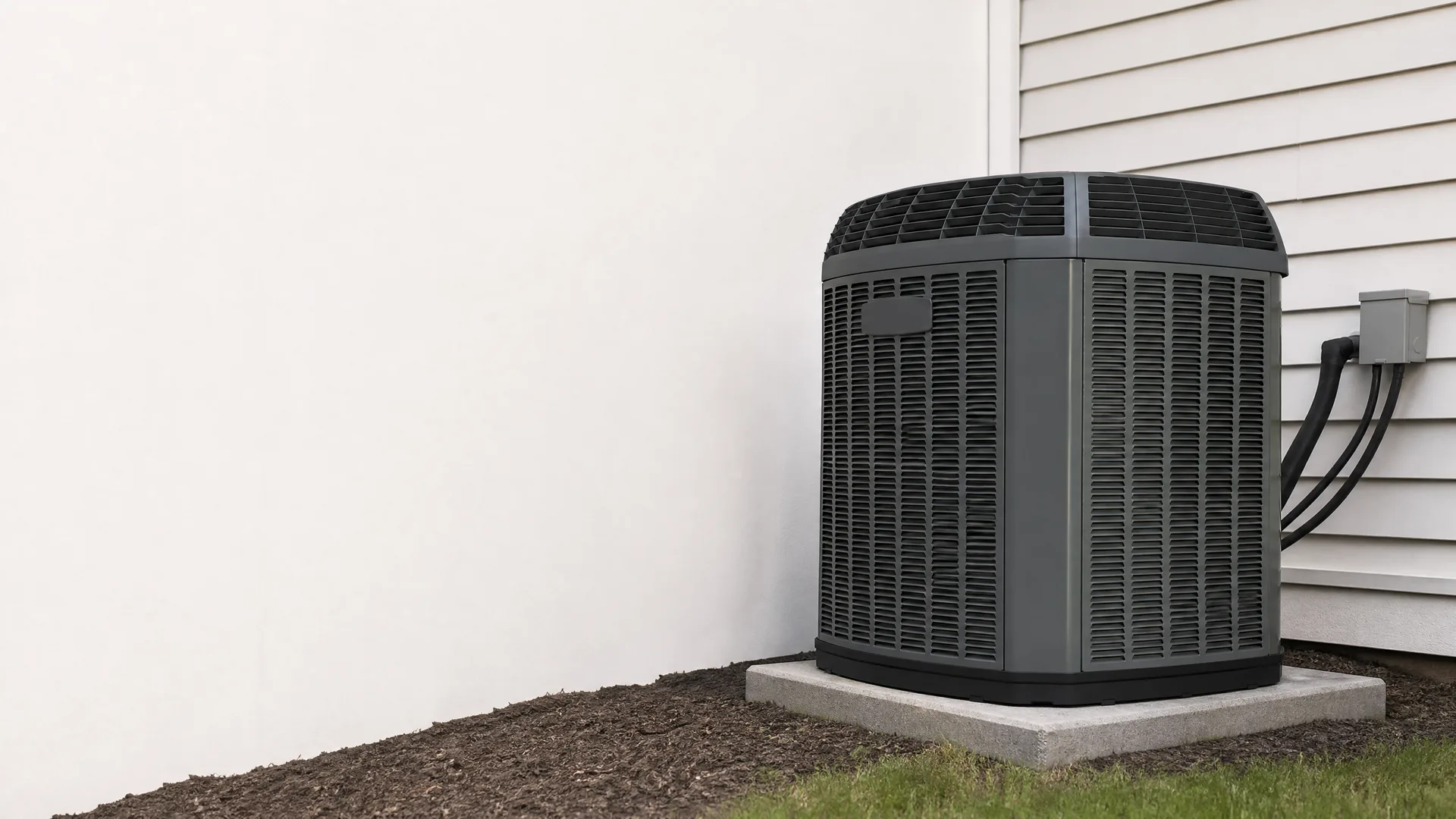
An outdoor air conditioner condenser unit on a concrete pad beside a light-colored stucco wall, with horizontal siding and a small electrical box to the left and gravel at lower left.

What the breaker is doing

A breaker trips when the air conditioner pulls more current than the circuit is rated for. That usually means the compressor or the fan motor is working harder than it should, often because a capacitor has weakened or a contactor has worn down. The breaker isn't the problem. It's doing its job by shutting things off before the wiring overheats. Resetting it again and again doesn't fix what's making the motor strain, and running it that way can shorten the life of the parts pulling the extra current.

A dark gray outdoor air conditioning condenser unit on a concrete pad beside a house with light siding and a stucco wall, with mulch and grass in the foreground.

Why summer makes it worse

Louisiana summers push an air conditioner to run long hours against heavy heat and humidity, and that extra runtime is hard on a compressor that's already drawing more current than it should. A unit that trips once a week in April can start tripping daily by July as outdoor temperatures climb and the system works harder to keep up. A licensed contractor working in your area sees this pattern every summer and checks the capacitor, the contactor and the compressor's amp draw before the heat makes it worse.

A smiling man in an olive T-shirt and jeans stands in an open front doorway holding the door, facing a person in a navy polo and cap seen from behind in the foreground, with horizontal wood-look siding and a potted white flowering plant nearby.

What this means for your house

A breaker that keeps tripping means your AC is shutting off at random, not on a schedule. You might lose cooling in the middle of the afternoon when the house is hottest, or come home to a warm house after work. Louisiana summers don't give you much room for that. Humidity builds fast indoors once the air stops moving, and a unit that starts and stops under strain wears out sooner than one that runs clean.

Resetting the breaker again isn't fixing anything. Each time the system pulls too much current and trips, whatever is causing it, a weak part or a strain in the compressor, is still there waiting for the next cycle. A local contractor who works on these systems through the summer will know what tends to fail first in this kind of heat and can check it before it leaves you without AC on a day you need it most. Getting matched with one means one contractor familiar with your situation calls you, not a handful of strangers.

Interior corner of a living room with a sheer-curtained window, a light wood console table holding a vase of greenery and a shallow bowl, a woven basket on the lower shelf, and a blurred upholstered sofa and dark wood table in the foreground.
A man with greying hair in a dark green sweater sits on a light sofa in a sunlit living room, looking off to the side, with a large window, table lamp, framed art and white built-in shelves behind him.
A gray-haired man in a dark navy sweater sits on a light sofa in a living room, looking toward a sunlit window with a houseplant and wooden cabinet behind him.
A gray-haired man in a dark green ribbed sweater sits on a light sofa in a living room, looking toward a sunlit curtained window with a potted plant and lamp nearby.
A middle-aged man with gray hair and a beard, wearing a dark green sweater, sits on a light sofa in a sunlit living room with large windows, a potted plant, and a dining area in the background.

Is your house staying cool the way it used to?

You might notice the air feels heavier in some rooms than others, or the thermostat says 72 while the house feels warmer than that. You hear the AC click off and the breaker panel buzzing or warm to the touch. Some homeowners catch a faint burning smell near the outdoor unit or the panel itself, which means wiring or a part is overheating, not just overworked. If this keeps happening, you're also cycling the compressor on and off harder than it's built for, and that shortens its life. In Louisiana humidity, a few hours without cooling is more than uncomfortable. It gives mold and mildew the damp air they need to get started inside your walls and closets.

  1. The compressor or fan motor draws more current than normal

  2. A weak capacitor or failing contactor forces the motor to strain

  3. The strain pushes current past what the breaker allows

  4. The breaker trips to stop the circuit from overheating

A woman with shoulder-length blonde-grey hair in a light knit cardigan sits in a grey upholstered armchair, looking toward a window, with a bookshelf and a small potted plant behind her.
A woman with her hair in a bun holds a sleeping child against her chest on a couch, both wrapped in a knit blanket, with a lit lamp, potted plant and framed picture in the background.

An air conditioner pro near you

The pro who reaches out is licensed in Louisiana.

No fee to send it, and nothing to sign.

Resetting it yourself versus calling someone

You can keep walking out to the panel and flipping the breaker back. It will probably hold for a while each time, long enough to think it's fixed. But the part causing the strain is still there, and every time the motor pulls too much current, it adds wear the motor doesn't recover from. Some homeowners do this for weeks before the AC finally fails to start at all, usually on the hottest afternoon of the month. A reset is not a repair. It's just proof the breaker is doing its job.

What a qualified contractor checks first

A contractor who works on AC systems all summer knows the short list of parts that cause this: the capacitor, the contactor, the wiring at the compressor. They'll test each one under load, not just look at it, because a capacitor can look fine and still be weak. If it's a wiring issue, they'll check for a loose connection or insulation damage before it becomes a bigger problem. You get one contractor, local, licensed to do this work in Louisiana, matched to what's actually tripping your breaker instead of a guess.

An outdoor air conditioner condenser unit sits on a concrete pad beside a stucco wall, with refrigerant lines and conduit running to the wall and a shrub to the left.
Before you get your air conditioner repair
A gray outdoor air conditioner condenser unit on a concrete pad beside a house with dark horizontal siding and a stone base, surrounded by gravel, with a flowering shrub at left and a concrete walkway in front.
After you get your air conditioner repair
A gray outdoor air conditioner condenser unit on a concrete pad beside a house with horizontal lap siding, with a wall-mounted disconnect box and conduit, mulch bed, shrub, and lawn nearby.

Running the way it should

This is a unit that starts, cools, and stays on. The compressor draws a steady current and the breaker never sees more than it's rated for. Lines run clean up the wall to the disconnect, and nothing inside is working harder than it was built to.


An outdoor air conditioner condenser unit sits on a gray pad beside a light vinyl-sided wall, on a concrete slab next to a gravel bed.

Running into trouble

Same kind of unit, same setup against the house, but something inside is pulling more current than this circuit can take. That's what a breaker trip is telling you. Left alone, it keeps happening until the part causing the strain gets found and replaced.

Power costs 12.52 cents per kilowatt-hour statewide

At 12.52 cents a kilowatt-hour, a straining compressor doesn't just trip the breaker, it runs up the bill every time it pulls hard before shutting off. Fixing the part causing the draw keeps both the breaker and the meter in check.

EIA-861 2025 statewide residential average

A gray outdoor air conditioner condenser unit sits on a concrete pad beside a house with horizontal lap siding, with conduit and an electrical disconnect box on the wall, dark mulch and a shrub to the left, and a concrete walkway in the foreground.

Unit in good shape

A clean condenser like this one draws a steady current and the breaker holds all summer. The lines run straight up the wall to the disconnect, and there's nothing straining inside to push the amps past what the circuit allows.

An outdoor air conditioning condenser unit on a concrete pad beside a house with horizontal lap siding, with a shrub and mulch bed to the left and conduit and a small electrical box on the wall to the right.

Unit under strain

Dirt packed into the grilles makes the compressor work harder to move the same air, and a worn disconnect box adds resistance right where the power feeds in. Either one raises the current draw until the breaker trips to protect the circuit.

A breaker that keeps tripping is telling you the compressor or fan motor is pulling more current than it should, and that doesn't fix itself. It gets worse the longer it's left, and in a Louisiana summer that means more afternoons with no cooling, not fewer. A contractor who works on AC units all summer in this heat has seen this exact failure plenty of times and knows what to check first, the capacitor, the contactor, the wiring at the disconnect. You'll be matched with one licensed contractor local to you, not a handful of companies competing for the job, so you're dealing with one person who knows your situation and follows through on it. The breaker isn't the problem. It's doing its job. Whatever is making the motor strain is the thing that needs fixing, and that's a job for someone who knows the equipment, not another reset.

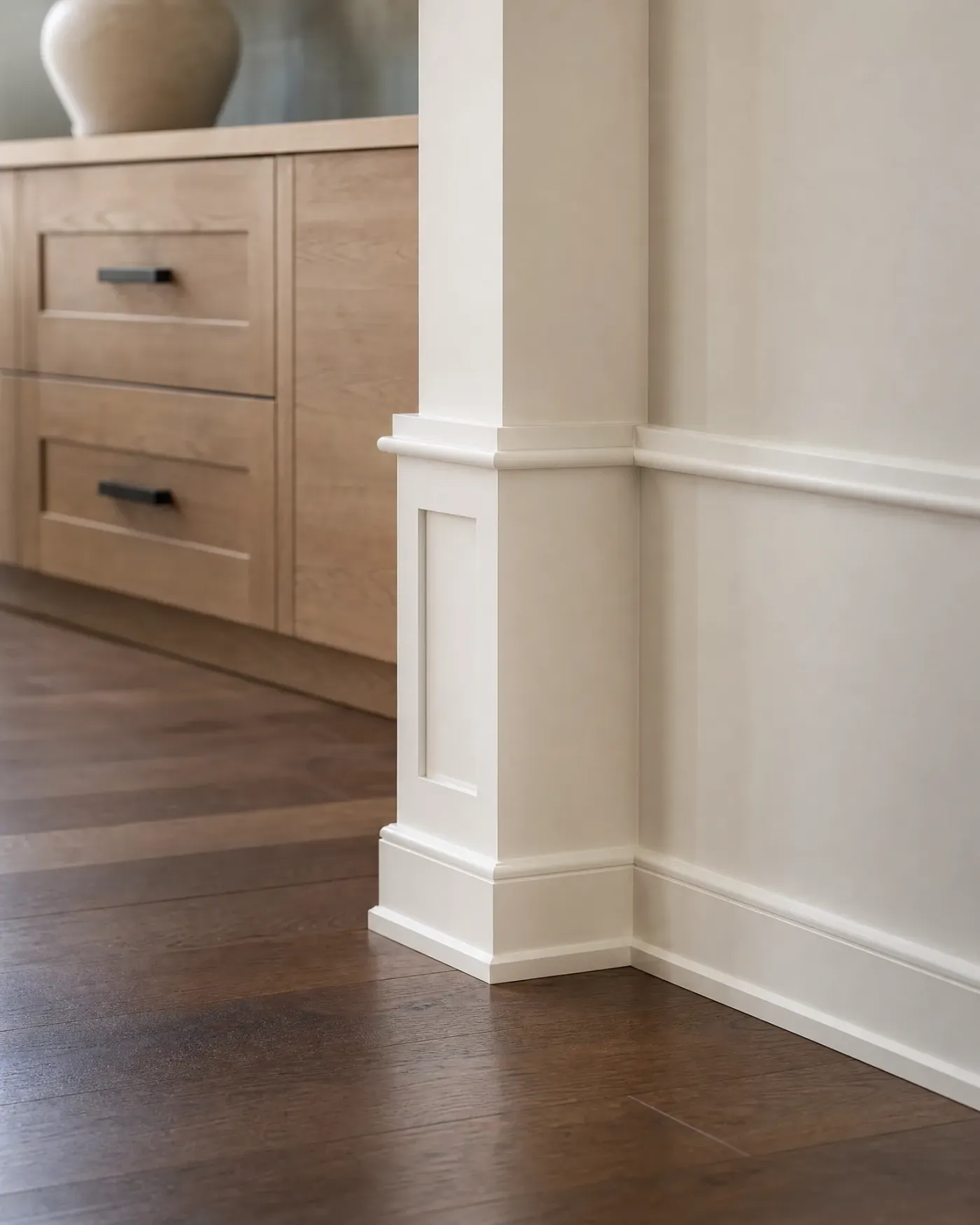
Interior corner showing a white painted column with paneled trim and chair rail meeting a wall with baseboard, beside light wood cabinetry with black bar pulls and a ceramic vase, over dark hardwood flooring.
Interior corner with a white-framed window showing green foliage, a pale wall with baseboard, light oak plank flooring, and a wooden cabinet with a dark ceramic vase on top.
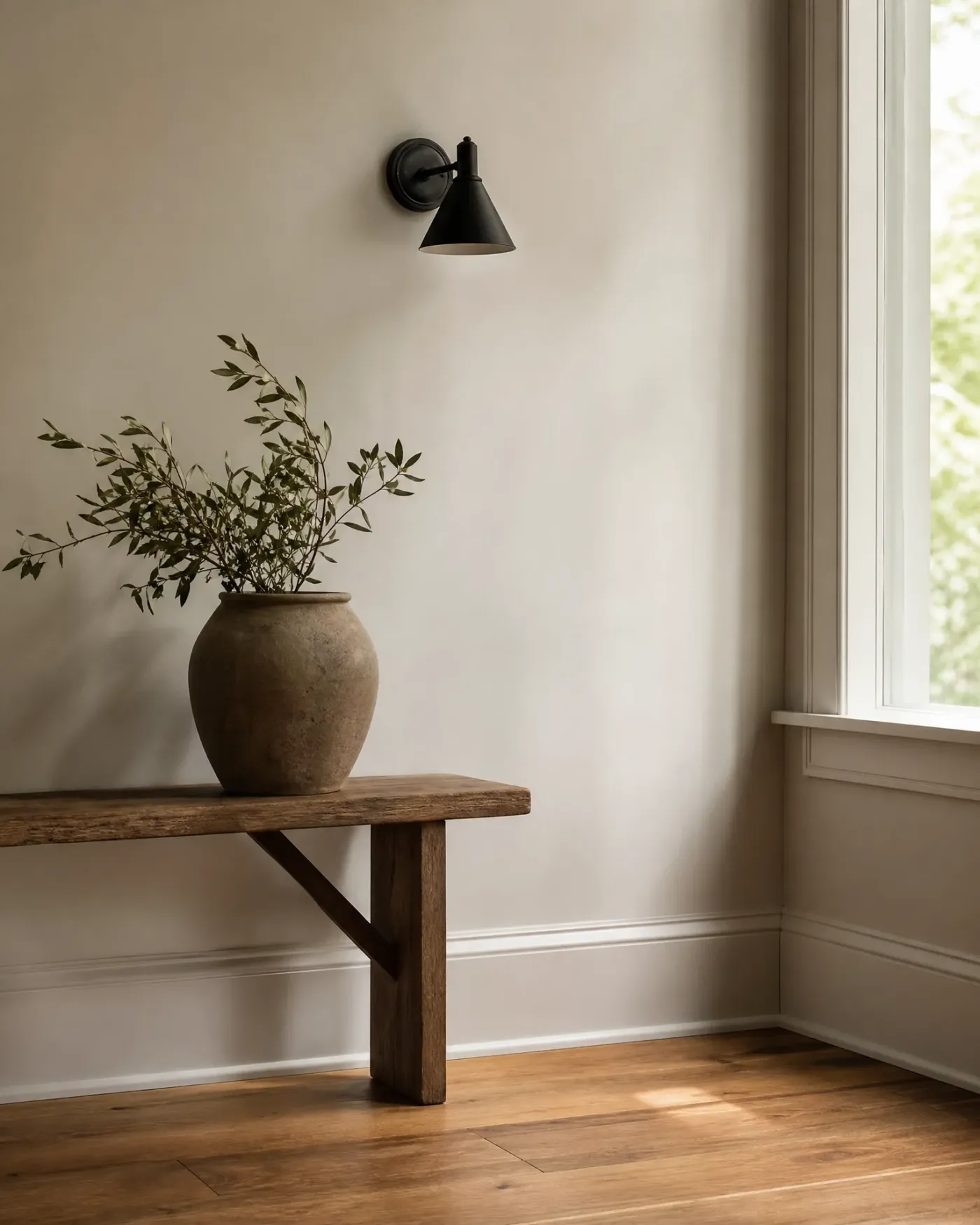
A rustic wooden bench against a pale wall holds a weathered ceramic vase with leafy branches, below a black cone wall sconce, beside a window with sunlight falling on the wood floor.
A bathroom vanity with wood cabinets and a white marble countertop, black widespread faucet and undermount sink, a wood-framed mirror, a fabric-shaded wall sconce, a ceramic vase with green branches, and a window with white blinds.
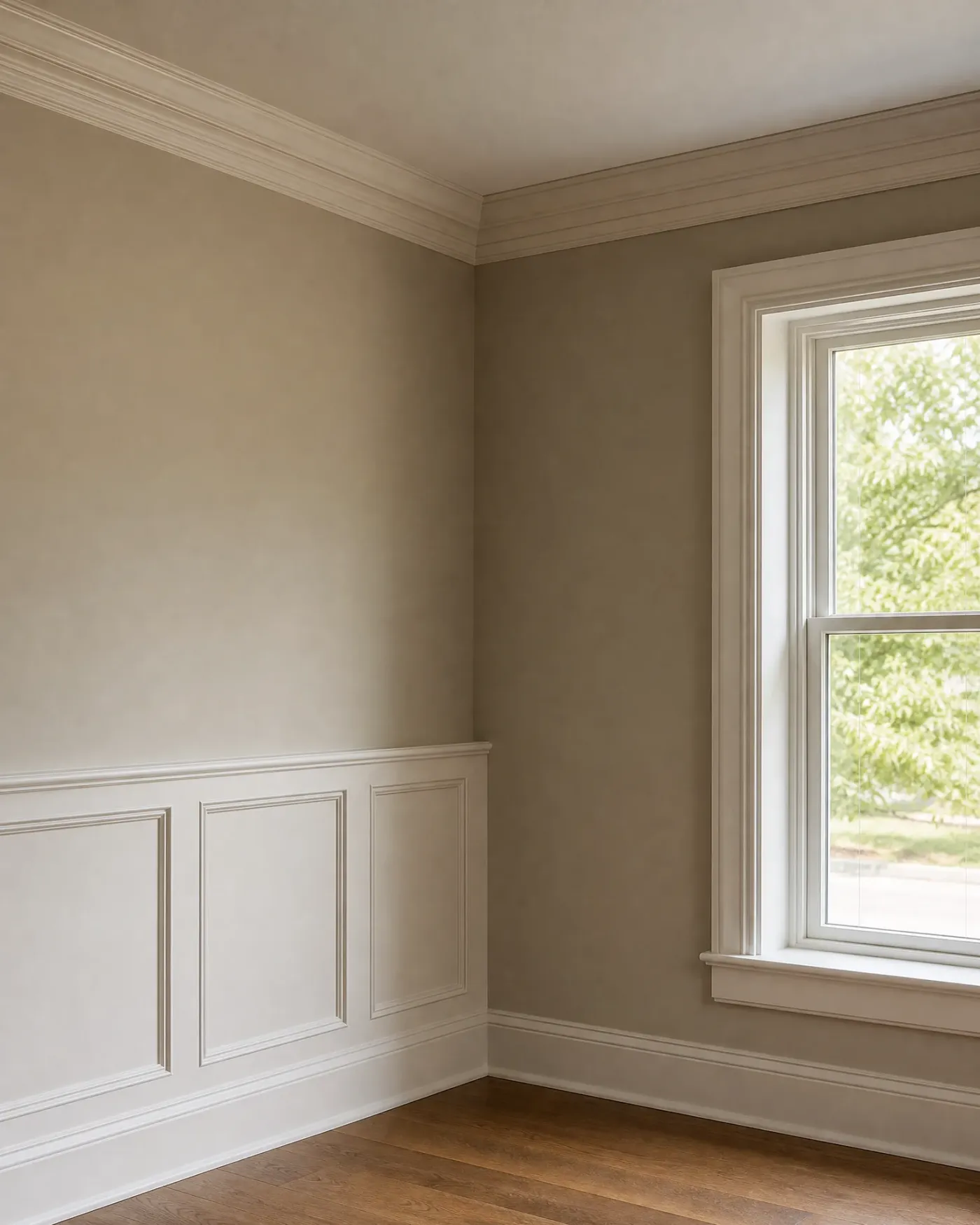
Empty room corner with taupe walls, white wainscot paneling, crown molding, dark wood floor, and a double-hung window showing green foliage outside.

A local pro for your air conditioner repair

Only one pro gets your request, so you hear from one company.

Find a licensed air conditioner pro

Sending the form costs nothing.