



Why your heat pump won't turn on in Louisiana

RepairHeat PumpLouisiana
Step 1 of 2

What ZIP code is the job in?

Why won't my heat pump turn on in Louisiana?

A heat pump that won't turn on at all, in Louisiana heat or in a cold snap, usually means power isn't reaching the unit or the thermostat isn't telling it to run. You flip the thermostat up or down and nothing happens, outside or in. Before anything gets diagnosed, it helps to know where the problem usually sits, since a dead system is often a smaller fix than it feels like standing in a hot house waiting on it.

Check the breaker and the thermostat first, then the outdoor disconnect

Most of the time a heat pump that won't start has lost power somewhere between the breaker panel and the unit itself, or the thermostat isn't calling for heat or cool the way it should. A tripped breaker, dead thermostat batteries, or a disconnect switch left off outside the condenser are the usual culprits. With power cheap here and most homes running electric heat, that outdoor unit works through muggy summers and mild winters without much rest, and a tripped breaker from strain or a worn contactor inside the unit is a common way for it to just quit. If the thermostat screen is blank or unresponsive, that points to power loss rather than a mechanical failure in the unit itself.

A smiling man in a gray long-sleeved shirt stands in a kitchen looking to the side, with open shelves of dishes, a white mug on the counter, a potted plant, and a view through a doorway into a living room.
A smiling bearded man in a green sweater sits at a white marble kitchen island with a mug, potted plant and bowl of fruit, in a bright white interior with open shelving and an arched doorway.
A smiling man with dark curly hair and a beard, wearing a dark green knit sweater, stands at a white marble kitchen counter with a dark blue mug, with open shelving, pendant lights and a houseplant behind him.
A smiling man in a green ribbed sweater stands behind a wooden table holding a ceramic mug of coffee in a kitchen with white subway tile, shelves of potted plants, and a bowl of fruit.

Check the thermostat first

Most thermostats here run on batteries even if the rest of the system is wired in. Dead batteries drop the display or freeze it mid-screen, and the unit never gets a call to run. A thermostat set to cool when you meant heat, or a fan switch left on, can look the same as a unit that's dead. Before anything else, pull the cover and look for a blank or dim screen. If it's a smart thermostat, check whether it lost its connection to the base unit. This takes a minute and rules out the simplest cause first.


What trips the breaker

A heat pump pulls more power on startup than it does running steady, and that surge is what trips a breaker that's already weak. A breaker that trips once might have caught a power blip. One that trips again as soon as you reset it is telling you something in the unit is drawing too much, often the compressor or the outdoor fan motor. Louisiana's humidity pushes the outdoor unit harder for more of the year than it would somewhere drier, and that steady load wears on electrical parts faster than people expect.

An outdoor air conditioning condenser unit with dusty coils sits on a concrete pad against light horizontal siding, with an electrical disconnect box and refrigerant lines on the wall and a shrub and mulch at left.
Before you get your heat pump repair
A gray outdoor heat pump unit on a concrete pad beside a house with horizontal lap siding, with a conduit running to a wall-mounted disconnect box and a green shrub to the left.
After you get your heat pump repair

With your heat pump down, you're running on window units or space heaters, and the power bill shows it. Electricity here is cheap, but running a backup for days still costs more than the fix would.

A heat pump that won't start is rarely a one-day wait. Left alone, a tripped breaker or stuck contactor can take the compressor down with it, turning a simple reset into a bigger repair.

Power costs 12.52 cents per kilowatt-hour statewide

At 12.52 cents per kilowatt-hour, running your heat pump day to day doesn't cost much here. That's exactly why a unit that won't turn on stings. You're paying to run window units or space heaters on top of a system already sitting idle, and that adds up fast compared to just getting it fixed.

EIA-861 2025 statewide residential average

A gray outdoor air conditioner condenser unit on a concrete pad beside a house with horizontal siding and an electrical disconnect box, surrounded by grass.

A breaker that trips once

A breaker trips, you flip it back, and the heat pump runs fine for weeks. That one trip might have been a surge or a fluke, nothing more. But a breaker that trips a second or third time is telling you something inside the unit is pulling too much current. Catching it after the first trip, before it becomes a pattern, is what keeps a Saturday afternoon repair from turning into a replaced compressor.

A white outdoor heat pump unit on a concrete pad beside a house with horizontal lap siding, with a plain light wall and grass lawn to the left.

A thermostat that stops responding

If the display is blank or frozen, new batteries either fix it in seconds or they don't. When they don't, the thermostat itself has failed, or the wiring behind it has come loose. A homeowner who checks this first and still gets nothing has already ruled out the easy answer, and that matters once a contractor is on site. It means the visit goes straight to the actual fault, outdoor unit or control board, instead of starting over at the thermostat.

Call Now or Wait and See

Call now

  • A licensed contractor local to your area gets your situation, not a dispatcher reading from a script.
  • Someone who works on heat pumps every season already has a guess at what's wrong before they pull up to your house.
  • Only one contractor gets your request, so you're not fielding calls from three different companies at once.
  • A tripped breaker or a dead thermostat battery might be fixed same day once someone is actually looking at it.
  • Waiting means more days running window units or space heaters while the power bill climbs for no reason.

Wait and see

  • If the breaker tripped once and the unit's run fine since, it might just have been a fluke.
  • A thermostat that lost power from fresh batteries and came back working on its own isn't a sign of anything deeper.
  • Waiting costs you comfort and money if the real problem is electrical and gets worse while you watch it.
  • A heat pump that won't turn on twice in the same week is telling you something that won't fix itself.
  • The longer a dead system sits, the longer you're paying for backup heat or cooling on top of a repair you'll still need.
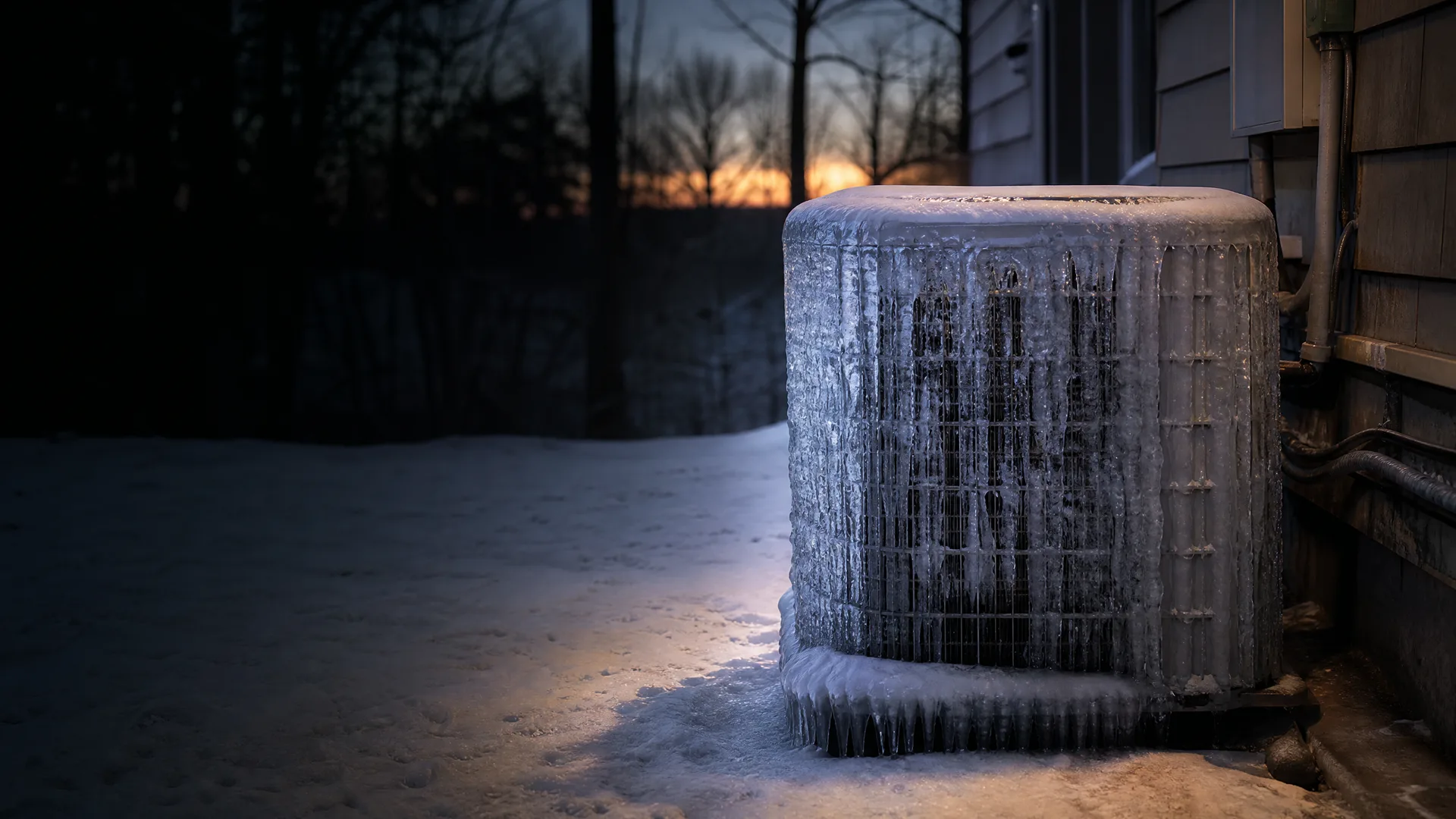
An outdoor condenser unit encased in thick ice stands on snow beside a house with horizontal siding and exterior pipes, with bare trees and a sunset glow in the background.

Ice has built up over the coils in the side yard, thick enough to round off the fins, and the unit sits silent under it. The sun is barely up, that gray light before it clears the fence line, and the grass is stiff with frost. You came out in a coat you don't wear most years to see why the house felt cold since 3 a.m. No fan noise, no hum, nothing moving. Just the block of ice and your breath in the air. Inside, the thermostat still reads the temperature you set it to last night. It just never got there.

One request and it's handed off

A heat pump with no power reaching it and no thermostat signal isn't a problem you can chase down by guessing. Someone who works on these units all year in Louisiana has already seen the breaker that won't hold, the contactor stuck from last summer's humidity, the low voltage wire a squirrel got into. They know which of those shows up most in a house like yours before they ever pull into the driveway. That's different from a dispatcher reading your symptoms off a screen and sending whoever's free. One contractor, local to where you live, takes this request and takes the time to look at what you actually described. You're not fielding calls from three companies trying to beat each other to your door while your house sits at whatever temperature it's stuck at. Whether it's July and the house is heating up or a rare cold morning and the heat won't kick on, the sooner this gets into the hands of someone who knows heat pumps, the sooner you're not the one trying to solve it.

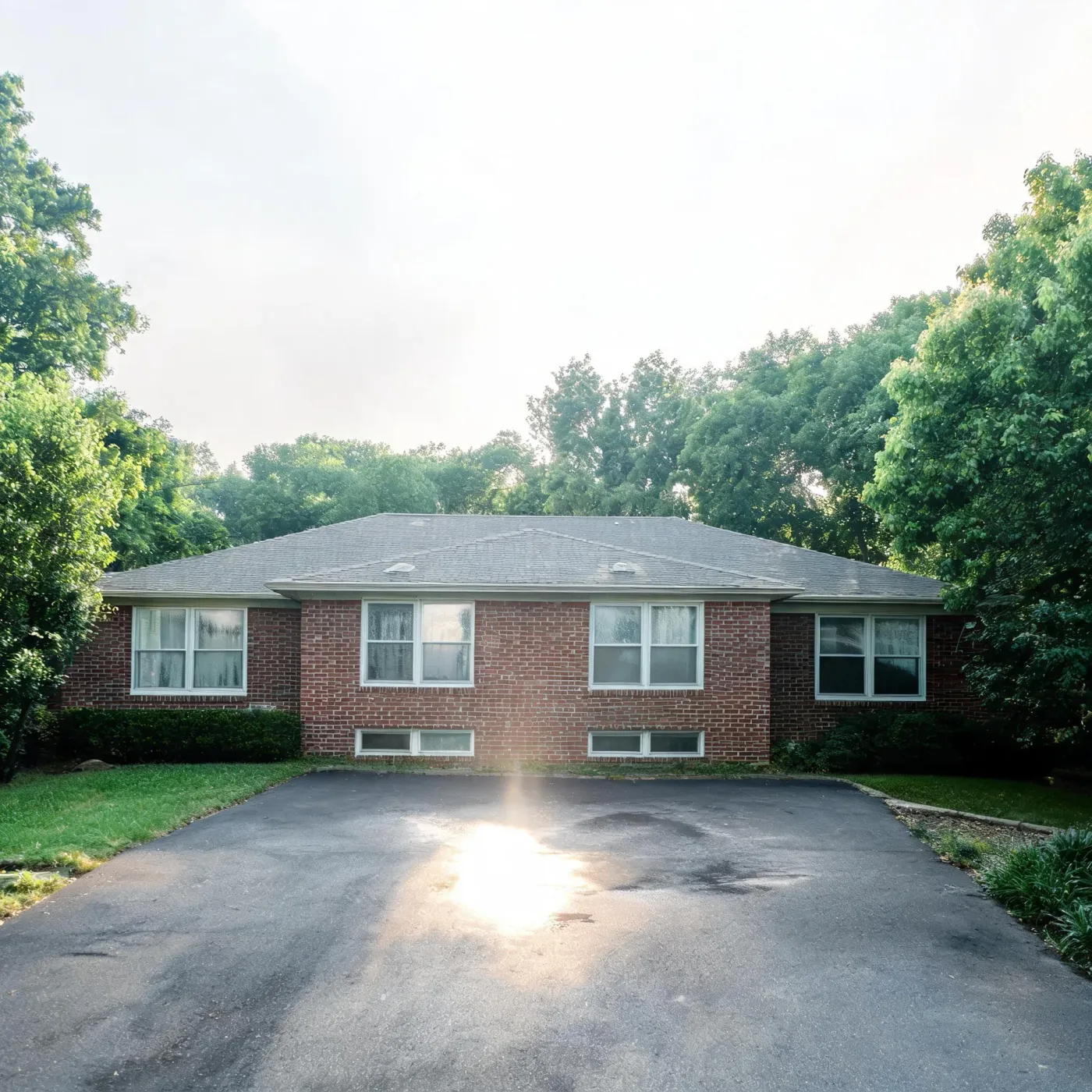
A single-story brick ranch house with a gray shingled hip roof, white-framed windows and basement windows, fronted by a wide asphalt driveway with sun glare, surrounded by green lawn and leafy trees under a bright hazy sky.

Summer air here averages a dew point of 73°F across June, July and August, according to NOAA climate data for Louisiana. That's heavy, sticky air, and a heat pump works harder pulling moisture out of it than it does just cooling the air itself. If yours won't turn on in weather like that, the strain of a whole summer running against that humidity is often what pushed a weak part past the point it could keep working. A unit that's been struggling quietly for months doesn't give much warning before it quits.

NASA POWER T2MDEW county cells weighted by homes

What are you noticing right now at your house

You go to the thermostat and nothing happens. No hum from the outside unit, no air moving through the vents, no click when the system should kick on. Maybe the display is blank or frozen. Maybe it lit up fine but the air coming out is room temperature, not warm or cool. Outside, the fan isn't turning and there's no sound at all from the unit in the side yard. If it's been off a while in summer, you've probably noticed the house holding onto heat and humidity it normally wouldn't. If it's a cold snap, the house just doesn't warm up no matter where you set the dial.

A gray outdoor condenser unit on a concrete pad beside a house with horizontal lap siding, with a wall-mounted disconnect box, conduit and insulated refrigerant lines, a shrub at left and gravel at right.

Running the way it should

The outdoor unit sits quiet most of the time, humming only when it's actually moving heat in or out of the house. The lines and conduit running up the wall carry refrigerant and power without you ever noticing them. Nothing about it should ask for your attention.

An outdoor air conditioning condenser unit on a concrete pad beside a house with horizontal lap siding, with a green shrub to the left and a wide concrete slab in the foreground.

Sitting dead on the pad

The unit on the slab isn't humming, isn't cycling, isn't doing anything. No vibration, no sound of the fan inside. Whatever's keeping it from starting, breaker, contactor, thermostat signal, won't show itself from where you're standing, and it won't fix itself either.

A heat pump that won't turn on comes down to power not reaching it or the thermostat not calling for it. Dead batteries, a tripped breaker, a stuck contactor, ice on the coils in a cold snap. Checking the thermostat and the breaker takes a few minutes and sometimes that's the whole fix. When it isn't, the unit needs someone who can test the parts behind the wall and the panel outside, not another guess. You've already looked at what's in front of you. The rest is a call away, and once you send the request, finding someone to come look at it stops being something you have to manage yourself. A licensed contractor local to your area, who sees this exact failure on heat pumps all over Louisiana every summer and every cold snap, takes it from there.

A man in a blue T-shirt sits on a light gray sofa, laughing while looking at an open laptop in the foreground, with a framed picture, lamp and potted plant behind him.
A bearded man in a blue and brown plaid flannel shirt stands indoors looking out a window at snow-covered trees, with a ceramic mug on the windowsill.

Done looking for a heat pump pro

A heat pump that won't turn on is a power problem or a thermostat problem, and either one needs someone who can test it rather than guess at it. Send the request and a licensed contractor local to your area takes it from there, someone who works on heat pumps all year in Louisiana and has already seen the stuck contactor and the breaker that won't hold. Only one contractor gets your request, so you're not fielding calls from three companies while your house sits without heat or air.

Send it today

Your request goes to one pro, not a list of companies.

Asking costs nothing, and the choice to hire stays yours.