What emergency heat means on a Louisiana heat pump

Once you send the form, finding a pro is off your list.

I'm done searching

Why is my heat pump showing "emergency heat"?

You went to switch on the heat and noticed the thermostat says "emergency heat" instead of its normal setting. The house still warms up, so nothing feels urgent, but the label is strange enough to make you wonder if the heat pump is failing or if you did something wrong just by touching the thermostat.

It means the heat pump outside has stopped and a backup heater is doing the work instead

A heat pump moves heat from the air outside into your house. When it can't do that, usually because the outdoor unit has iced over, lost power, or failed outright, the system switches to its backup electric heat to keep the house warm. That backup is what "emergency heat" means. Most heat pumps in Louisiana rely on electric strip heat for this, since the mild winters here mean it's rarely needed for long. If the thermostat switched to it on its own, something in the outdoor unit likely isn't working. If you switched it manually and the outdoor unit never runs at all, that points to the same problem. Either way, the house stays warm while the backup heat runs, but it's worth having the outdoor unit looked at.

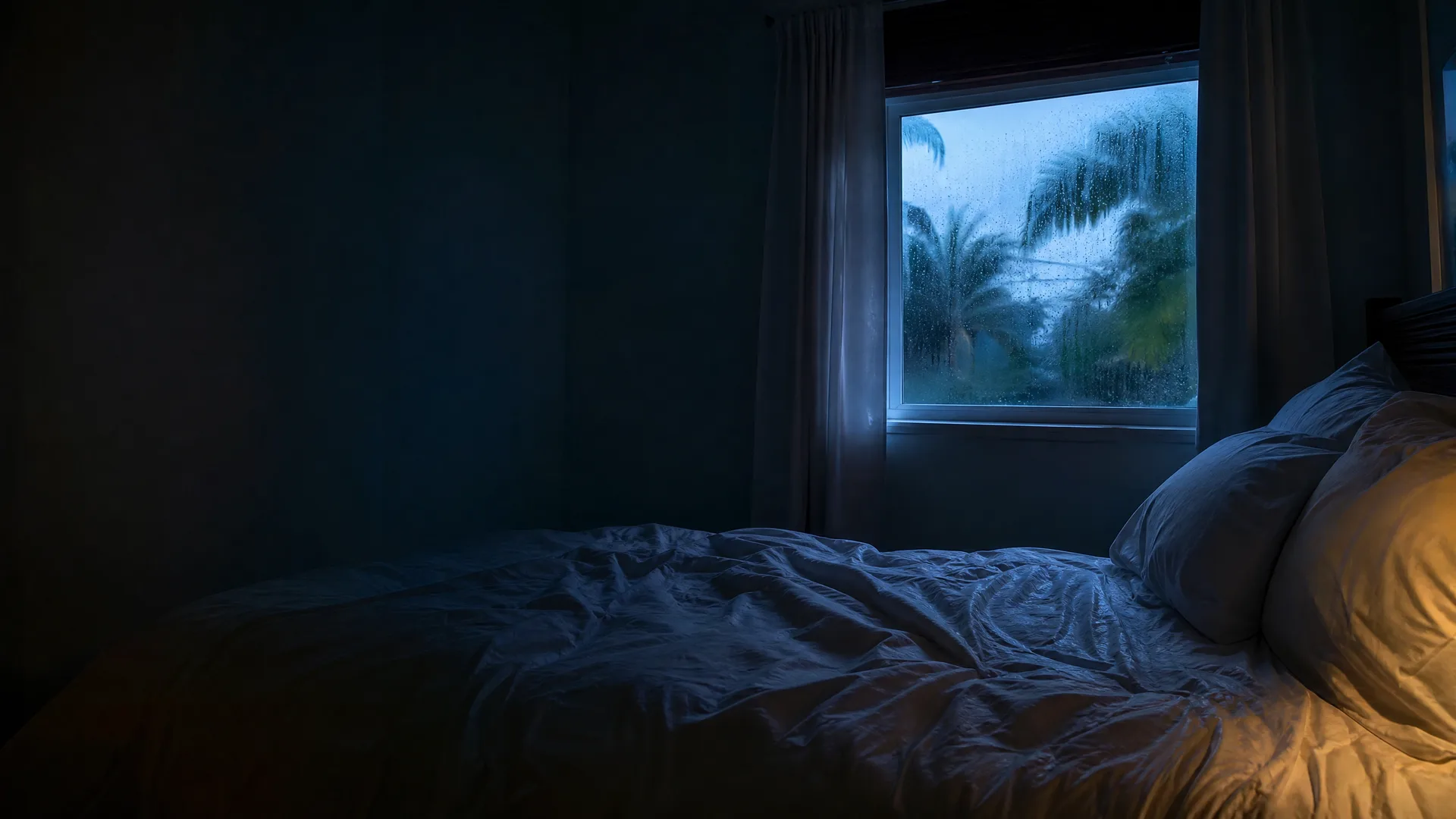
A dark bedroom with an unmade bed and pillows beside a curtained window showing rain-streaked glass and palm foliage outside.

It's past midnight and the room is thick with heat that shouldn't still be there. You kicked the sheets off an hour ago and they're damp where you were lying. The window's fogged along the edges from the cold air outside meeting all that humidity trapped in. You get up and check the thermostat in the hall, and it still reads "emergency heat" like it did this morning. The air coming out of the vent feels thin, not the steady warm push you're used to. You stand there a second, barefoot on the floor, wondering if it's been running like this all day while you were at work, and what it's been costing you to heat the house this way since Louisiana power isn't the problem, something else is.


A gray outdoor condenser unit on a concrete pad beside a light green lap-sided house, with a wall-mounted electrical disconnect box, mulch bed with shrubs, river rock, and a paved walkway in the foreground.
Your heat pump pulls heat from the outside air and moves it inside. The coils stay clear, the lines run clean, and the thermostat holds the temperature you set.
An outdoor air conditioner condenser unit on a concrete pad beside a house with horizontal lap siding, with refrigerant lines entering the wall and a shrub on bare soil to the left.
When the coils clog with dirt and debris, the unit can't pull heat from the air anymore. That's when the thermostat switches to emergency heat on its own.
A gray-haired man in a dark long-sleeve shirt sits on a gray sofa in a living room, looking toward a sunlit window with sheer curtains.
A gray-haired man in a dark green sweatshirt sits on a sofa in a living room, looking toward a bright window, with a houseplant, lamp, fireplace and framed art behind him.
A gray-haired bearded man in a dark green collared sweater sits on a sofa in a living room with a window, houseplant, floor lamp and bookshelves, looking off to the side.
A gray-haired man in a dark green sweater sits on a sofa in a sunlit living room, looking off to the side, with a framed landscape painting, dining table and shelving behind him.

Why is the air coming out cool and your bill climbing?

If the unit's stuck on emergency heat and nobody switched it, the air from your vents will feel cooler than usual, maybe lukewarm instead of warm. You might notice the heat running longer to hit the same temperature, or never quite getting there. Since most homes here heat with electricity, that strip heat inside the air handler is pulling a lot more power than the heat pump normally would, and you'll likely see it on your next bill even with power priced the way it is here. Left alone, the house stays heated, so it's easy to put off. But the outdoor unit isn't doing its job, and whatever stopped it, ice on the coil, a bad sensor, a failed component, won't fix itself.

A gray outdoor condenser unit on a concrete pad beside a house with horizontal lap siding, connected by conduit and lines to a wall-mounted disconnect box, with a shrub and gravel bed to the left.

Running as it should

The outdoor unit sits quiet on its pad, coils clean, fan grille clear. Air moves through it the way it's built to. Set the thermostat to normal heat and it should hold the temperature without strain, drawing warmth from the outside air even on a cold Louisiana night.

An outdoor air conditioner condenser unit on a concrete pad beside a house with horizontal lap siding, with refrigerant lines and a gray electrical disconnect box on the wall, surrounded by bare dirt.

Coated and struggling

Dirt and debris have built up over the coil guard and fan grille until the unit can barely pull air through. A heat pump in this shape is what pushes the system onto emergency heat, and it won't clear up on its own. A contractor who works on these year-round can tell you what it needs.

A woman with shoulder-length dark brown hair in a cream knit cardigan sits in an upholstered armchair beside a window, looking off to the side, with a white bookshelf and potted plant blurred behind her.
A woman with dark hair in a bun sits wrapped in a chunky knit blanket on a couch with a child resting his head on her shoulder, eyes closed, beside a lit lamp and bookshelf indoors.

Stop chasing a heat pump pro

A heat pump stuck on emergency heat is running on electric strips alone, and in a Louisiana winter that's not the setup your system was built around. Electric heat here is already the main way most houses stay warm, and strip heat on top of that pulls hard. You'll see it on the bill before the month is out. The longer it sits on emergency heat, the longer something in the outdoor unit isn't getting fixed, whether that's a stuck switch, a low charge, or a frozen coil that isn't defrosting the way it should. None of those clear themselves. A local contractor who works on heat pumps through every Louisiana winter has likely seen this exact thermostat switch more than once and knows where to check first. Sending the request puts it in front of that one contractor instead of leaving you to sort through a list of companies yourself. From there, getting the system back to normal heat stops being something you have to chase down.

What the outdoor unit is doing

A heat pump moves heat instead of making it, and that only works if the outdoor unit can pull warmth from the air outside. Inside that unit is a defrost control board, a reversing valve, and coils that have to stay clear for the process to run. If any of those fail, the system can't do its normal job, so it falls back to emergency heat, which runs on electric strips instead. The thermostat setting is really just reporting what the equipment had to do to keep the house warm. Nothing about that failure fixes itself once the weather warms up or the unit cycles again.

Why a tech checks it on site

Emergency heat can mean a frozen coil, a bad reversing valve, a failed defrost sensor, or a compressor that's stopped working, and each of those needs a different repair. A technician who services heat pumps in your area knows which of these shows up most this time of year and checks the outdoor unit directly rather than guessing from the thermostat reading alone. That's the only way to know whether the fix is a part, a sensor, or something in the refrigerant line. Leaving the system on emergency heat past a day or two means paying for strip heat while the actual problem sits unaddressed outside.

An outdoor air conditioner condenser unit with rust spots on its top grille sits on a concrete pad beside a house with light horizontal siding, with conduit lines and an electrical box on the wall and a mulch bed to the right.
Before you get your heat pump repair
A gray outdoor condenser unit on a concrete pad beside a light-colored lap-sided house, with a wall-mounted disconnect box, refrigerant lines, mulch bed and shrubs, and a concrete walkway in the foreground.
After you get your heat pump repair
  1. Outdoor temperature drops and frost starts forming on the outdoor coil.

  2. The defrost control board senses the coil losing heat transfer.

  3. The reversing valve switches the system into defrost mode briefly.

  4. Frost melts off the coil while the strips cover indoor heat.

Power costs 12.52 cents per kilowatt-hour statewide

At 12.52 cents a kilowatt-hour, your heat pump costs less to run than it would almost anywhere else. Emergency heat throws that away. The strips draw far more power to make the same warmth, so a stuck thermostat setting turns a cheap month into an expensive one fast.

EIA-861 2025 statewide residential average

Where this leaves you

  • Emergency heat means the strips are doing all the work while the outdoor unit sits idle.
  • A stuck switch is a quick fix, but a locked reversing valve or a dead defrost board is not.
  • Left alone, your bill keeps climbing every day the thermostat stays set to emergency heat.
  • A local contractor who works on heat pumps all winter knows which of these parts tends to fail first.
  • One contractor takes the job, so you get one visit instead of a string of calls to sort through.
  • Switching the thermostat back without fixing what tripped it just sends the system right back to the strips.

Emergency heat is your system telling you the outdoor unit isn't doing its job, and the strips are covering for it. Sometimes that's nothing more than a switch bumped out of place. Sometimes it's a reversing valve stuck in the wrong position or a defrost board that's stopped reading the coil right. You can't tell which from inside the house, and flipping the thermostat back to normal without knowing why it tripped just means it trips again, maybe tonight, maybe next week.

A contractor who works on heat pumps through a Louisiana winter has seen this before, probably more than once this season. They know a locked reversing valve looks different from a dead defrost board, and they know which one tends to go first on units that have been running a few years. That's the kind of thing you learn from doing the same repair call over and over, not from a manual.

When you send the request, it goes to one contractor, licensed and local, not a batch of companies competing for your callback. You get a single visit from someone who already knows what they're walking into, instead of sorting through a string of quotes from people who've never seen your system. Until then, the strips keep running and the bill keeps climbing. That part won't wait, but finding someone to fix it doesn't have to be the thing you're carrying.

An outdoor heat pump unit with a large circular fan sits on a concrete pad beside a dark horizontal-sided building, with gravel ground and green shrubs at right.

Hand off the heat pump problem

Only one pro gets your request, so you hear from one company.

RepairHeat PumpLouisiana
Step 1 of 2

What ZIP code is the job in?