





A red brick wall with a row of low shrubs and mulch bed on the left, a mown lawn in the center, and a single-story light-colored house with a gabled roof beyond, backed by pine trees under an overcast sky.

AC Installation in Bogalusa, LA

Tell us about the job

Takes about a minute. No obligation.

New system or replacementCentral ACWashington Parish, LA
Step 1 of 2

What ZIP code is the job in?

Most homes in Washington Parish heat with electricity, close to seven in ten. Gas heat is less common here, under a quarter of homes, and propane fills in a small share beyond that. For AC installation this matters because a lot of these homes already run an electric furnace or heat pump, so the ductwork and electrical setup are built around an all-electric system. A heat pump fits that pattern well, since it uses the same electric service and ties into ducts already sized for electric heat. If your home runs on gas heat instead, the installer will size the AC side on its own and leave the furnace as it is.

6 months
May through October, your air conditioner is on duty
91°F
the average summer afternoon it cools against
3 hail events
in ten years, and hail bends the fins on outdoor coils
13.4 SEER2
the federal minimum any new unit must meet
Isometric cutaway illustration of a single-story house showing interior rooms with furniture, overhead ductwork, an indoor air handler unit, and an outdoor condenser unit connected by lines at the side of the building.
Your air conditioner works hardest from May through September.

NOAA nClimDiv, 1991–2020 normals

Half the homes in Washington Parish were built in 1982 or earlier.

A standard AC install still fits them, no special sizing needed.

Weather here is rough on a system. It doesn't change what size you need.

38 severe weather events from 2015 to 2024
49% of homes statewide lost power a day or more in 2024
27 damaging wind events from 2015 to 2024

A standard size and a mid-range efficiency rating are the right call here. Nothing about Bogalusa pushes you toward oversizing or toward paying more for a higher SEER2 unit than the house needs. Electricity in Louisiana runs 11.73 cents per kilowatthour, which is on the lower side nationally, so the payback on a premium high-efficiency unit takes longer to pencil out here than in a state with pricier power. A correctly sized system matched to your square footage and insulation will cool the house and keep the electric bill reasonable without reaching for the most expensive option on the lot.

Size it for how hard it works here

A new system here will work harder than most, every year. Size it right and don't buy on price alone.

Find a contractor
A man in a dark T-shirt and brown work pants carries a canvas tool bag up wooden porch steps toward a green front door, beside a potted shrub.
An outdoor air conditioning condenser unit mounted on a concrete pad beside a house, with electrical conduit running to a wall-mounted disconnect box.

Cooling starts in May. April is the month to get ahead of it.

Cooling runs here from May through October, six months a year. If the old unit fails once that stretch is underway, the replacement happens on whatever schedule the breakdown allows, not the one you'd choose. Doing it in April, before the season starts, means the contractor can size the system properly and it's already running when May gets here.

The old unit gets disconnected and hauled off

The installer disconnects the refrigerant lines, the electrical whip and the condensate drain before the old condenser and air handler or coil come out. Refrigerant has to be recovered into a tank rather than released, that's standard practice for anyone licensed to do this work. Once the old equipment is out, it gets hauled away as part of the job.

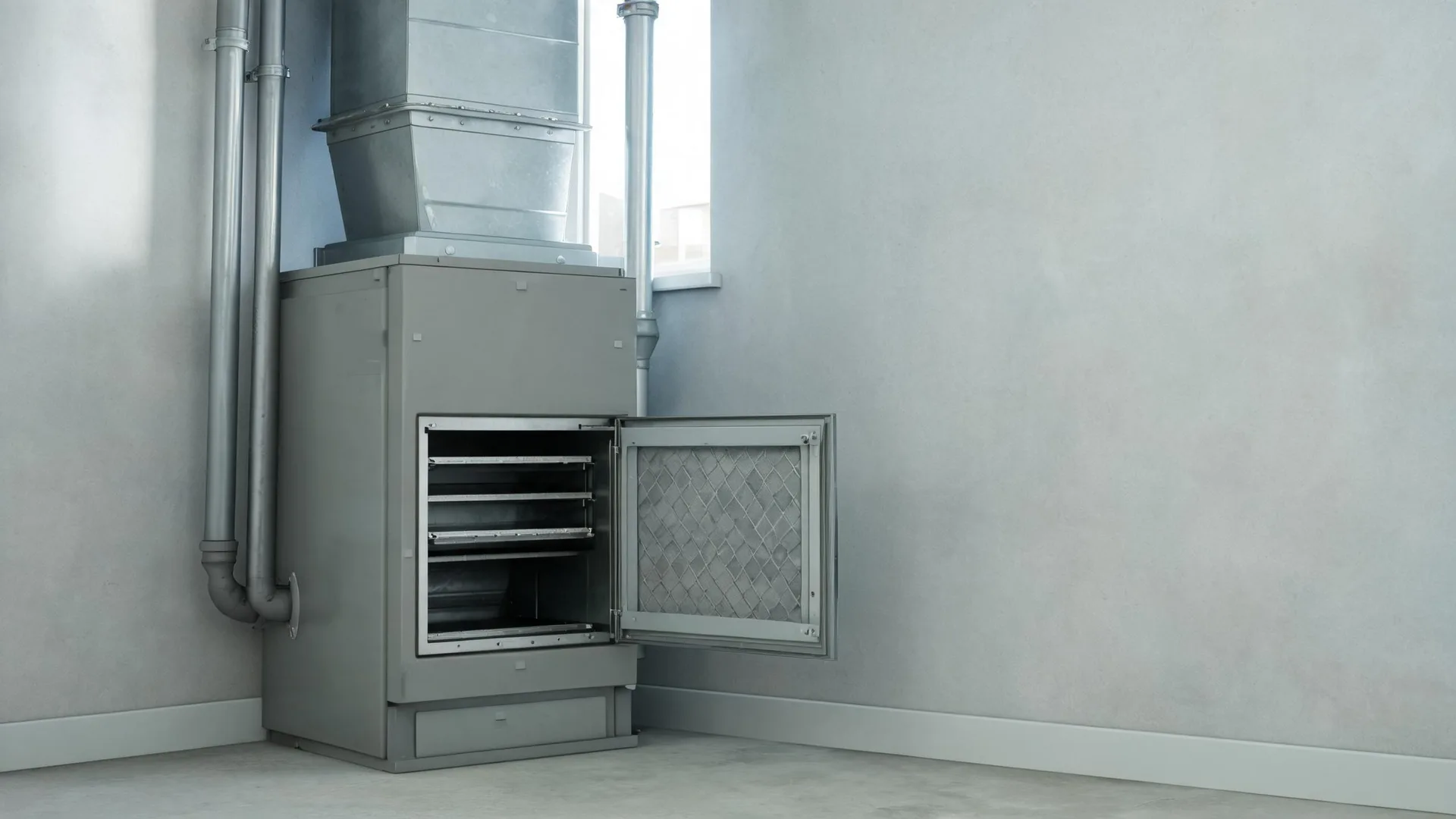
What stays depends on what the new system needs

If the new unit matches the old one in type and capacity, the existing line set and ductwork can often stay in place. A different refrigerant type, a different tonnage, or a switch to a heat pump can mean new line sets or duct modifications, since the old ones were sized and built for the equipment coming out.

An outdoor air conditioning condenser unit on a concrete pad next to the gray vinyl siding of a residential home.

Going above the federal minimum saves little here, about $20 a year.

  • A higher-efficiency unit$400 a year
  • A new unit at the federal minimum, 14.3 SEER2$420 a year

Estimates for a typical Washington Parish home, from EIA household energy data, Louisiana fuel prices and NOAA climate normals. Your home will differ.

Install day starts with the new equipment set in place before the old system comes out, so the condenser pad or stand is ready and the indoor coil or air handler location is cleared ahead of time. Once the old unit is disconnected, the installer sets the new condenser outside, connects or replaces the line set, and mounts the indoor coil to the furnace or air handler. The electrical whip and disconnect box get wired to the new unit, and the condensate drain is run and tested so the system has somewhere for the water to go. Before anything turns on, the line set gets pressure tested and pulled into a vacuum to clear out air and moisture, since either one left behind will damage the compressor. Once that holds, refrigerant goes in, the system gets charged to the manufacturer's spec, and the installer runs it through a cycle checking airflow, temperature split across the coil, and that the thermostat is talking to the right equipment. A system that's wired but never checked against its charge and airflow numbers is one that looks installed but isn't finished.