





An outdoor air conditioning condenser unit positioned beside a blue-sided house at sunset.

AC Installation in Lake Charles, LA

Tell us about the job

Takes about a minute. No obligation.

New system or replacementCentral ACCalcasieu Parish, LA
Step 1 of 2

What ZIP code is the job in?

Electricity here runs 12.95 cents per kilowatt-hour, which is cheap next to most of the country. That helps, but it only goes so far against how hard the air conditioner has to work. The dew point around Lake Charles averages 74°F in June, July and August, higher than most US counties see, and that's what makes the air feel heavy instead of just warm. A unit here is pulling moisture out of thick air for months at a stretch, not just dropping the temperature a few degrees. Cheap power lowers the cost of each hour it runs. It doesn't change how many hours it has to run to keep up.

7 months
April through October, your air conditioner is on duty
91°F
the average summer afternoon it cools against
45 hail events
in ten years, and hail bends the fins on outdoor coils
13.4 SEER2
the federal minimum any new unit must meet
Isometric cutaway illustration of a single-story house showing interior rooms with ductwork and an air handler, connected by refrigerant lines to an outdoor condenser unit on the left.
Your air conditioner works hardest from May through September.

NOAA nClimDiv, 1991–2020 normals

Calcasieu Parish saw 155 severe weather events between 2015 and 2024, including 77 with damaging wind and 45 with hail.

An outdoor unit here needs a spot that keeps it clear of falling limbs and flying debris, and a plan for keeping heat and hot water going when the power drops.

Most homes here run on electricity, and a new system usually keeps it that way

69.4% of homes heat with electricity
Climate zone 2A
Power here costs 12.95 cents per kilowatt-hour

Calcasieu Parish falls under climate zone 2A, a hot and humid zone, and that puts a floor under what can be installed here. Any split-system air conditioner under 45,000 Btu/h put in anywhere in the Southeast has to hit at least 14.3 SEER2. That's higher than the baseline the rest of the country can build to. It's not a label on the box, it's a measure of how much cooling the unit gets out of every watt-hour it draws over a summer. Buying new also puts a federal tax credit in reach, on top of meeting the regional minimum.

A more efficient system earns its keep here

That's the case for going above whatever system you're comparing against. Power here is cheap, but this unit will run long hours most of the year pulling moisture out of thick air, and every one of those hours draws power. A system built to do that job well costs less to run than one that just meets the minimum. Ask what efficiency rating a quote is built around, and compare that number as closely as the price.

Find a contractor
An outdoor residential air conditioning condenser unit mounted on a concrete pad, surrounded by gravel with a blue sky in the background.

Seven months of work a year. One month to get ahead of it.

This system runs April through October here, seven months of the year. That leaves March open, and it's worth using. A unit that fails once summer is underway gets replaced in a hurry, with whatever is on the truck and whoever can get out fastest. One replaced in March gets chosen on its own terms, sized right and installed before the load hits. Cooling starts back up in April either way. The difference is whether that start date found a new system already in or a failed one waiting on a repair truck.

Ask for a load calculation, not a guess off square footage

The size of the old unit doesn't tell you the size of the one you need. A contractor should measure the windows, the insulation, the duct layout and the orientation of the house, then run that through a load calculation. A system sized too big cools the air fast but shuts off before it pulls the moisture out, so the house feels clammy even at the right temperature. One sized too small runs constantly and never quite catches up. Either way you paid for the wrong unit.

Ask what happens to the ductwork, not just the equipment

A new air conditioner only performs as well as the ducts moving its air. Leaky joints, crushed flex duct or a return that's too small will hold back even a well matched system. A contractor comparing systems with you should also look at what's carrying the air, and say plainly whether the existing ductwork can handle what the new unit puts out or needs work first.

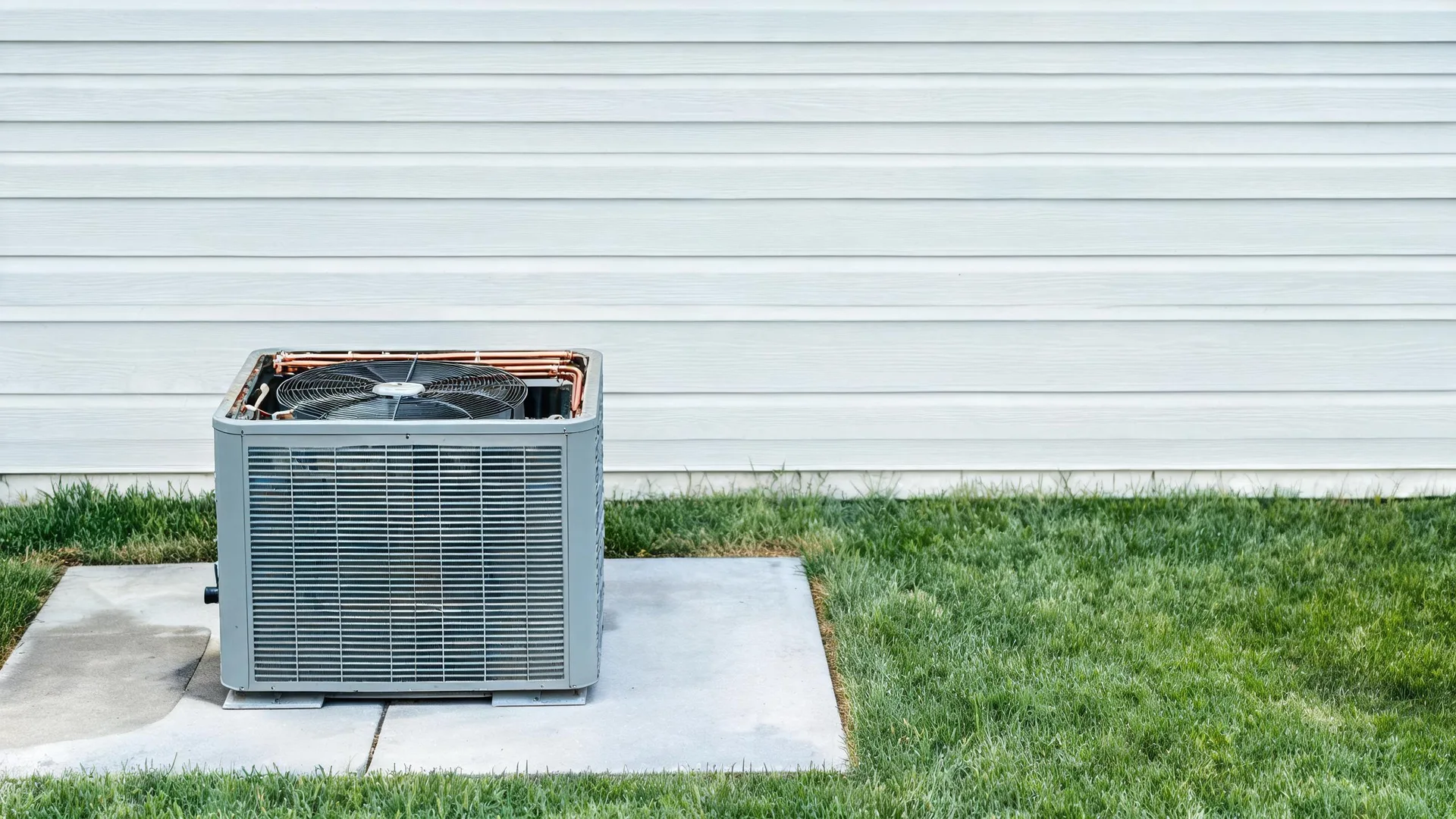
Overhead view of an outdoor AC condenser unit on a concrete pad next to a house with a dark shingle roof.

A higher-efficiency unit would save about $30 a year to run in Calcasieu Parish compared with a new unit at the federal minimum.

  • A higher-efficiency unit$450 a year
  • A new unit at the federal minimum, 14.3 SEER2$480 a year

Estimates for a typical Calcasieu Parish home, from EIA household energy data, Louisiana fuel prices and NOAA climate normals. Your home will differ.

Installation day starts before anyone touches the old unit. The contractor should walk the house first, confirming the load calculation still matches what gets installed and checking that the electrical disconnect, the breaker and the line set all suit the new equipment, not just the old. Pulling the old system comes next: the indoor coil, the outdoor unit, and the refrigerant lines, with the lines either reused if they're sized right or replaced if they're not. Setting the new outdoor unit means a level pad and clearance on all sides for airflow. Inside, the coil gets matched to the furnace or air handler already there, and the refrigerant lines get connected, pressure tested for leaks, then evacuated to pull out air and moisture before any refrigerant goes in. Once it's running, a tech checks the refrigerant charge, the airflow across the coil, and the thermostat wiring before calling the job done.