Electricity here runs 13.43 cents a kilowatt-hour
That is cheap compared to most of the country, but an air conditioner here runs most of the year to keep up with the heat. Low rates don't mean a free pass on a weak system.
Takes about a minute. No obligation.
That is cheap compared to most of the country, but an air conditioner here runs most of the year to keep up with the heat. Low rates don't mean a free pass on a weak system.
A new system installed here is going to run for months straight. How much power it pulls while doing that work shows up on the bill long after the install is done.
NOAA nClimDiv, 1991–2020 normals
Cooling runs May through October here, six months straight once it starts.
April is the month to put in a new system, before the first hot stretch asks something of it.




Half the homes in Sabine Parish were built in 1986 or earlier. A system going into one of those houses is going into ductwork and a layout that were sized for whatever was running decades ago, not for the unit on the truck today. Mobile homes make up close to half the housing stock here too, and they carry their own duct sizing and airflow needs that a standard install has to match. None of that tells you what's behind your own walls. It means the new system has to be sized and matched to the house you actually have, not just dropped in to replace what was there.
Get the sizing and the equipment right and the rate on your bill works for you instead of against you, for as long as the system runs. Get it wrong and you pay the difference every month it's in the ground.
Find a contractorCooling runs six months here, May through October. That is the compressor cycling on and off through the afternoon heat, day after day, with highs averaging 92°F across June, July and August. The dew point averages 71°F those same months, higher than most of the country sees. A system here is not just cooling the air. It is pulling the water out of it too, every time it runs. Sized right, it handles both jobs without strain. Sized wrong, it runs longer than it should or short-cycles trying to keep up, and either way the parts inside log more hours than the same unit would somewhere with a milder summer.
A contractor has to run a load calculation on the house before quoting anything. That number comes from the square footage, the ceiling height, how many windows face the sun, and how much insulation is in the attic. Two houses the same size can need different tonnage because one holds heat better than the other. A unit sized off the old system or a square footage guess costs more to install wrong than to measure right the first time.
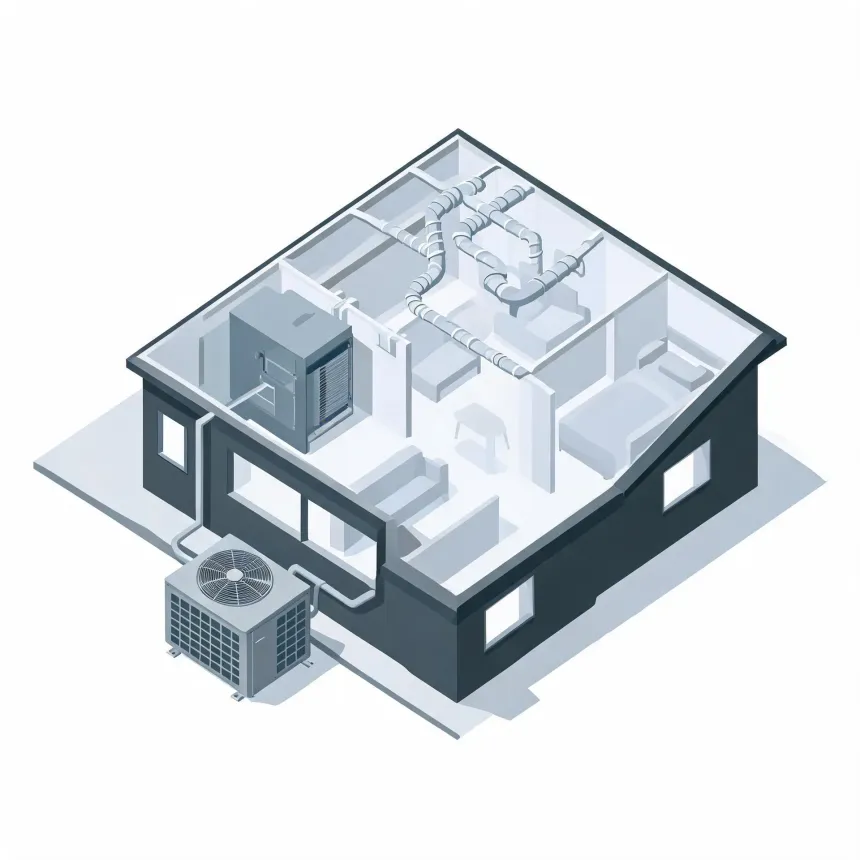
The condenser and air handler are only part of what goes in. Line sets have to be run or replaced, the condensate drain has to pitch correctly so water doesn't back up, and the refrigerant charge has to be weighed in and checked against what the manufacturer specifies for the line length. Electrical work matters too. A disconnect box, the right breaker size, and wiring that can handle the new unit's draw all factor into what the job takes to do right.
Estimates for a typical Sabine Parish home, from EIA household energy data, Louisiana fuel prices and NOAA climate normals. Your home will differ.
Installation day starts with the load calculation already done and the equipment already chosen, so the work itself is mechanical. The old condenser comes out first, then the line sets get disconnected and inspected to see if they can be reused or need replacing. Setting the new condenser means leveling a pad outside and securing it so vibration doesn't carry into the ground or the wall it sits near. Inside, the air handler or coil gets matched to the ductwork already in place, with sheet metal work if the transitions don't line up cleanly. Once everything is connected, the line set gets pressure tested for leaks before any refrigerant goes in, and the charge gets weighed in to match the line length, not just topped off by feel. The last step is running the system through a full cycle and checking the temperature split at the vents, because that number is what tells the installer the system is actually doing what it was sized to do.