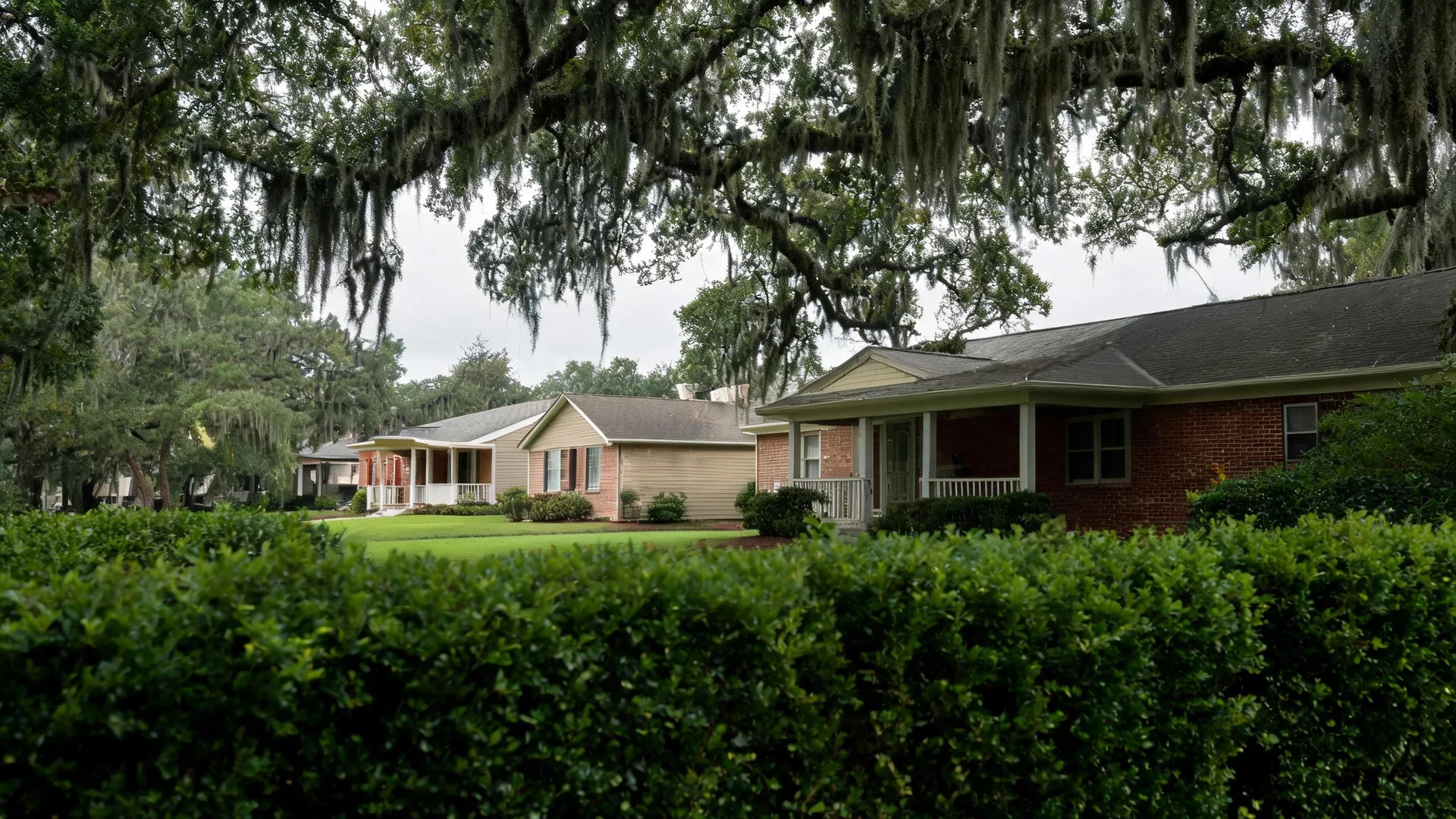






Single-story brick and siding houses with covered porches behind a trimmed hedge and lawn, framed by large oak branches draped with hanging moss under an overcast sky.

AC Installation in Natchitoches, LA

Tell us about the job

Takes about a minute. No obligation.

New system or replacementCentral ACNatchitoches Parish, LA
Step 1 of 2

What ZIP code is the job in?

Natchitoches Parish saw 173 severe weather events between 2015 and 2024. Most of that was wind, 107 times, with 42 hail events and 18 tornadoes mixed in. A new AC has to sit outside through all of that. Hail dents a condenser cabinet and bends its fins, and wind throws branches and debris into the coil. Power is part of the same picture. Nearly half of Louisiana households went at least 24 hours without electricity in 2024, and a central air system does nothing without it.

6 months
May through October, your air conditioner is on duty
92°F
the average summer afternoon it cools against
42 hail events
in ten years, and hail bends the fins on outdoor coils
13.4 SEER2
the federal minimum any new unit must meet
Isometric cutaway illustration of a house showing interior ductwork, an air handler, and an outdoor condenser unit connected by lines, with simple furniture in the rooms.
Your air conditioner works hardest from June through September.

NOAA nClimDiv, 1991–2020 normals

Six months of 92 degree afternoons means this system runs most days from May to October.

Size it for that load now, because a unit that's too small will run flat out all summer and still fall behind.

Two in three homes here already run on electricity, outages and all

67% of homes heat with electricity
Cooling runs May through October
Summer afternoons average 92°F

Natchitoches Parish falls in climate zone 3A under the 2021 energy code, warm and humid with a long cooling season. That puts it in the Southeast region for federal efficiency rules. Any split-system air conditioner installed here under 45,000 Btu/h has to hit at least 14.3 SEER2, higher than the national manufacturing minimum. A contractor sizing your system works within that floor, not below it. A federal tax credit is available for equipment that qualifies above the minimum, which is worth asking about when you're comparing units.

Plan the installation around the weather it has to survive

Where the installer puts the new outdoor unit, and what they mount it on, is worth deciding before the work starts rather than after a storm. Ask about a pad or bracket that keeps it clear of runoff and falling limbs, and where it sits in relation to the house. If the power goes out for a day, a gas or propane water heater with a standing pilot keeps making hot water without it; that's a question worth raising while you're already planning the installation.

Find a contractor
A man in a dark T-shirt and tan work pants carries a canvas tool bag up wooden porch steps toward a green panelled front door, with a potted shrub beside the entry.
A gray metal air conditioning condenser unit mounted on a concrete pad in a flat grassy field under a partly cloudy sky.

Put it in before May asks anything of it

May through October is six months, half the year this system has to work. Put it in before May and the job happens on your schedule, with time to size it right and set the outdoor unit where it belongs. Wait until the old one quits in the middle of summer and you take whatever gets you cool fastest, not what's right for the house. Going in before May also means a startup check and a few weeks to watch it run before the real heat gets here.

The size of the job sets the price

A straight swap, same spot, same size, same kind of ductwork, is the simplest version of this job. Price moves when the new system needs a bigger line set, a new disconnect box, or a pad poured somewhere the old one never sat. Adding a line, running new wire to the breaker panel, or modifying ductwork to match a different blower all add labor before the unit even gets set.

The equipment itself isn't one price

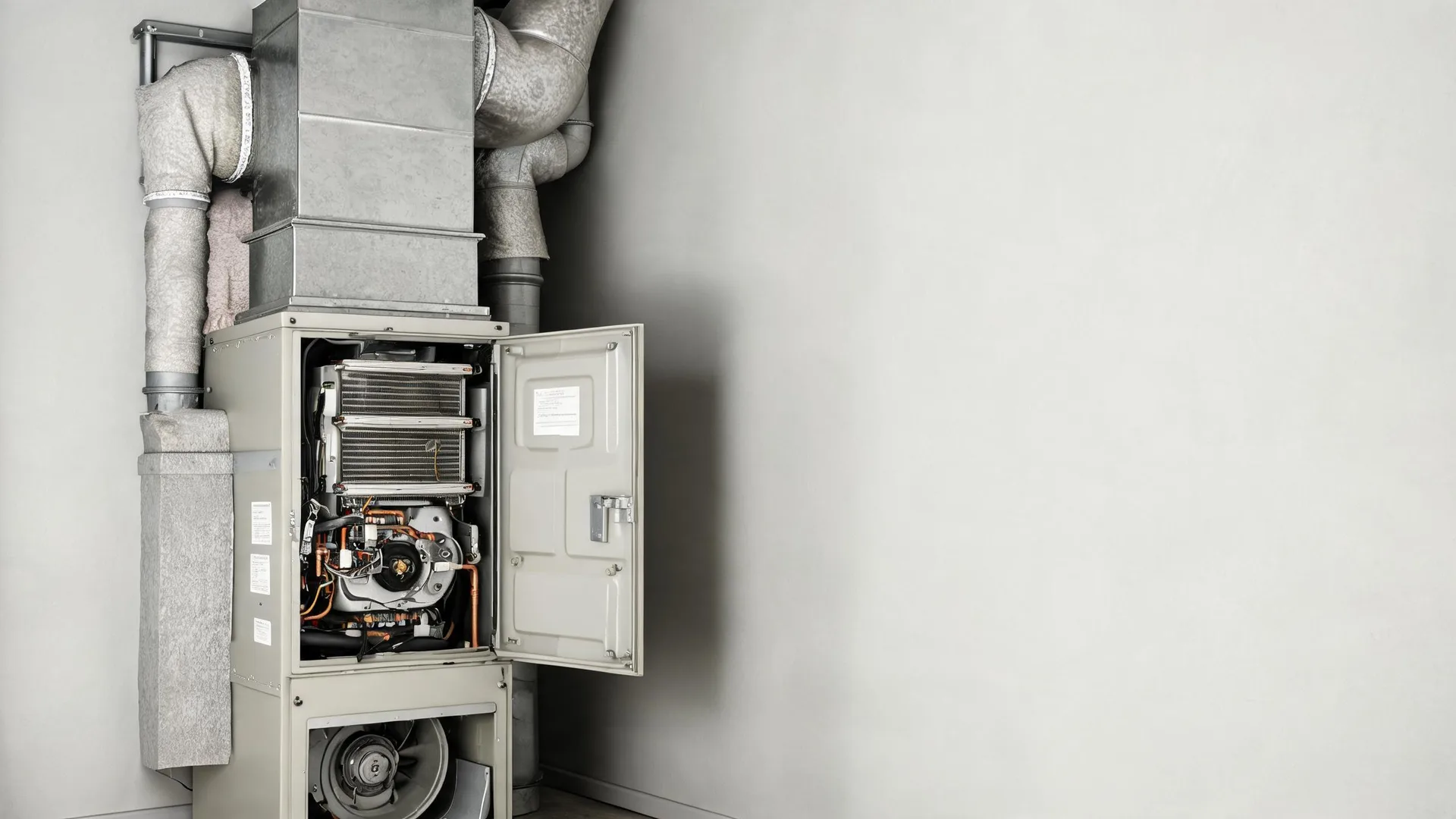
Two outdoor units can look alike and cost very differently once you compare the compressor inside, the coil material, and how the manufacturer rates its efficiency. A variable-speed compressor costs more than a single-stage one because it does more, running low most of the time and only ramping up when the house actually needs it. None of that shows up by looking at the cabinet from the driveway, so ask what's actually inside the one you're being quoted.

Overhead view of a gray outdoor AC condenser unit on a concrete pad beside a mulched garden bed and a house with vinyl siding.

Going above the federal minimum saves little here, about $20 a year.

  • A higher-efficiency unit$400 a year
  • A new unit at the federal minimum, 14.3 SEER2$420 a year

Estimates for a typical Natchitoches Parish home, from EIA household energy data, Louisiana fuel prices and NOAA climate normals. Your home will differ.

Installation starts with the old system coming out, the indoor coil, the outdoor unit, and the line set running between them. The installer checks the ductwork before setting anything new, because a new system connected to the wrong size duct will never move air the way it should. Setting the outdoor unit comes next, leveled on its pad and far enough from the wall to pull air freely. Inside, the coil goes in above or beside the furnace or air handler, and the line set gets connected and sealed so no refrigerant leaks out before the system ever runs. Once everything is connected, the installer pulls a vacuum on the line set to clear out air and moisture, because either one left behind will damage the compressor over time. Only after that does the system get charged with refrigerant, started up, and checked against what the manufacturer specifies for that unit.