Single-story brick house with a dark shingled roof set behind a lawn and tall pine and moss-draped trees, photographed low to the ground with pine straw in the foreground.

AC Installation in New Orleans, LA

Tell us about the job

Takes about a minute. No obligation.

New system or replacementCentral ACOrleans Parish, LA
Step 1 of 2

What ZIP code is the job in?

Power here is cheap, but that's not the whole bill

Orleans Parish pays about 12.78 cents per kilowatt-hour, lower than most of the country. That sounds like good news, and it is. But a new AC here still runs more hours than almost anywhere else, so even a low rate adds up fast once you multiply it by how often the system is working.

What this means for the system you pick

A system that wastes power here costs you more than the same waste would somewhere milder, because it's wasting power on nearly every one of those hours. How efficiently the unit turns electricity into cooling matters more in this parish than it would in a place where the AC sits idle half the year.

7 months
April through October, your air conditioner is on duty
90°F
the average summer afternoon it cools against
6 hail events
in ten years, and hail bends the fins on outdoor coils
13.4 SEER2
the federal minimum any new unit must meet
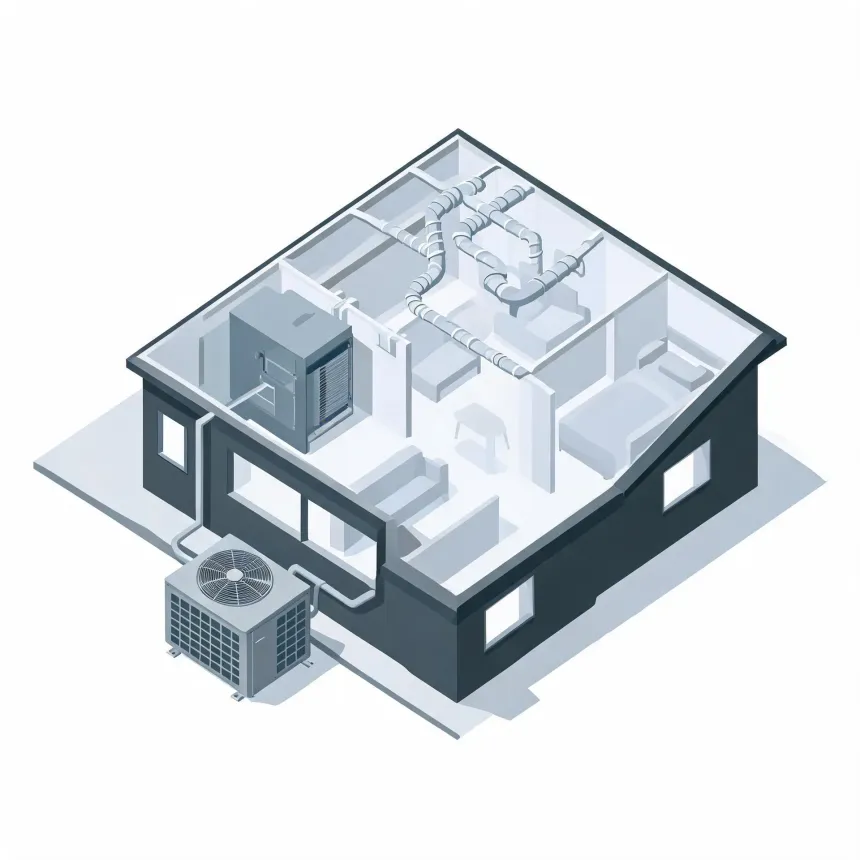
Isometric cutaway illustration of a small house showing interior rooms with furniture, ceiling ductwork and an air handler, plus an outdoor condenser unit connected by refrigerant lines beside the building.
Your air conditioner works hardest from May through September.

NOAA nClimDiv, 1991–2020 normals

Half the homes in Orleans Parish were built in 1960 or earlier.

An older home needs a load calculation, not a swap for whatever size sat there before.

Cooling starts in April, so March is the month to get this done

Cooling runs April through October
Summer afternoons average 90°F
Power here costs 12.78 cents per kilowatt-hour
54 storms means plan for the outage, not just the heatOrleans Parish logged 54 severe weather events between 2015 and 2024, and 49% of Louisiana homes lost power for a day or more last year.

This system runs April through October, about seven months a year. Most places get a few brutal months and a long break. Here the break is short. June through August, the afternoon high averages 90°F, and the dew point averages 75°F, higher than most of the country sees. That heavy air means the system is pulling moisture out along with the heat, every time it runs. A compressor working seven months against that kind of heat and humidity wears differently than one that gets to coast through spring and fall. Pick a system sized and rated for that, not just the one with the lowest number on the sticker.

The rate is low. The runtime isn't.

Efficiency is the one thing on the spec sheet that works in your favor every single month this system runs. A higher-efficiency unit costs more to install, but it turns fewer of those cents per kilowatt-hour into wasted heat, on every one of the hours it's working. That's worth weighing now, before the unit is picked, not after it's in the wall.

Find a contractor
An outdoor air conditioning condenser unit mounted on a concrete pad surrounded by gravel, photographed against a partly cloudy blue sky.

Seven months a year is a long time to run on the wrong size

Seven months of runtime against 90 degree afternoons doesn't leave much room for a unit that's sized wrong. Too big and it short cycles, cooling the air fast but shutting off before it pulls the moisture out, so the house feels clammy even at the right temperature. Too small and it runs flat out all day without catching up. Either way the compressor takes the hit, and it's taking that hit for seven months, not two or three. A load calculation sized to this house, not the old unit, is what keeps that wear in check.

Sizing comes from a room by room count, not a guess

A load calculation adds up the square footage, the window area and direction, the insulation, the ceiling height, even how many people usually occupy the space. Two houses the same size can need different tonnage once windows and insulation are counted. Skip that math and you're just matching the number stamped on the old unit, whether or not it was ever right.

The wrong size fails in a different way than you'd think

An oversized unit blasts cold air and shuts off before it finishes pulling humidity out of the house, so the thermostat reads satisfied while the air still feels damp. An undersized one runs nonstop and never quite catches up to the thermostat setting, especially on the hottest afternoons. Both wear out a compressor faster than one sized to the actual load.

Overhead view of an air conditioning condenser unit on a concrete pad next to a house with asphalt shingle roofing and vinyl siding.

A higher-efficiency unit would save about $30 a year to run in Orleans Parish compared with a new unit at the federal minimum.

  • A higher-efficiency unit$460 a year
  • A new unit at the federal minimum, 14.3 SEER2$490 a year

Estimates for a typical Orleans Parish home, from EIA household energy data, Louisiana fuel prices and NOAA climate normals. Your home will differ.

Installation day starts with the old equipment coming out, the indoor coil, the outdoor unit, and whatever line set isn't being reused. If the ductwork is being changed or the new coil doesn't match the old one, that part takes longer than people expect. The line set gets run or reused, the new outdoor unit gets set on a pad, and the indoor coil goes in above or beside the furnace or air handler. Once everything's connected, the system gets evacuated to pull moisture and air out of the lines before refrigerant goes in, because any moisture left in there causes problems down the road. After charging, a tech checks refrigerant levels against the manufacturer's spec, not just by feel, and checks airflow at the vents. The thermostat gets wired and set up last, and the whole system runs through a cycle or two before anyone calls it done.