







A gray outdoor heat pump unit on a concrete pad beside a dark horizontal-siding wall, with a small electrical box on the wall, shrubs and a concrete walkway to the right at dusk.

Get your heat pump to the right pro

Best heat pump setting for a Louisiana winter

Set it and leave it alone, or bump it down at night to save on the bill? A heat pump works harder catching up from a big setback than holding steady, and that math matters when electricity is what's heating your home. This page gets into where to actually leave the thermostat and when it's worth having someone look at the system before the next cold snap.

Get a local pro

Set your heat pump to one temperature and leave it there, somewhere around 68 to 70 degrees, instead of bumping it down at night or when you leave the house. A heat pump moves heat instead of burning fuel to make it, and it does that efficiently only when it isn't working against a big gap. Drop the setting ten degrees overnight and the system has to run its backup heat strips to catch up in the morning, and those strips use far more electricity than the heat pump itself. Louisiana winters don't ask much of the system most days, cold snaps are short, so the energy you'd save from a lower setting rarely makes up for the recovery cost. Holding one steady number also means the system runs in short, normal cycles instead of long hard ones, which is easier on the parts inside it. If your home feels colder than the thermostat says, that's usually worth a look before you touch the setting at all.

A gray outdoor condenser unit on a concrete pad beside a house with horizontal lap siding, a conduit and disconnect box on the wall, a shrub with white flowers at right and evergreen foliage at left.
Set at one temperature, the heat pump cycles on in short stretches and the coil stays clean enough to shed heat properly.
An outdoor air conditioning condenser unit with a top fan grille sits on a concrete pad beside a house with horizontal siding and a concrete step.
Left to catch up from a deep setback over and over, the outdoor coil fouls faster and loses its ability to transfer heat.
A woman in a cream turtleneck sweater stands beside a multi-pane window looking out at falling snow, with a dimly lit living room containing a lamp, sofa and shelves behind her.
A woman in a beige turtleneck sweater stands by a large window with snow-covered trees outside, in a living room with a lit lamp, sofa with cushions, and a wood stove with visible flames.
A woman with long dark hair in a beige knit turtleneck sweater stands beside a window with snow outside, looking off to the side, with a warmly lit living room containing a sofa, lamps and a coffee table behind her.
A woman with shoulder-length brown hair in a beige knit sweater stands near a window looking outside at falling snow and snow-covered evergreens, with a dimly lit living room, sofa, lamp, bookshelf and framed landscape painting behind her.
A woman stands in the open front doorway of a single-story house with a covered porch, stone column bases and a dormer window, facing a man in a dark cap and gray polo shirt seen from behind in the foreground.

What a setback actually does to your system

You set the thermostat back before bed, thinking you're saving money. Around 5 a.m. the house has drifted down a few degrees and the heat pump switches to strip heat to catch up fast. That backup heat is electric resistance, the same idea as a space heater, and it runs until the house reaches your morning setting. On a cheap electric rate the extra draw still shows up on the bill, and it shows up every morning you do this through a Louisiana winter.

There's a mechanical side too. Short, steady cycles let the outdoor coil shed heat the way it's built to. Long catch-up runs stress the same coil and the compressor behind it, and a system working that way is the kind that needs a service call before February is out. If you'd rather have someone look at the system now, before a cold snap finds the weak point, that's a quick thing to arrange, and from there it's off your plate.

A dark ceramic vase holding a leafy green branch sits on a round wooden table, with a blurred cushioned wooden armchair, woven basket, window and shelving with pottery in the background.
A gray outdoor heat pump unit on a concrete pad beside a house with gray horizontal siding, with conduit and an electrical box on the wall and a shrub at left.

Why strip heat costs so much

A heat pump moves heat from the air outside into your house. Strip heat skips that and makes heat directly from electricity, the same way a space heater does. It works, but it draws far more power to produce the same warmth. The thermostat calls for strip heat when the house has fallen several degrees behind the setpoint, which is exactly what happens after a setback. Hold the temperature steady and the system rarely needs to reach for it.

An outdoor air-source heat pump unit with a dark grille stands on a concrete pad beside a white wall and wood-clad facade, surrounded by gravel.

What a dirty coil does to the bill

The outdoor coil gives up heat to the air so the system can keep moving warmth indoors. When it stays cleaner, that transfer happens with less strain on the compressor. Frequent catch-up cycles push more refrigerant through the coil at a harder pace, and buildup collects faster under that load. A maintenance visit includes cleaning the coil, which matters more for a heat pump run in setbacks than one held at a steady number.

Is your heat pump running almost nonstop lately?

If the outdoor unit seems to run longer than it used to, or the air coming out feels cooler than you'd expect for how hard it's working, that's usually a setback habit catching up with the system rather than the weather. You might notice the bill creeping up some months and not others, even though you're doing the same thing each night. A system that keeps playing catch-up puts more hours on the compressor and the outdoor coil than one left alone at a steady temperature, and that wear doesn't show itself until the unit struggles to keep the house warm on the coldest mornings of the year.

A beige outdoor air conditioning condenser unit on a concrete pad beside a house with horizontal vinyl siding, with refrigerant lines and a disconnect box on the wall, surrounded by dark mulch and a green shrub at left.

Running the way it should

This is a heat pump holding one setting, cycling on for short stretches and shutting off again. The coil stays clean and the conduit and disconnect box beside it see nothing unusual. Nothing here is working harder than it has to.


An outdoor air conditioner condenser unit on a concrete pad beside a house with horizontal lap siding, with a shrub to the left, bare dirt in front, and conduit and a metal disconnect box on the wall.

Running the way it shouldn't

This one looks the same from the yard, but inside it's catching up from a setback, leaning on strip heat to close the gap. Left like that through a Louisiana winter, the coil fouls faster and the unit loses ground instead of holding it. A maintenance visit catches that before the coil wears down for good.

What maintenance finds, by habit

Hold steady

  • Short cycling means the coil sheds heat the way it's built to, so a maintenance visit finds a clean system doing what it should.
  • A tech checking refrigerant charge or airflow on a steady-running unit is confirming normal wear, not chasing a problem caused by how it's used.
  • Strip heat stays off or close to it, so there's less wear on the backup elements for a tech to inspect come service time.
  • The outdoor unit runs in short bursts, which is easier to catch a failing capacitor or weak start on during a routine check.
  • Filters and coils stay cleaner longer because the system isn't straining to recover from a deep setback every morning.
  • A maintenance visit on a steady-running heat pump is mostly confirming things are fine, not finding what broke.

Deep setbacks

  • Strip heat kicking on every morning puts hours on the backup elements that a tech will eventually have to test or replace.
  • A coil fouling faster from repeated hard recovery shows up at maintenance as reduced heat transfer, sometimes before it's obvious to you.
  • The outdoor unit running long stretches to catch up gives a tech less of a clean read on whether a part is actually failing or just overworked.
  • Repeated strip heat cycles mean a maintenance check spends more time on the backup heating components than it otherwise would.
  • A system that's always playing catch-up wears the same parts faster, so the same visit interval covers less margin before something fails.
  • What a tech finds during maintenance on a setback routine often reflects the habit more than the age of the equipment.
A bearded man in a plaid flannel shirt stands indoors beside a wood-framed, frost-covered window, looking outside, with a steaming brown mug on the sill and a wooden cabinet behind him.
A smiling bearded man in a green t-shirt sits on a gray sofa, looking down toward a device at the bottom of the frame, with a bookshelf and a green plant blurred behind him.

The right pro for this job

A system that's been running in long, hard stretches off a setback habit is also a system nobody's looked at in a while. Strip heat and constant catch-up cycles put a different kind of wear on a heat pump than steady operation does, and you won't necessarily hear it or see it on the thermostat. What tells you is a tech checking the coil, the refrigerant charge, and the airflow, the same things that decide whether holding one temperature actually saves you what it should. If you've been bumping the setting down at night or while you're out, getting the system looked at now, before the rest of winter runs it through more of those catch-up cycles, is worth more than waiting until something stops working. A contractor who works on heat pumps in your area can take that off your hands from here.

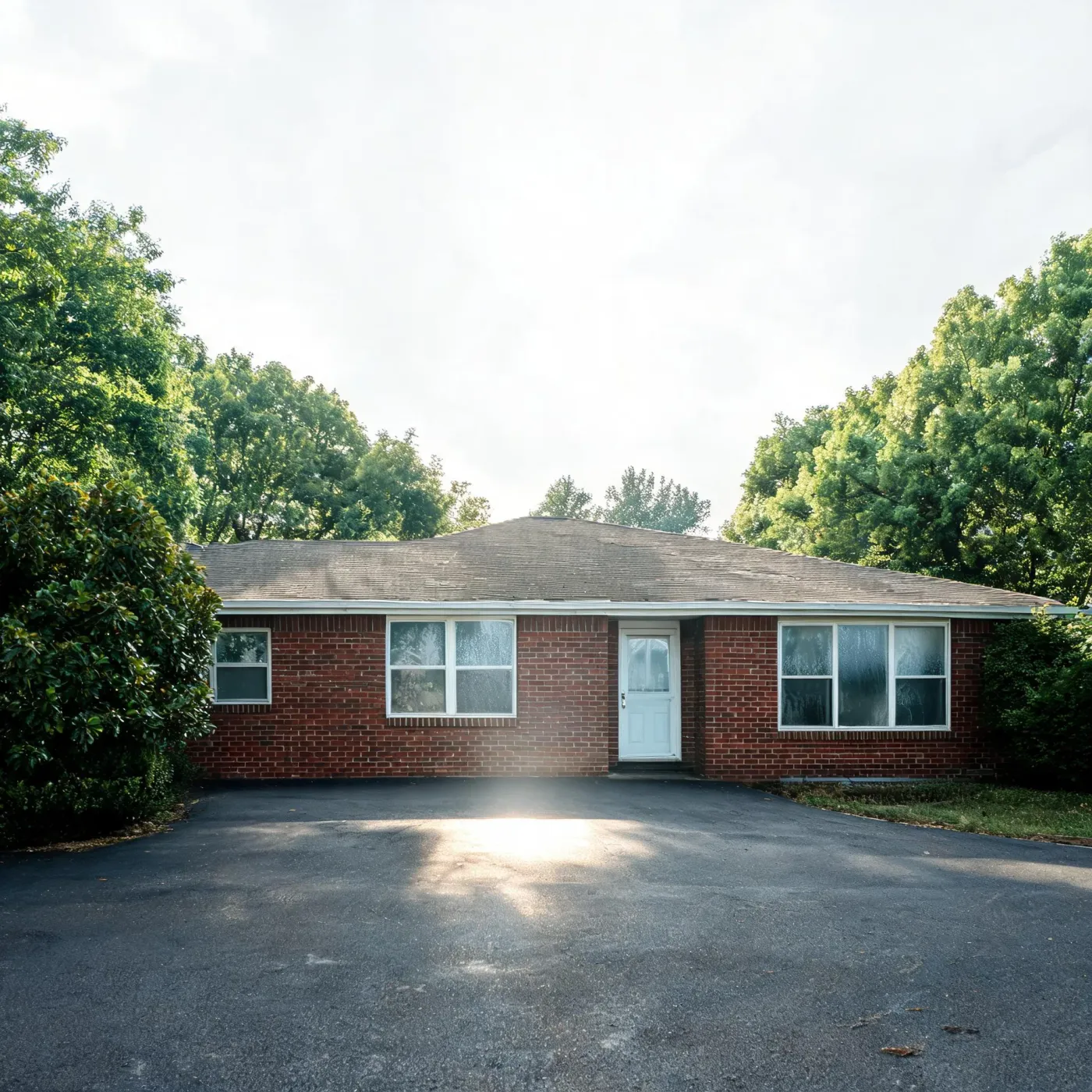
A single-story red brick house with a hipped shingle roof, white-framed windows and a pale blue front door, fronted by a wide asphalt driveway and flanked by green trees and shrubs under a bright hazy sky.

Summers here run heavy. Average dew point across June, July and August sits at 73°F, which is the sticky end of the scale, and that's what your heat pump spends those months wringing out of the air along with the heat. All that moisture passing over the outdoor coil leaves more behind than a dry climate would. Paired with the coil fouling a setback habit already causes, a muggy summer gives it less margin to begin with. A system that went into winter with a coil already carrying grime from August has further to fall before it's working hard enough for you to notice.

NASA POWER T2MDEW county cells weighted by homes

An outdoor air conditioning condenser unit on a concrete pad beside a house with horizontal siding above a brick foundation, with a flexible conduit running to a wall-mounted disconnect box.
Before you get your heat pump maintenance
An outdoor condenser unit on a concrete pad beside a gray lap-sided house, with an electrical disconnect box and conduit on the wall and shrubs with mulch to the right.
After you get your heat pump maintenance

If you're away all day

Some households are out of the house nine or ten hours at a stretch, and it's tempting to let the heat pump sit idle until someone's home to feel it. Left alone that long, the house can drift down several degrees, and the unit comes back to a bigger gap than it would after a few hours. It still ends up leaning on strip heat to close that gap fast, the same way an overnight setback does. If nobody's home to notice the long runtime, a system doing this for weeks can go unnoticed until a maintenance visit turns it up.

If someone's home most days

A house that's occupied through the day keeps the heat pump working off small swings instead of one long climb back. Someone passing through notices if the air feels off or the outdoor unit won't stop running, and that's the kind of thing worth mentioning at a maintenance visit before it turns into a bigger repair. Holding one setting still matters here, but the margin for catching a problem early is wider simply because someone's around to notice it. The equipment itself doesn't care who's home. It only cares how often it has to catch up from a setback.

Power costs 12.52 cents per kilowatt-hour statewide

At 12.52 cents a kilowatt-hour, every degree of strip heat shows up on your bill fast, since electricity is how most homes here make heat. Holding one setting instead of chasing a setback keeps that cost down and keeps the system from leaning on the expensive backup coil to catch up.

EIA-861 2025 statewide residential average

One Setting, Left Alone

  • Hold your heat pump at one steady setting, around 68 to 70 degrees, instead of setting it back at night or while you're out.
  • A steady setting keeps the coil clean and the unit cycling in short stretches, which is how it's built to run.
  • Chasing a setback forces strip heat to kick in, and that draws far more power than the heat pump moving heat on its own.
  • Long, hard run times from a setback habit put wear on a system that a short seasonal check can usually catch early.
  • Louisiana's cheap power makes it easy to miss how much a setback habit costs when strip heat has to cover for it.
  • Once you send the form, finding a contractor to look at your system is off your plate.

The answer is simple even if the reason took some explaining. Pick a temperature in the high 60s and leave your heat pump there straight through winter. Don't set it back at night, don't set it back when you leave for work. A heat pump is built to run in short bursts at one setting, and that's when the coil stays clean and the whole system does the least amount of work to keep you warm. Every time the house drifts down and the unit has to catch up fast, strip heat takes over, and strip heat is electricity doing the job without any help from the outdoor coil. Power being cheap here doesn't change what that costs against holding steady. It just makes the difference easier to miss on the bill.

A system worked this way for a stretch of cold months is a system worth having looked at, especially if you've noticed it running longer than it used to or felt the air coming out cooler than expected. A seasonal check catches that kind of wear while it's still small, before a cold snap turns it into a system that can't keep up. None of that has to be your problem to solve on your own. Once you send the form, the work of finding someone qualified to look at your heat pump is handled. You're not left searching for a contractor or wondering who's reliable. That part is off your hands the moment you submit it.

A gray outdoor heat pump unit mounted on a concrete pad beside a dark horizontal-slat clad house wall, with gravel ground and shrubs nearby.

Matched to your heat pump job

Tune-up, service, or cleaningHeat PumpLouisiana
Step 1 of 2

What ZIP code is the job in?