Profile view of a bearded man wearing a dark baseball cap and a navy blue t-shirt against a plain light gray background.

How often to change your AC filter in Louisiana

Tune-up, service, or cleaningCentral ACLouisiana
Step 1 of 2

What ZIP code is the job in?

How often should I change my AC filter in Louisiana?

Your AC runs most months of the year here, and that filter is working harder than it would somewhere with a short summer. You've probably heard every answer from 30 days to 90 days and aren't sure which one actually applies to your house. The right interval depends more on what kind of filter you bought and what's in your air than on a date on the calendar.

Check it every 30 days, change it every 1 to 3 months

A basic 1-inch fiberglass or pleated filter needs a look every month and usually needs replacing by the second or third month. Louisiana humidity pushes your air conditioner to run long hours for most of the year, and all that runtime pulls more air, and more dust, through the filter than a system that only runs a few months out of the year. A dirty filter makes the unit work harder to pull air through it, and that strain is what leads to higher bills and early breakdowns. If you have pets or run the system year round, check closer to the 30 day mark. A thicker 4 or 5-inch media filter, if your system takes one, can usually go 6 to 12 months between changes.

  1. Air pulls through the return vent toward the air handler.

  2. The filter traps dust, hair and lint before the coil.

  3. A clogged filter starves airflow across the evaporator coil.

  4. Restricted airflow lets the coil drop below freezing and ice over.

An older man with gray hair and a beard, wearing a dark jacket dusted with snow, stands smiling in a dimly lit hallway with lamps and a living room visible behind him.
A gray-haired, bearded man in a dark snow-dusted coat stands smiling in a dimly lit entry hall with a staircase, a lit table lamp, a framed picture, and a living room visible through a doorway.
An older man with white hair and a beard, wearing a dark snow-dusted coat and scarf, stands in a warmly lit interior hallway with a framed landscape picture, a table lamp and a potted plant behind him, and a snowy view through a window at left.
A gray-haired, bearded man in a dark coat dusted with snow stands smiling in a dimly lit room with a lamp, mirror, framed art, and a sofa in the background.

A system that runs nine or ten months a year pulls a lot more dust through that filter than one that shuts off by October. Check yours monthly and you'll see how fast it loads up.

A one inch filter in a Louisiana home often needs changing every 30 to 60 days instead of the 90 you'd get away with up north. Going by the calendar instead of the filter itself is how the coil ends up frozen.

A weathered outdoor air conditioner condenser unit on a concrete pad beside a house with horizontal vinyl siding, with a conduit and disconnect box on the wall to the right.
Before you get your air conditioner maintenance
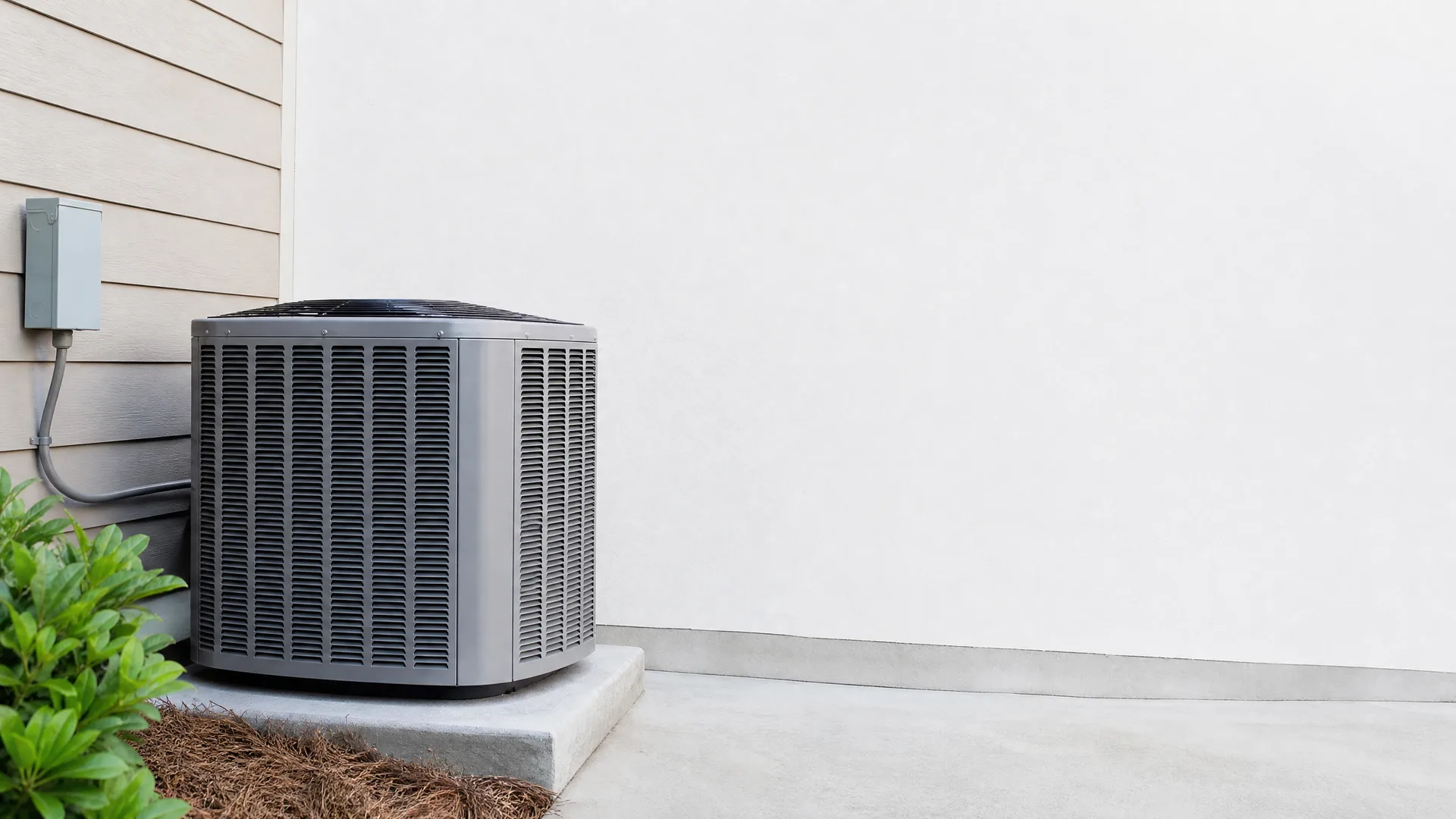
A gray outdoor air conditioning condenser unit on a concrete pad beside a house with horizontal lap siding, with a conduit and electrical disconnect box on the wall and a green shrub in mulch to the right.
After you get your air conditioner maintenance
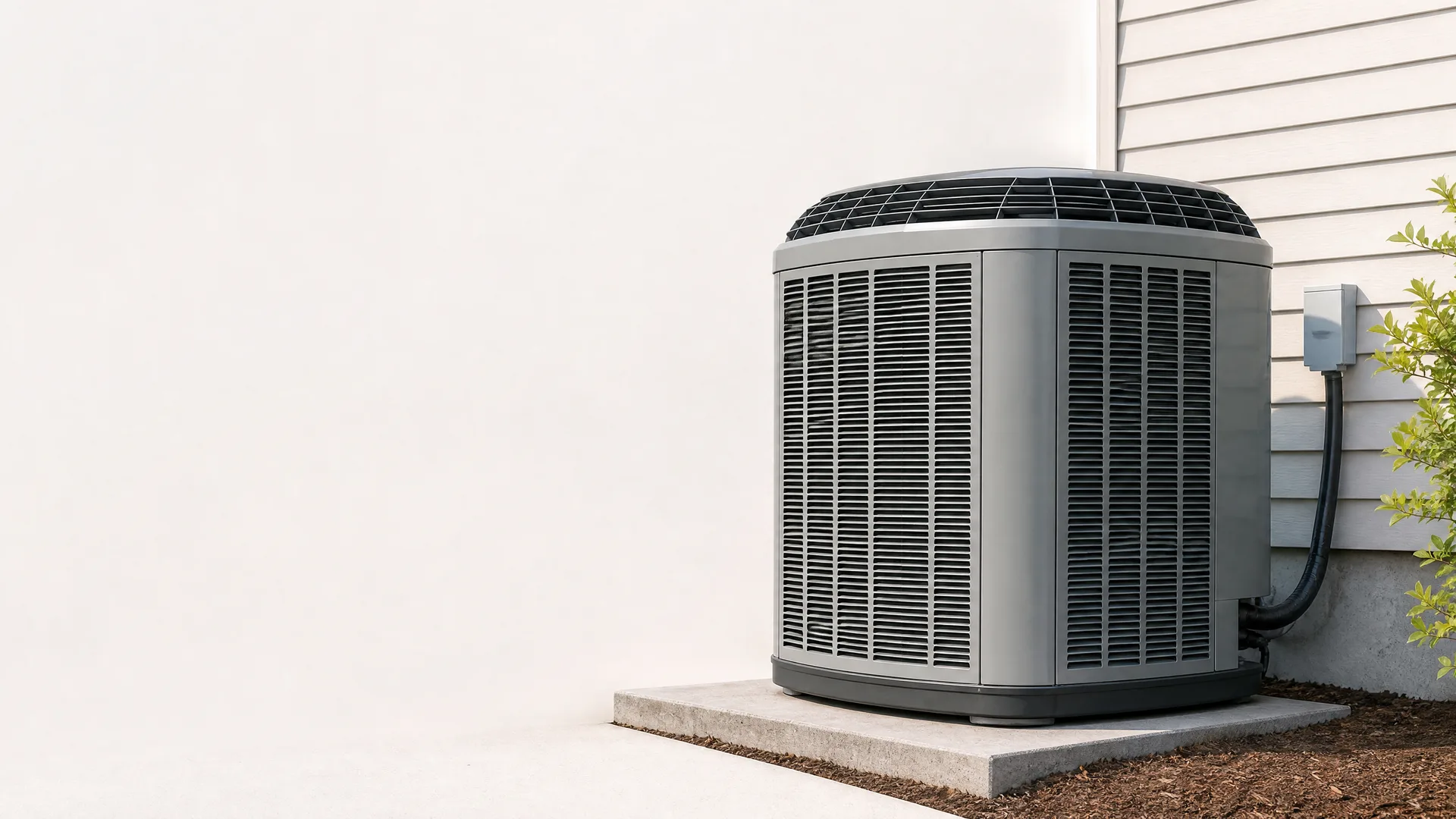
A gray outdoor air conditioner condenser unit on a concrete pad beside a house with horizontal lap siding, with a wall-mounted disconnect box and conduit at left and a green shrub and mulch bed at right.

A clean filter, a steady unit

Airflow moves through the condenser the way it's supposed to. The coil stays at the right temperature and the system cycles on and off without strain. This is what a filter changed on schedule buys you, month after month.

An outdoor air conditioner condenser unit on a concrete pad beside a house with horizontal lap siding, with a conduit running to a gray electrical disconnect box on the wall.

A clogged filter, a struggling unit

Starved of airflow, the coil behind this condenser can drop below freezing and ice over. The compressor runs longer to make up for it. Left alone, that strain is what shortens the life of the unit sitting on the pad.

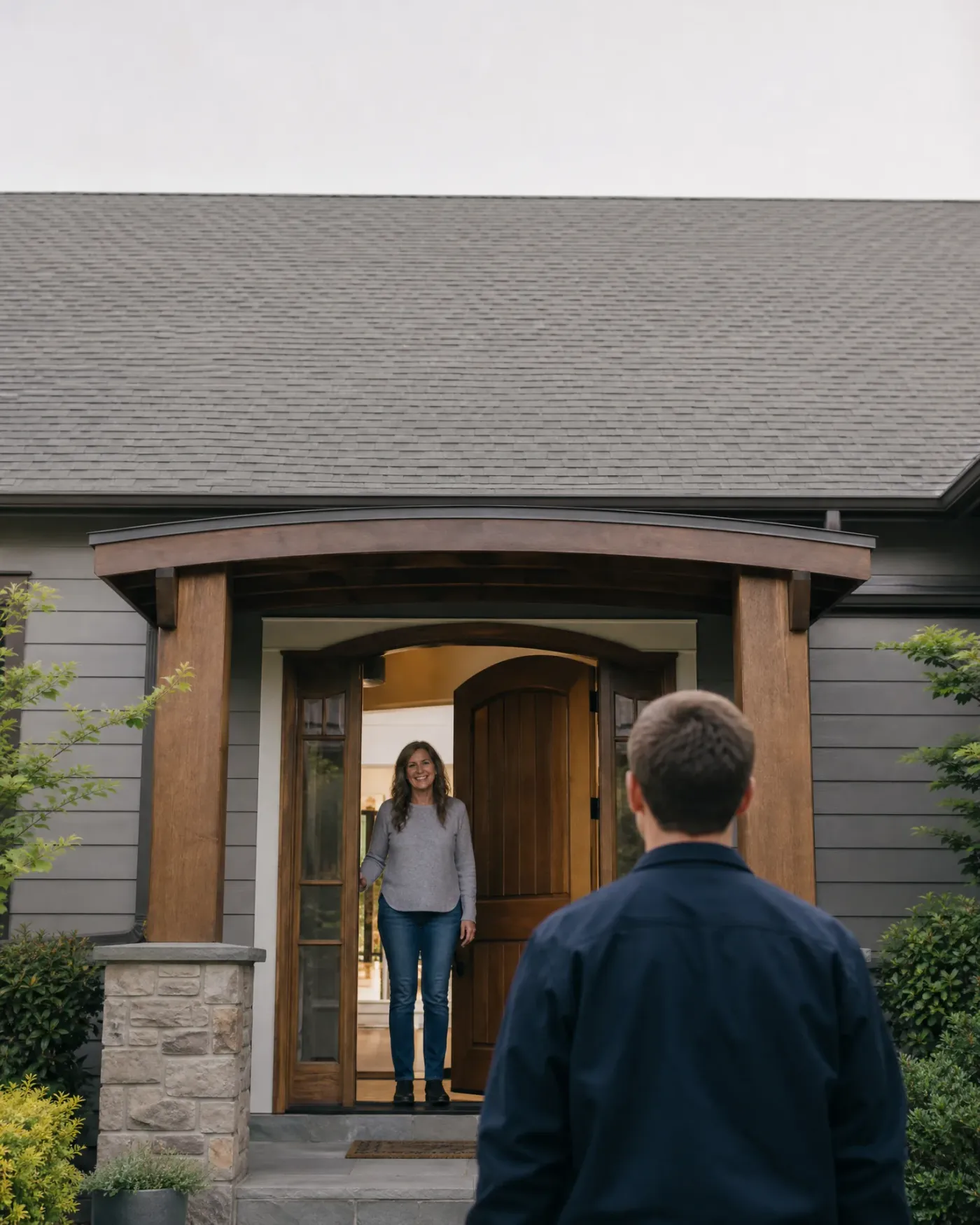
A woman stands in the open front doorway of a gray house with wood porch posts and a shingled roof, facing a man in a dark jacket seen from behind in the foreground.

What a skipped filter costs your house

You'll notice it on the vents first. Rooms that used to cool down fast start lagging, and the air coming out feels weaker than it should. Dust settles faster on furniture too, because the filter isn't catching what it used to. Your electric bill moves next. A system pulling air through a clogged filter runs longer to hit the same temperature, and in a house that cools with electricity, that shows up on the next statement.

Left long enough, it's not just comfort and cost. A frozen coil can shut the whole system down on the hottest week of the year, and a strained compressor doesn't always recover on its own. If you'd rather have someone local look at the unit before that happens, you can get matched with a licensed contractor who works on systems like yours all summer and knows what tends to go first. One contractor reaches out, not a list of them.

A wooden table holding a stone vase with a bare branch, two stacked books and a small dark bowl, beside a window with green foliage outside and a sofa in the dim background.
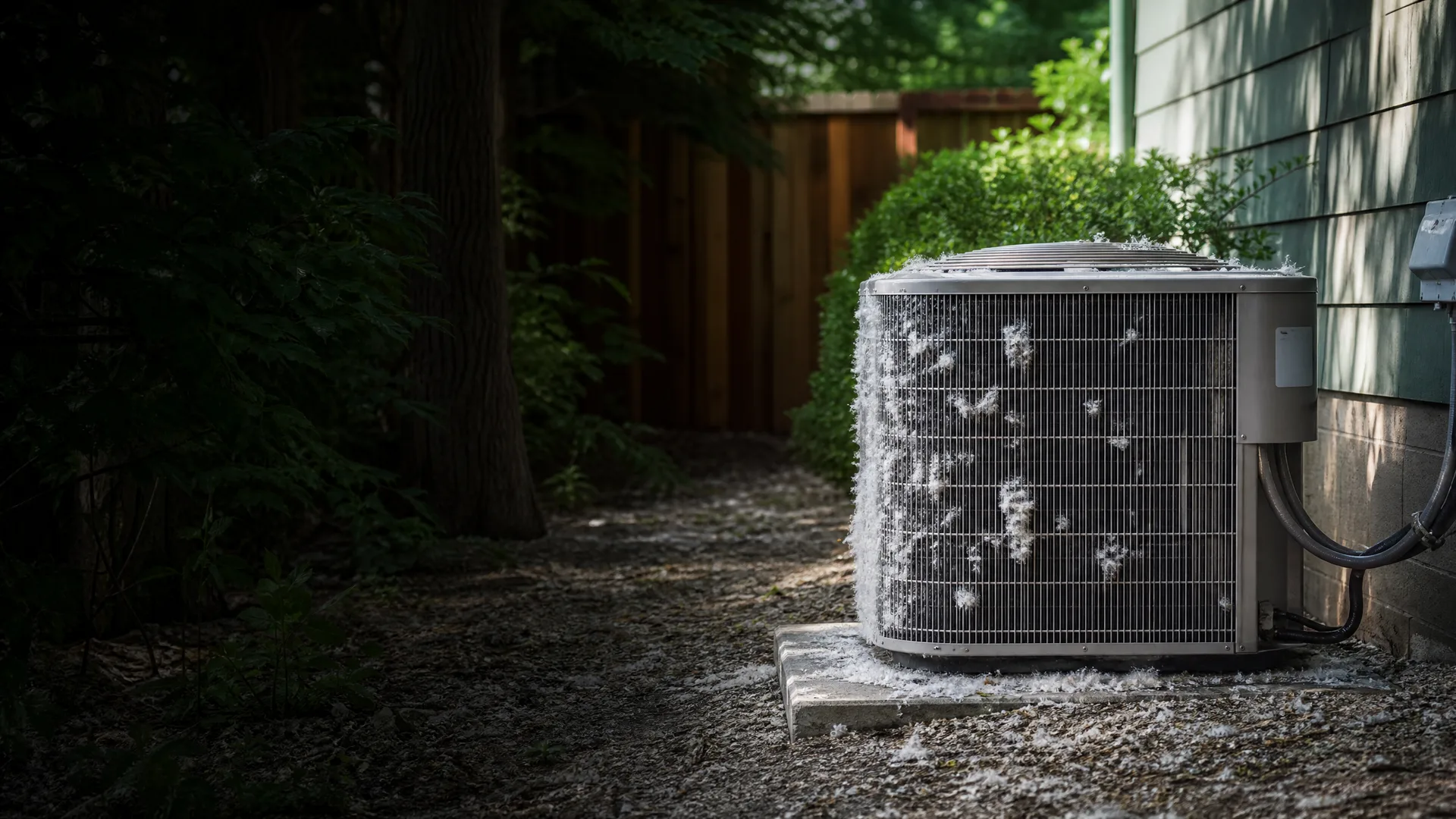
An outdoor air conditioner condenser unit on a concrete pad beside a green clapboard house, with white fluff or debris clinging to its coil grille and scattered on the surrounding gravel, next to shrubs and a wooden fence.

You're out pulling weeds along the side yard in May when you notice it, white fluff caught thick in the condenser fins, drifted off the cottonwoods down the block. It's piled up like a dusting of snow, and when you brush a hand across it, more just settles in behind it. The unit's still running, you can hear it, but the fins are packed tight enough that you wonder how much air is getting through at all. You make a note to ask someone who deals with this kind of thing every summer what else might be caught up in there that you can't see from the yard.


An air conditioner pro near you

A licensed local pro takes the request for your air conditioner tune-up.

There's no charge for the request.

A gray outdoor air conditioner condenser unit sits on a concrete pad beside a house, with a gray electrical disconnect box and conduit on the lap-siding wall above it and a green shrub and pine straw at the lower left.

Filter type changes the math

A pleated one inch filter is the one most Louisiana homes have in the return. It's cheap and it's easy to swap, which matters because it needs changing often. A thicker media filter, four or five inches, holds more dust and lasts longer between changes, sometimes several months. If you don't know which one is behind your return grille, pull it and look at the frame.

A gray outdoor air conditioner condenser unit on a concrete pad beside a light-colored stucco wall and horizontal lap siding, with an electrical disconnect box, conduit, mulch, and a shrub at right.

A number on a box isn't a schedule

Every filter box prints a suggested change interval, usually 90 days. That number comes from an average home in an average climate, run by an average amount each year. Your air conditioner in Louisiana doesn't fit that average. It runs longer, so more air and more dust pass through the same filter in less time. Treat the box number as a starting point, not the answer, and check the filter itself before you trust it.

Power costs 12.52 cents per kilowatt-hour statewide

At 12.52 cents a kilowatt-hour, running your AC on a clogged filter costs more than the filter itself. The unit has to pull harder and run longer to push air through, and that extra runtime shows up on your bill every month your system is working this hard.

EIA-861 2025 statewide residential average

A gray outdoor air conditioning condenser unit on a concrete pad beside a house with horizontal lap siding, with a wall-mounted disconnect box and conduit, and shrubs to the left.
This is what a condenser looks like when the filter upstream is doing its job: clean fins, steady airflow, nothing blocking the coil.
An outdoor air conditioning condenser unit on a concrete pad beside a house with horizontal siding and a concrete foundation, with dry brown leaves on the ground to either side.
This is what neglect looks like outside: leaves banked against the coil, grime on the cabinet, a sign the filter inside hasn't been checked either.

Is your AC running longer than it used to?

You'll hear it before you can explain it. The unit cycles on more often and stays on longer to hit the same temperature. Rooms near the end of the ductwork feel warmer than the rest of the house. Dust shows up faster on the furniture and the ceiling fan blades. If you check the filter and it's gray or matted instead of white, that's your answer. A clogged filter forces the system to work past what it's built for, and run it like that long enough and you risk the coil icing over or the compressor wearing out well before it should.

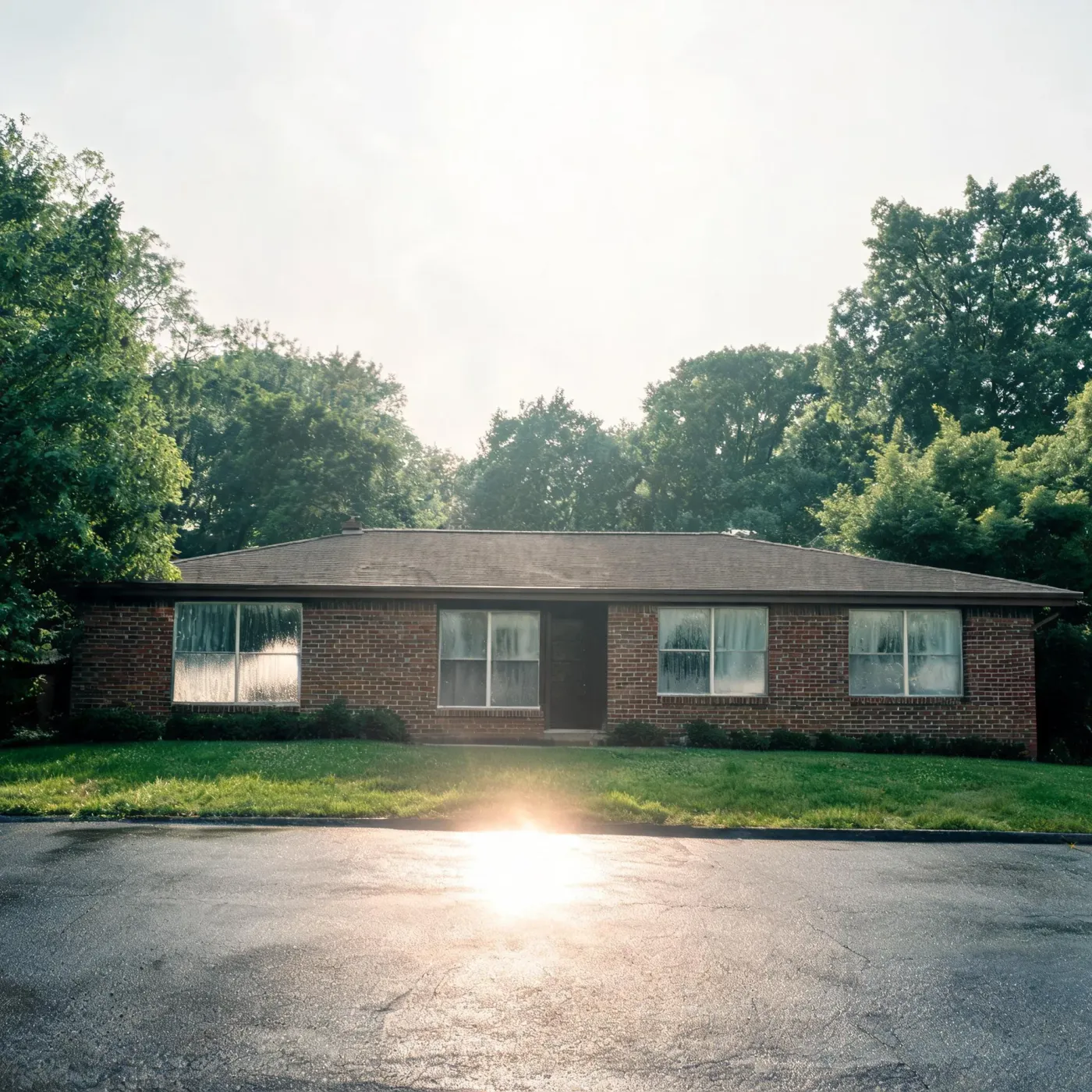
A single-story brick ranch house with a low shingled roof and curtained windows, fronted by a mown lawn and an asphalt driveway, with sun flare in the foreground and leafy trees behind.

NOAA puts the summer dew point here at an average of 73°F across June, July and August. That's the kind of air where sweat doesn't dry and a glass of tea sweats on the counter. Your AC isn't just cooling that air, it's wringing the moisture out of it too, and that's harder work for the coil than dropping the temperature alone. A loaded filter cuts the airflow your system needs to do that job, so the coil stays wetter and colder than it should, and humidity inside the house creeps up even when the thermostat says you're at temperature.

NASA POWER T2MDEW county cells weighted by homes

Checking it yourself or having it checked

Checking it yourself

  • You pull the filter and hold it to a light. If you can't see light through it, it's past due.
  • It costs you nothing but a few minutes a month, and you catch a clogged filter before the coil ices over.
  • You're guessing at how fast your specific filter loads up unless you check it often enough to know the pattern.
  • A pet in the house or a window left open on a nice day changes the timeline, and you won't know unless you look.
  • You still have to remember to check, and that's easy to let slide once the house feels fine.

Having a contractor look at the system

  • A local contractor who works on Louisiana systems all season knows what a filter looks like at 30 days versus 60 in this kind of heat.
  • Maintenance covers more than the filter, so a coil already picking up dust gets caught before it costs you airflow.
  • You're matched with one contractor, not a handful of companies calling about the same job.
  • Someone who services this equipment regularly can tell you what filter type and schedule actually fits your system, not a generic number.
  • A second set of eyes on the unit outside catches things you wouldn't think to check, like fins packed with debris.
A woman wrapped in a thick fleece blanket sits on a sofa holding an open book, beside a lit table lamp and a frost-covered dark window.
An older woman with short blond hair in a cream turtleneck sweater stands smiling and looking off-camera in a kitchen, with a loaf of bread, a lit candle, a window showing darkness outside, and wood cabinets behind her.

The Filter Question, Settled

  • A one inch filter in a Louisiana home usually needs changing every 30 to 60 days since the system runs most months of the year.
  • Holding the filter up to a light is a quick, free way to check whether it's past due.
  • A clogged filter strains the system and can ice over the coil, costing you more on your power bill before anything breaks.
  • A local contractor who services AC systems all summer knows which filter size and brand tend to clog fastest in this climate.
  • Getting matched means one contractor reaching out, not a handful of companies competing for your call.
  • Checking monthly costs you nothing but a few minutes, and catches a problem before the coil does.

Thirty to sixty days. That's the answer for a one inch filter in your house, and the reason is simple: your AC doesn't get a break from May through October the way it might somewhere up north. More runtime means more air pulled through that filter, and more dust packed into it before it's due. You don't need to guess at the schedule either. Pull the filter, hold it to a window or a light bulb. If light struggles to get through, it's done its job and needs swapping.

Skip that check too many months running and the strain shows up two ways. First on your power bill, because a clogged filter makes the system work harder to move the same amount of air. Then, if it goes long enough, on the coil itself, which can ice over when airflow drops too low.

When you're ready for someone to look at the whole system, not just the filter, you'll be matched with one contractor, not several competing for your business. Someone local, who's out servicing AC units across Louisiana all summer, sees which filter sizes and brands clog fastest in this humidity and which systems are prone to running hard because of it. That's the kind of thing you only learn from doing this work here, season after season, not from a manual.

A house with a dark standing-seam metal roof and stone chimney seen among trees, with forested hills and hazy mountain ridges in the background under a cloudy sky, framed by moss-draped branches at left.

A local pro for your air conditioner maintenance

Find a licensed air conditioner pro

You only hire the pro if you want to.

A filter change is a small thing to put off, but a frozen coil or a strained compressor isn't. A local contractor who services Louisiana systems all year can check yours and catch what a quick look might miss.