Running clean
Air moves freely through the filter and across the coil, so the unit pulls humidity out of the air and holds the room where you set the thermostat. No frost on the coil, no water pooling on the floor below.
A mini split that's iced over the coil isn't going to cool your house until that ice is gone and whatever caused it gets fixed. In Monroe, running a frozen system during the long muggy summer just adds strain on top of a problem that's already there. The cause could be low refrigerant, a dirty filter restricting airflow, or a blower that's not moving enough air across the coil, and figuring out which one it is matters, because clearing the ice doesn't fix the reason it froze in the first place. Ouachita Parish homes run mini splits hard for months at a stretch, and a contractor local to this area sees these freeze-ups often enough to know where to look first. Answer a few questions about your system and your situation, and you'll be matched with one licensed contractor who works in Monroe, not a handful of companies competing for your call. They'll reach out directly to look at what's actually going on with your unit.
Ice on a mini split's coil usually means air isn't moving across it the way it should, or the system is low on refrigerant. A dirty air filter, a blocked indoor coil, or a fan that's struggling will all starve the coil of airflow, and once that happens the coil gets cold enough to freeze the moisture in the air right onto it. Low refrigerant does the same thing from a different angle, dropping the pressure in the coil until it's cold enough to ice over even with good airflow. With the long muggy summers here in Monroe, a unit runs for hours at a stretch, so a small airflow problem or a slow leak has plenty of time to turn into a solid block of ice. Turning the system off and letting the ice melt will get airflow moving again for a while, but the freeze will come back until whatever is behind it, the filter, the coil, the fan, or the charge, gets looked at and corrected.
Cooling runs May through October
Your mini split cools from May through October here. That's six months of steady run time for a system that freezes up fast once airflow or refrigerant drops.
Heat runs November through March
Heat runs November through March. A mini split that ices over in a mild winter usually points to the same airflow problem that'll hit it again come summer.
Power here costs 12.03 cents per kilowatt-hour
Electricity here runs 12.03 cents per kilowatt-hour. A frozen system still draws power while it fails to cool, so a stuck repair costs you before it's even fixed.
NOAA nClimDiv 1991-2020 · EIA-861 2025
Switch the unit off at the thermostat or remote and let the ice melt on its own. That can take a few hours depending on how much built up. Don't chip at the coil or run a hair dryer on it, since the fins bend easily and a cracked coil means a bigger repair. Set a towel underneath to catch the water as it drips off the indoor unit. Once the coil is clear, check the filter. If it's covered in dust, that's likely why airflow dropped in the first place. A clean filter solves it sometimes. If the unit freezes again within a day or two of running, something past the filter is wrong, and that's where a contractor needs to look at the coil and the charge.
Switching the unit back on without knowing why it froze just starts the same cycle. If airflow is the problem, a dirty coil or a failing fan will keep starving the system no matter how many times it thaws out. If refrigerant is low, there's a leak somewhere in the line, and that doesn't fix itself between freezes. A contractor who works on mini splits around Monroe every summer has seen which parts fail first on these units and can check the charge and the coil before you lose another day of cooling. Getting matched with one contractor means you're dealing with a single visit, not fielding calls from several companies while your house sits hot.





A licensed pro who repairs mini splits in Ouachita Parish gets your request.
A Ouachita Parish pro who repairs mini splits gets your request.
It costs nothing to send, and you don't have to hire anyone.
Look at the indoor head and you'll probably see frost or a solid sheet of ice across the coil behind the filter, sometimes reaching onto the louvers. Water may be dripping or pooling under the unit as the ice melts, which can mark a ceiling or wall if it keeps happening. The air coming out feels weak or barely cool, and you may hear the fan running without much airflow behind it. Outside, the condenser might be icy too, or running nonstop trying to keep up. None of this is unusual for a frozen mini split, but the moisture it's dropping into your home can soak insulation or drywall, and a system that runs iced up for very long is working harder for less cooling.

Air moves freely through the filter and across the coil, so the unit pulls humidity out of the air and holds the room where you set the thermostat. No frost on the coil, no water pooling on the floor below.

Dust and grime have built up across the front panel and louvers. That buildup blocks the air the coil needs, and once airflow drops enough, the coil turns cold enough to ice over instead of cooling the room.
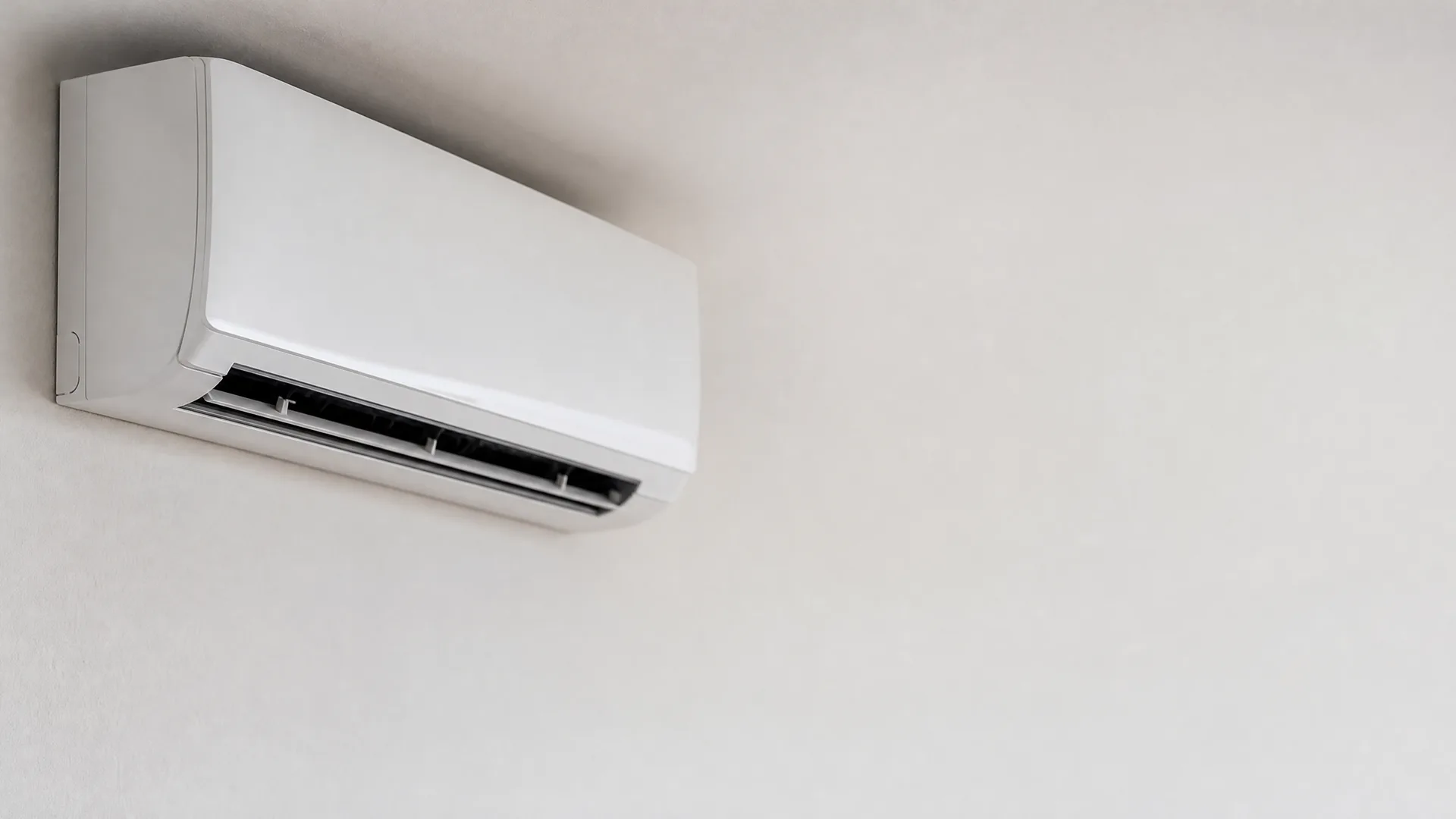
A mini split's indoor coil sits right behind the filter, and it's supposed to run cold enough to pull moisture out of the air, not cold enough to freeze it. That line holds as long as warm room air keeps moving across the coil at the right rate. Slow that air down, with a clogged filter or a fan that's lost speed, and the coil surface drops below freezing. Once ice forms, it blocks even more airflow, so the problem builds on itself fast.
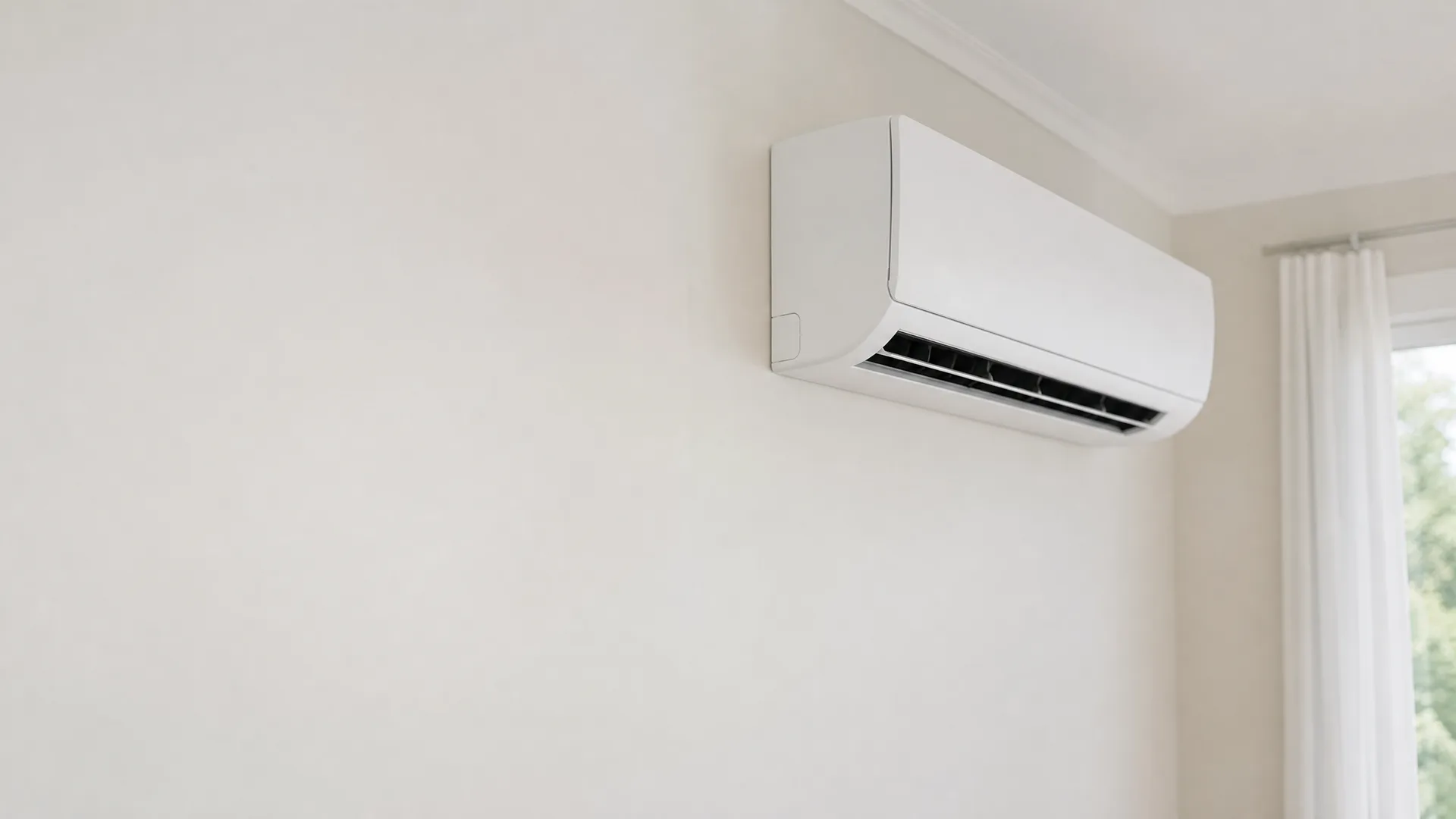
Refrigerant has to be at the right pressure to absorb heat the way the system was designed for. A unit low on refrigerant, usually from a slow leak at a fitting or coil, runs colder than it should on the indoor side. That super cold refrigerant chills the coil below freezing even with normal airflow moving across it. This is why a frozen coil doesn't always point to a dirty filter. Sometimes the fix is on the refrigerant side, and that calls for a licensed hand with a gauge set, not a guess.
Six months of cooling means six months where your mini split has to shed the heat it pulls out of the air through that same coil. Any dip in airflow or refrigerant during that stretch shows up fast as ice, and in Monroe the unit doesn't get much of a break to recover before the next hot day.
NOAA nClimDiv 1991-2020

Melting the ice gets you running again for a day or two. It doesn't tell you why the coil froze in the first place, and in Monroe the unit is back to work within hours of you turning it on. If the cause was a dirty filter you've since rinsed, you may be fine. If it's a low refrigerant charge or a fan motor that's wearing out, the ice comes back, usually sooner than you'd like.
A contractor who works on mini splits in this area through all six months of cooling season has seen most of what causes this. Matching you with one means someone local looks at your specific unit, not a general checklist, and you hear back from that one contractor instead of fielding calls from several. You'll know what froze your coil and what it takes to keep it from happening again.



Get matched with a mini split pro in Ouachita Parish
The pro who gets in touch is licensed in Louisiana and works in Ouachita Parish.
