Running clean
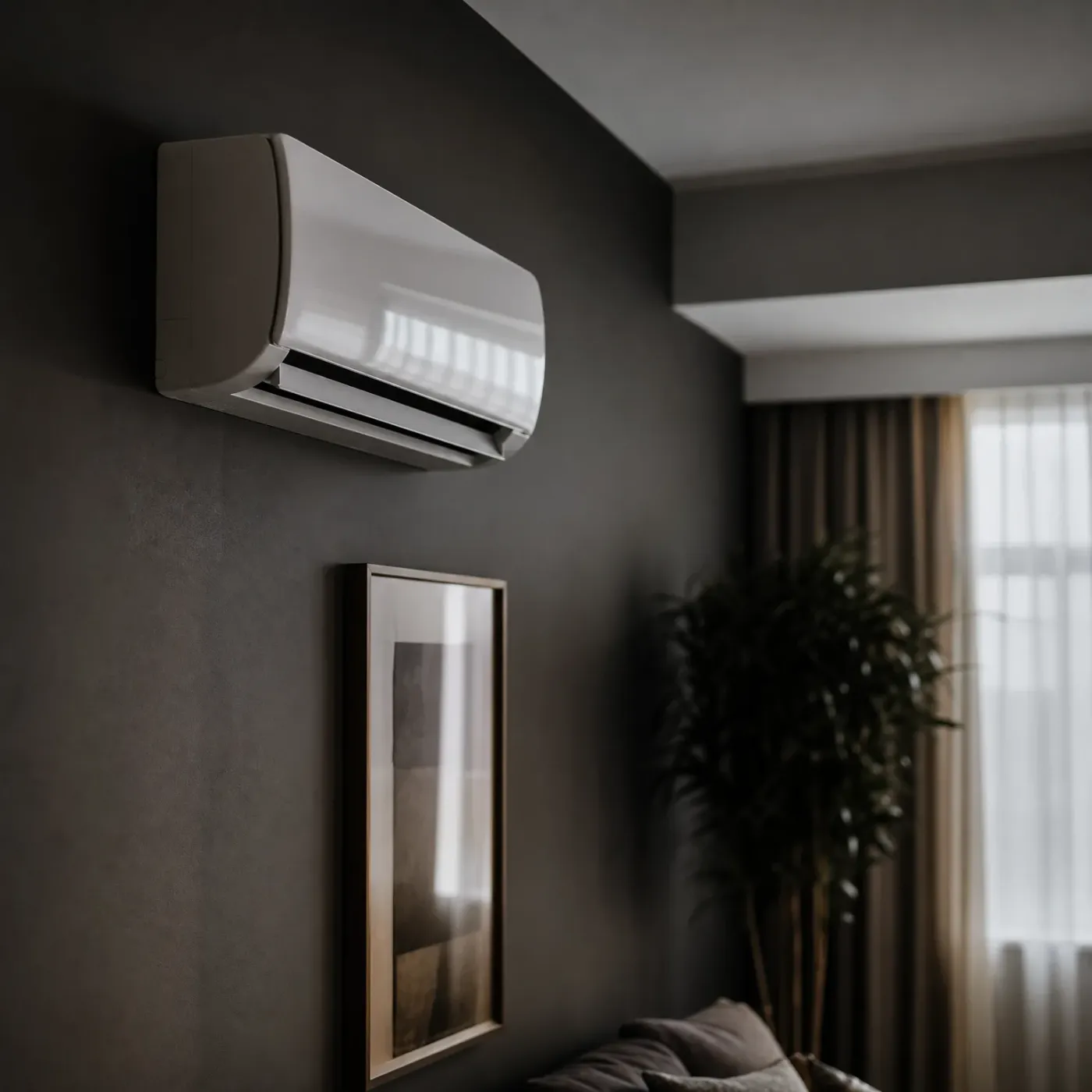
A mini split that looks like this one, clear vents, steady housing, is moving air the way it should. No blinking light, no warning pattern. This is the baseline worth knowing so you catch it when something changes.
A local pro for your mini split repair
A blinking light on your mini split is a code, not a random glitch. It's telling you something about what's wrong, whether that's a sensor, the filter, or something electrical. Below you'll find what the blinking usually means, and a way to get matched with a contractor near Shreveport who can take a look.
Request a proA blinking light on a mini split is the unit's way of flagging an error code, usually through a pattern of flashes on the indoor unit. The count and the color matter: most brands use a set number of blinks to point to a specific problem, like a dirty filter, a frozen coil, a drain line that's backed up, or a fault in the circuit board. Some units blink in sync with a beep, which narrows it down further. Because Shreveport summers run long and humid, the drain line and the coil are common culprits here, since the system runs for months without much of a break and condensation has more chances to cause trouble. The exact meaning depends on your brand and model, since Mitsubishi, Daikin, LG and others each use their own codes. What it means for you is that the blinking isn't random and isn't something to wait out. It's the system telling you where to look.




Cooling runs May through October
Cooling runs May through October, so your mini split carries most of the year's work in that stretch, and a blinking light during those months means less waiting around.
Heat runs November through March
Heat runs November through March, and if your mini split handles both jobs, a blink code in winter deserves the same quick look as one in July.
Power here costs 13.67 cents per kilowatt-hour
Power here costs 13.67 cents per kilowatt-hour, and a unit blinking through an error can run inefficiently or short-cycle until the problem is found.
NOAA nClimDiv 1991-2020 · EIA-861 2025

A mini split that looks like this one, clear vents, steady housing, is moving air the way it should. No blinking light, no warning pattern. This is the baseline worth knowing so you catch it when something changes.

Dust packed into the vents and across the casing blocks airflow and loads the coil underneath. A mini split working this hard behind a dirty housing is a likely candidate for a blinking light, and the fix starts with what you can see from across the room.
Most people notice the light before anything else changes. The indoor unit keeps running, but it's flashing a pattern instead of staying solid, and the air coming out feels weaker or not as cold as it should. Some units stop cooling altogether while the light keeps blinking. You might hear the unit cycling on and off more than usual, or notice water pooling near the indoor head if a drain line is behind the code. Left alone, a mini split that's throwing a code and still running can end up working harder than it needs to, and in Shreveport's summer that means higher bills for a unit that isn't actually cooling the room.
Most mini splits flash the same pattern over and over until the problem clears, pause, then start the sequence again. That's by design. A single blink or two could be mistaken for a loose connection, so manufacturers build in the repeat so you have time to count it. Count the blinks in one full cycle, note the color if the unit uses more than one, and you've got what a contractor needs before they even see the unit.
Caddo Parish runs mini splits hard from May through October, and a dirty filter is the error code that shows up most from that kind of use. Restricted airflow across the indoor coil can trigger the same blink pattern on many brands, because the unit is built to flag it before the coil freezes over. Checking the filter costs nothing and takes a minute, and it clears a real share of these calls before a contractor ever has to touch the unit.

Caddo Parish summers carry a dew point around 70°F on average across June, July and August, according to NOAA climate data. That's heavy, damp air, and it means your mini split's coil stays wet almost the whole time it's running, pulling moisture out of the air nonstop just to keep up with the cooling load. A coil working that hard is more likely to ice over or drain slow, and either one can set off the blinking light you're seeing now. If that's what's happening, the unit may already be struggling to keep the house cool while it flashes. Once you send in the form, you're done chasing down who can look at it. That part moves off your plate.
NASA POWER T2MDEW
Send the request and finding a pro stops being your problem.
Sending the form costs nothing.
Every mini split brand sets its own blink codes, and the count that means low refrigerant on one brand might mean a sensor fault on another. The sheet that came with the unit, or a quick look at the model number stamped on the indoor unit's side panel, will tell you what that brand's pattern means. Some units pair the blinking with a beep count instead of a light count, so read both if the manual mentions it. This is the fastest way to know whether what you're looking at is minor or something that needs a contractor out soon. Without the manual, you're guessing at what the unit is trying to tell you, and a guess can send you chasing the wrong fix.
Sometimes the blinking doesn't line up with any code in the manual, or it changes pattern between cycles. That usually points to a control board issue rather than the sensor or drain problem the steady codes point to. A board that's misreading its own sensors can blink in ways that don't match the chart because the fault is in how it's communicating, not in the part it thinks is failing. This is one a contractor needs to see in person, since testing the board means pulling the cover and checking voltage at specific points. Trying to match it to a code that isn't quite right can waste a day you could have spent getting it looked at.


The blinking starts with two sensors, one on the coil and one reading the room, feeding information to a control board tucked inside the indoor unit. When something falls outside what the board expects, it doesn't just flash once and stop. It stores the fault and holds onto it, which is why cutting the power and plugging it back in won't change what you see. The flashes come in groups, with a short pause marking where one digit ends and the next begins, so counting them in sections matters more than counting the total. Meanwhile the outdoor unit can pull its own compressor offline once the indoor board sends certain signals, even as the indoor fan keeps turning like nothing happened. Not every code needs a service call to clear. Something like a clogged drain line can trip a float switch, and once that line is cleared the switch resets on its own and the blinking stops. Holding a remote up to the unit will often pull the same code up as a number on the display, which is the fastest way to know what the board is actually seeing.


A blinking light is information, not an emergency on its own. The count and color point to a cause, and checking that against the manual or the model number on the indoor unit tells you roughly what you're dealing with before anyone shows up. Some patterns mean the system can keep limping along for a bit. Others, like a blocked drain or a frozen coil, mean no cooling at all, and in a Shreveport summer that's not something to sit on. The code itself doesn't go anywhere. It's stored on the control board, so even if you cut power to the unit overnight, the same pattern shows up again once it's back on. That's useful. It means you don't have to catch the light in the act. Whoever looks at the unit can read the stored fault whenever they get there.
Where this leaves you is simple. You've got a unit that's telling you something specific, a way to narrow down what that something is, and a record that doesn't disappear if you turn the breaker off. The part you don't have to carry is finding who's available to come look at it. Once you send the form, that search is someone else's job, not yours. You get matched with a contractor who handles mini splits in this area, and the waiting around that usually comes with "who do I even call" is off your list.
A pro who works on mini splits
