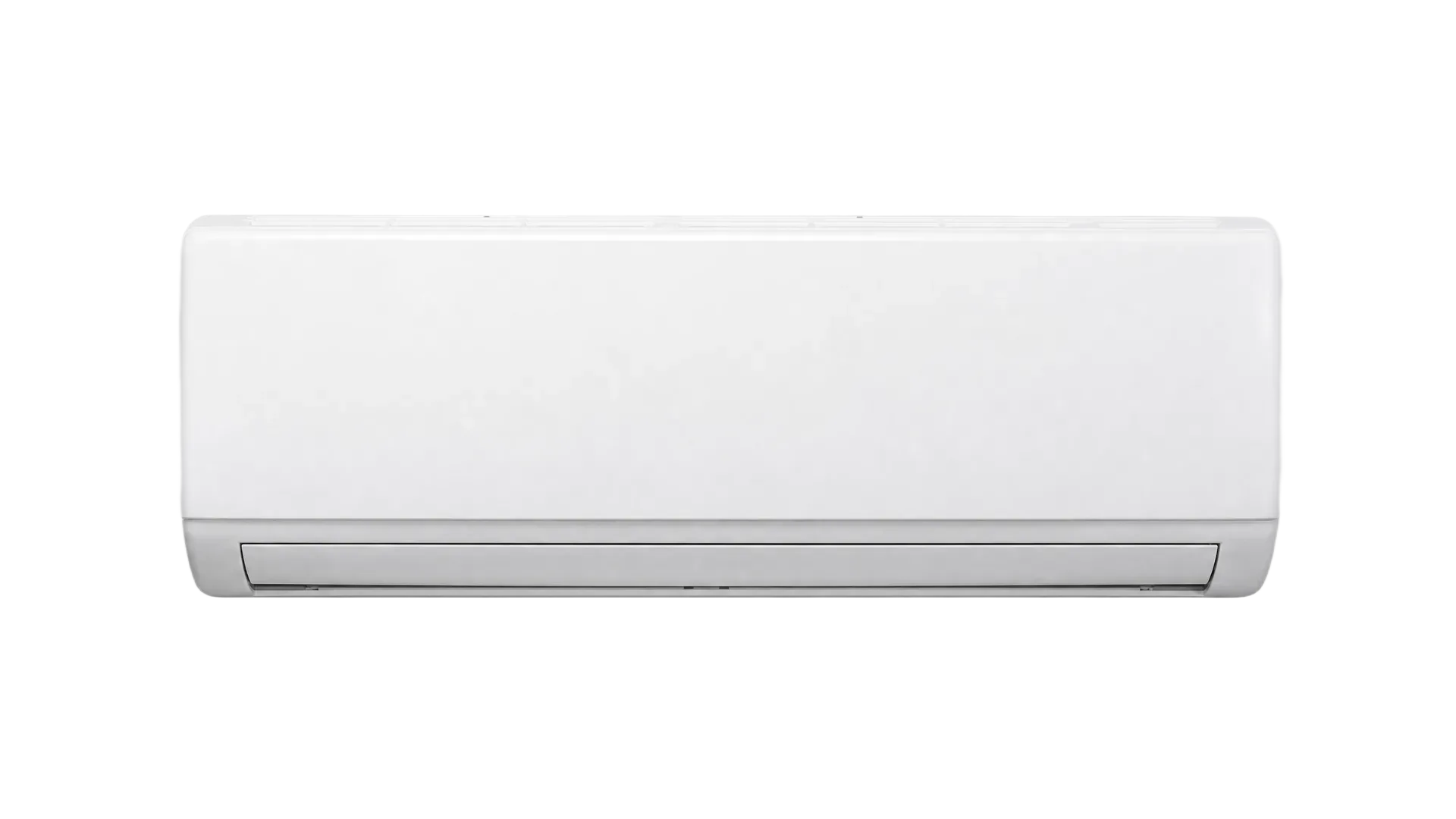

Running clean
A mini split like this isn't blinking at all. The coil stays clear, the drain runs free, and the sensors have nothing to report. Air moves out of the vents steady and cold, and the wall underneath stays dry.
A blinking light on your mini split is the unit's way of telling you what is wrong. Most brands use the number of blinks, or a pattern of blinks, as a fault code, and that code points to something specific like a frozen coil, a drainage problem, a sensor that failed, or a communication error between the indoor and outdoor unit. With Louisiana summers as muggy as they get, a mini split that is low on refrigerant or struggling with drainage will often ice up and start blinking well before the heat really sets in. The blinking itself does not tell you the fix. The same pattern can mean a clogged filter on one system and a failed sensor on another, and the exact meaning depends on the brand and model you have. What it does tell you is that the unit has stopped running normally and needs someone to read the code and look at what is behind it.


The blinks come from the indoor unit's circuit board, and the board is counting for a reason. Each fault gets its own number, so the board that controls your unit is working through a short list of known problems and telling you which one it found. The spacing matters as much as the count. A board that blinks twice, pauses, then blinks twice again is usually saying something different than one that blinks four times straight through. That is why counting once rarely tells you enough. Most boards repeat the full sequence after a few seconds of dark, so you can watch it cycle a second or third time and confirm what you saw. In Louisiana, a clogged condensate line shows up on this list more than almost anything else, because the humidity here keeps the drain pan working hard and gives algae and sediment a steady supply of moisture to build up in the line. When homeowners cut power at the breaker and turn it back on, the light often goes out, but that only resets the board. Whatever tripped the code in the first place is still there, and it will usually blink again once the unit runs long enough to hit the same condition. The outdoor unit keeps its own fault memory too, separate from the indoor light, and a contractor checks that with a meter since it won't always show on the wall-mounted display.


Louisiana's humidity means your mini split pulls a lot of moisture out of the air, and that water has to leave through the drain line and pan. When the line clogs with algae or the pan overflows, the float sensor trips and the board blinks a fault code before water reaches your wall or floor. This happens more here than in drier states simply because the unit is removing more water to begin with. A clogged drain is one of the most common reasons a mini split blinks in a humid climate, and it's not something you can see just by looking at the outdoor unit.
Cutting power to the unit and plugging it back in will not clear a stored fault code on most brands. The board keeps the code in memory until the sensor it was reading goes back to normal or until a technician resets it after fixing the cause. That's why the same blink pattern can come back the next time the unit runs, even after it seemed to stop. On a system that runs most of the year to keep a home comfortable through Louisiana's heat, a code that keeps returning is worth having looked at before it trips again.




That blink code is specific, but matching it to what's actually wrong inside your unit takes someone who works on these systems regularly. A code that reads as a drainage fault on one brand might point to a sensor issue on another, and with the humidity Louisiana runs most of the year, a tech who sees mini splits all season knows which fault codes show up here most and why. Since most homes around you heat with electric heat pumps too, that same unit is working through summer and winter both, and a local contractor familiar with that pattern can usually tell what's failing before they even open the panel. Getting matched here puts your request in front of one licensed contractor near you, not a handful of companies competing for the job. That means one person looking at your actual blink pattern and your actual unit, not a generic answer. With a blinking light, the sooner that happens, the sooner you know what you're dealing with.
Ignore a blink code long enough and the unit protects itself by shutting the compressor down. In a Louisiana summer that means the room it's covering starts picking up heat and humidity within hours, not days.
A mini split that's cut itself off stays dark and quiet, not blinking, so if your bedroom or living room is the one it covers, you'll notice the air turn still before you notice the light at all.


A mini split like this isn't blinking at all. The coil stays clear, the drain runs free, and the sensors have nothing to report. Air moves out of the vents steady and cold, and the wall underneath stays dry.

This is what sits behind a lot of blink codes. Dust builds up on the coil and vents until airflow drops, the unit works harder to cool the room, and the board eventually flags a fault. The grime didn't happen overnight, and it won't clear on its own.
At that rate, running a mini split to fight the drain and coil faults blinking on your unit won't wreck your bill. That's worth knowing before you decide between a quick repair call and just living with a blinking light all summer.
EIA-861 2025 statewide residential average
A sensor inside the indoor unit detects a fault condition.
The circuit board translates that fault into a blink count.
The light flashes the pattern on a short loop, pause, then repeat.
The compressor shuts off if the fault isn't cleared.
Summers here run heavy. The National Weather Service puts the average summer dew point across Louisiana at 73°F, which is the kind of air that feels wet even standing still. Your mini split has to pull that moisture out before it can cool the room, and that extra load keeps the drain line running almost constantly from June through August. A line that might clog once a season somewhere drier can clog two or three times here, and a coil works harder to stay clear too. That's why blink codes tied to drainage and icing show up more often on units running in Louisiana than most places.
NASA POWER T2MDEW county cells weighted by homes

The blink count on your mini split points to one thing, not a dozen. A drain line backed up, a coil gone dirty, a sensor giving bad readings. The light is already telling you which.
A contractor who works on mini splits in this climate all summer has likely seen your brand's pattern before and knows where to look first. Get matched with one who's local and licensed, and that's the one call you'll get, not five contractors competing for your business. Tell them the blink pattern and the brand, and they'll have a sense of what's wrong before the truck pulls up.


Get your mini split to the right pro