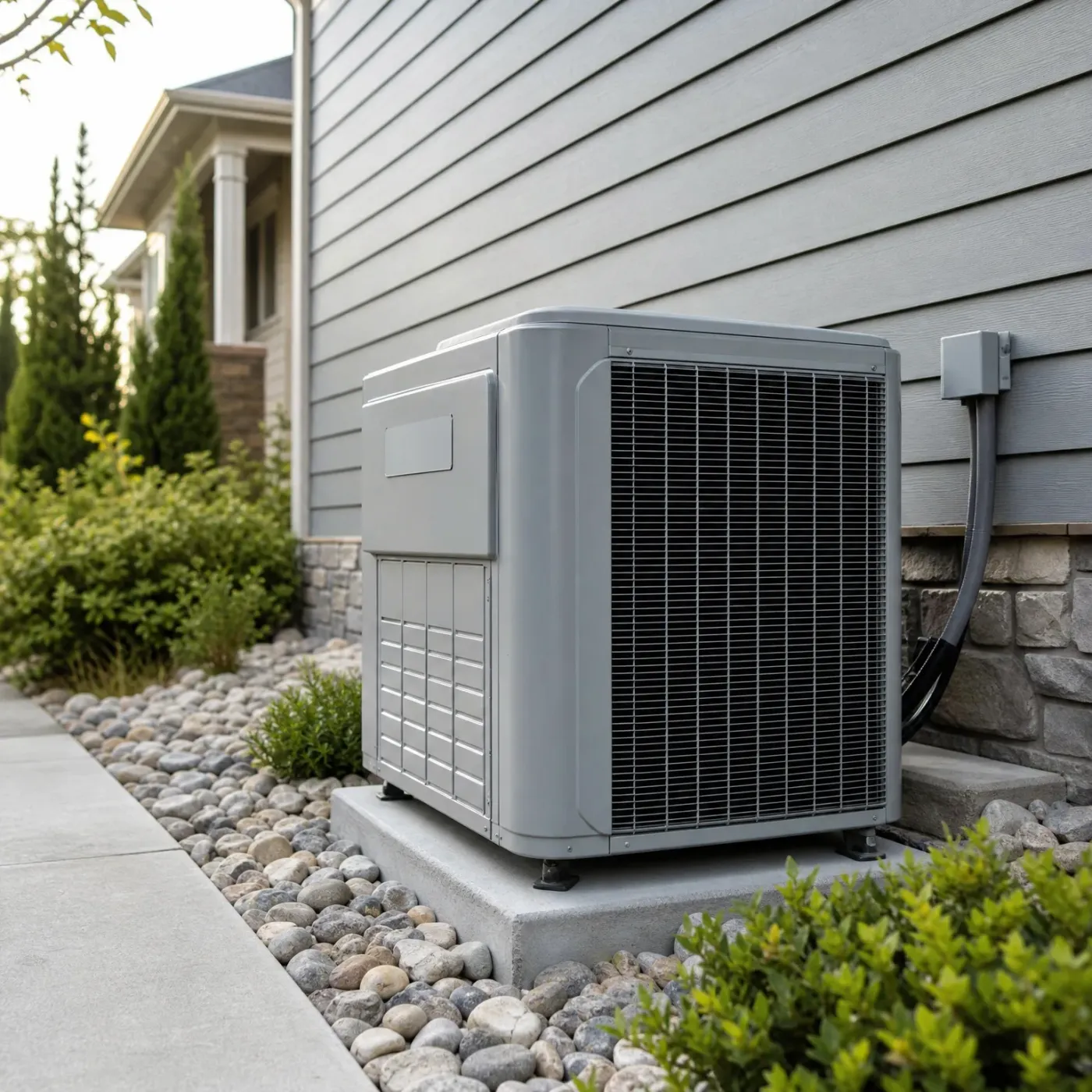
A gray outdoor heat pump unit with a circular fan grille sits on a concrete pad beside a dark wood-clad house, next to a gravel bed with ornamental grasses and a stepping-stone path.

Send one request and you're done looking

What size heat pump a Louisiana home needs

Sizing a heat pump isn't just square footage. Louisiana's humidity, your home's insulation, and how much shade it gets all change the number a contractor lands on. Getting it wrong means a unit that runs constantly or can't keep up. Skip the back and forth of calling around for quotes and comparing opinions. Send the form once and let a contractor sort out the right size for your home.

Hand off my installation

There's no single number that applies to every house, but a Louisiana home usually lands somewhere between a 2.5 and 5 ton heat pump, and the right size depends less on the square footage than on how well the house holds the cooling it makes. A unit sized only by square feet will run long and still leave the air sticky, because Louisiana's humidity means a heat pump has to pull moisture out of the air, not just drop the temperature. Too big, and it cools the air fast but shuts off before it has pulled that moisture out, so the house feels clammy even at the thermostat setting you want. Too small, and it runs nonstop through the worst of summer without catching up. A contractor sizes it with a load calculation that accounts for your insulation, windows, and shade, not a chart based on square footage alone. That calculation is what tells you the real number for your house.

A woman with dark hair in a bun reclines on a gray sofa with her eyes closed and a slight smile, wrapped in a cream knit sweater and blanket, with an open book resting in the foreground and a lit lamp in the dim room behind.
A smiling bearded man in a dark crewneck sweater sits at a dinner table with a lit candle, glasses of wine and water, and plates of food in the foreground, with a lamp, framed art and a potted plant behind him.

A contractor doesn't start with your square footage and a chart. They run a Manual J calculation, which accounts for your insulation, how many windows you have and which way they face, and your ceiling height, then arrives at a load number in BTUs. That number points to a tonnage, but two houses the same size can need different sizes depending on attic exposure and how tight the ductwork is. Bigger isn't safer. A heat pump that's too large for the house cools the air quickly and shuts off before it has pulled the humidity out, so the house can read 72 degrees on the thermostat and still feel damp. The fix is a unit that runs long, steady cycles instead of short blasts, because it's that extended runtime across the coil that actually removes moisture from the air. Come winter, the same equipment works in reverse, pulling warmth from the outside air to heat the house. Getting the size right means the equipment matches the load it's actually built to handle, in both directions.

Why Correct Sizing Beats Guesswork

  • A contractor sizes your heat pump with a Manual J load calculation, which weighs your square footage against insulation, window area, and ceiling height.
  • Oversizing is its own problem here because a unit that's too big cools the air fast but shuts off before it pulls the humidity out.
  • That short-cycling leaves the house feeling clammy even at 72 degrees, since the coil never runs long enough to wring the moisture from the air.
  • A unit sized correctly for Louisiana's humidity will run longer, steadier cycles rather than blasting cold air and shutting off every few minutes.
  • The same equipment handles your heating load in reverse, pulling warmth from outside air even on the coldest nights electricity keeps the house warm.
  • Ductwork condition and attic exposure can push the right tonnage up or down even for two homes with identical square footage.
A smiling man with dark curly hair in a dark green henley shirt sits on a light sofa in a living room with large windows, a lamp, shelving, a stone fireplace, and a bowl of popcorn in the foreground.
A smiling man in a dark long-sleeved henley shirt sits on a beige sofa in a living room, with a bowl of popcorn and a remote on the table in the foreground and shelves, a lamp, and a doorway behind him.
A smiling man with graying hair and stubble in a blue henley shirt sits on a gray sofa with cushions in a living room, with a bowl of popcorn on a wooden table in the foreground.
A smiling man in a dark green long-sleeve shirt reclines on a sofa in a dimly lit living room, with a bowl of popcorn on a side table in the foreground and a bookshelf, lamp, and houseplant behind him.
A gray outdoor heat pump unit on a concrete pad beside a house with light gray horizontal lap siding and a stone base, surrounded by river rock and shrubs next to a concrete walkway.

Finding a pro stops being your job

Describe the project once instead of to every installer.

Send it once and finding someone is no longer on you.

Start one form

No charge to send it. You decide if you hire them.

A dark gray outdoor condenser unit on a concrete pad beside a house with beige horizontal siding, with a gray electrical disconnect box and conduit on the wall, mulch beds, a hosta plant, a shrub, and mowed lawn in front.
A properly sized unit cycles on and off evenly, giving the air enough time to lose its humidity before the compressor shuts off.
A weathered outdoor condenser unit on a concrete pad beside a house with light horizontal siding, surrounded by bare dirt and a shrub.
A unit sized wrong for the house gets caked in grime over the years from running longer, harder, or more often than it should.
An outdoor air conditioning condenser unit on a concrete pad beside a dark horizontal-siding wall and a brick wall, with flowering shrubs and grass nearby.

You walk out to the side yard to grab the hose and catch the outdoor unit sitting in a patch of weak spring sun. The rust along its base has spread since last fall, flaking a little where it meets the concrete pad. It still runs. You can hear it kick on from the bedroom at night. But it's been short-cycling for weeks now, clicking off ten minutes in like it's winded, then starting back up before the house ever really cools. You crouch down and look at the coil through the rusted grille, wondering how many more Louisiana summers this one has in it before it just stops coming back on.


Power costs 12.52 cents per kilowatt-hour statewide

At 12.52 cents per kilowatt-hour, a heat pump that's sized right pays you back on every bill. One that's too big short cycles and still runs up the meter. One that's too small runs flat out all summer trying to catch up. Getting the size right the first time keeps that rate working in your favor instead of against you.

EIA-861 2025 statewide residential average

A gray outdoor condenser unit on a raised pad beside a house with horizontal lap siding, with refrigerant lines, conduit and an electrical disconnect box on the wall, and shrubs on a mulch bed to the left.

Running the way it should

This is what a correctly sized unit looks like from the side yard. The cabinet stays clean because the compressor isn't fighting to keep up, and the cycles are even enough that grime never gets the chance to build up on the coil.

An outdoor air conditioner condenser unit on a gray composite pad beside a house with horizontal lap siding, with refrigerant lines and a conduit running to a wall-mounted disconnect box, and a shrub at left.

Running too hard for too long

This is what shows up after a few summers on a unit that's the wrong size for the house. The grime along the cabinet comes from longer, harder runtimes, the kind a unit settles into when it's undersized for the load or oversized and short cycling.

A weathered outdoor condenser unit on a concrete pad beside a house with white horizontal vinyl siding, with refrigerant lines and conduit running to a wall-mounted electrical box.
Before you get your heat pump installation
A gray outdoor heat pump unit with a large fan grille sits on a concrete pad beside a house with horizontal lap siding, next to a green shrub, mulch bed, and lawn.
After you get your heat pump installation
A gray outdoor condenser unit on a concrete pad beside a white horizontal-siding house, with refrigerant lines and conduit running to a wall-mounted disconnect box, bare soil in front and a green shrub at left.

Running clean

This is a unit sized to match the house. It cycles on, pulls the humidity down, and shuts off before it has to strain. The fins stay clear because the compressor isn't working past what the house actually needs.

An outdoor air conditioning condenser unit on a concrete pad beside a house with light horizontal siding and a concrete block foundation, with bare soil and small green plants around it.

Running wrong

Dust and grime cake the fins on a unit that's been running longer or harder than it should. Whether it's too big or too small for the house, the extra hours of runtime pull dirt into the coil and the grille faster than a correctly sized unit ever would.

A closed silver laptop and a white cup of coffee on a saucer sit on a wooden table in front of a wooden chair, a plain beige wall, a potted leafy plant and a window with greenery outside.

The right size comes from your house, not a chart

A Louisiana home usually needs something between a 2.5 and 5 ton heat pump, but that range only means something once a contractor has looked at your insulation, your windows, and how much shade your house gets. That's the number that keeps the unit cycling evenly, pulling the humidity down, and running your power bill the way it should at 12.52 cents per kilowatt-hour.

Getting there usually means calling around to a handful of contractors, explaining your house and your old unit's quirks to each one, then waiting on quotes to compare against each other. Send the form instead and that part is off your plate. You'll have someone qualified to run the load calculation on your house without doing the legwork of finding them yourself.

A light-colored ceramic vase holding green leafy branches sits on a round wooden table, with a wooden-framed armchair draped in a cream throw, a tripod floor lamp, and sheer curtains blurred in the background.
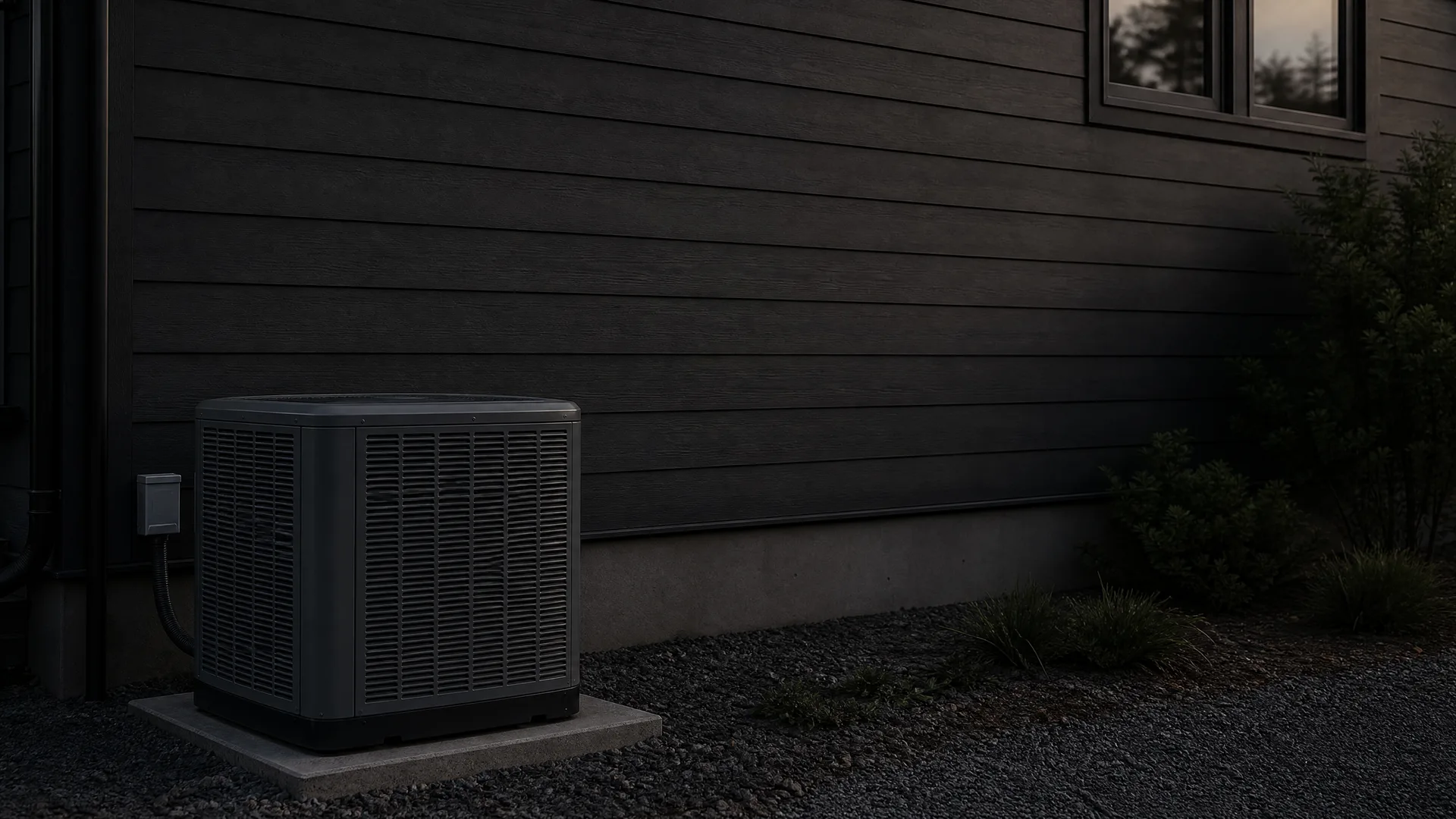
An outdoor condenser unit on a concrete pad beside a dark horizontal-lap-sided house, with gravel, shrubs and a small electrical disconnect box on the wall, in dim light.

Let someone else find the pro

Describe your heat pump job once, to one pro.

New system or replacementHeat PumpLouisiana
Step 1 of 2

What ZIP code is the job in?