Electricity here runs cheap
Homes in Tangipahoa Parish paid an average of 11.91 cents per kilowatt-hour in 2025, lower than most US counties. That rate is one side of the bill.
Takes about a minute. No obligation.
Homes in Tangipahoa Parish paid an average of 11.91 cents per kilowatt-hour in 2025, lower than most US counties. That rate is one side of the bill.
A new air conditioner here runs for months on end to keep up with the humidity. The rate per kilowatt-hour is low, but a system sized and installed right is what keeps the hours it runs from adding up against you.

NOAA nClimDiv, 1991–2020 normals
This system will run from April through October most years.
Seven months of work a year means sizing it right matters more here than in most places.




Any new split-system central air conditioner going into a home here has to meet 14.3 SEER2 if it's under 45,000 Btu/h, which covers most houses. That's the Southeast minimum, set higher than the national one because Tangipahoa Parish falls under zone 2A, where cooling carries the year. A contractor installing anything smaller than that number isn't meeting code. There's a federal tax credit available for qualifying high-efficiency equipment too, worth asking about when you're comparing systems. The rule puts a floor under what goes into your house. What you pick above that floor is what decides how the next ten summers show up on your bill.
Get a few quotes and look past the price tag to the SEER2 number. The rate per kilowatt-hour is low here, but a system that runs this long makes up for it in hours worked. What you pick above the code floor is what decides how the bill reads.
Find a contractor
The afternoon high averages 91°F across June, July and August, and the unit runs through that heat from April to October. At installation, this is where sizing earns its keep. A unit too big cycles on, cools the air fast, and shuts off before it pulls the humidity down, so the room feels damp even at the set temperature. One too small runs flat out all afternoon trying to catch up and never quite does. Either way the compressor takes the hit over months of runtime, not days. A contractor who sizes it against this house, not a rule of thumb, is the one worth hiring.
A contractor works out the load by going through the house: square footage, window area and orientation, ceiling height, insulation, how many people live there. That math is called a Manual J. Swapping in the same size as what's already outside, or sizing off a chart that only looks at square footage, skips the parts of the math that actually change the answer.
A unit that's too big satisfies the thermostat fast and shuts off, so it never runs long enough to pull moisture out of the air. The room reads cool but feels damp. A unit that's too small never catches up, so it runs continuously and the compressor carries that strain hour after hour. The right size is the one that runs long steady cycles and actually finishes the job each time.
Estimates for a typical Tangipahoa Parish home, from EIA household energy data, Louisiana fuel prices and NOAA climate normals. Your home will differ.
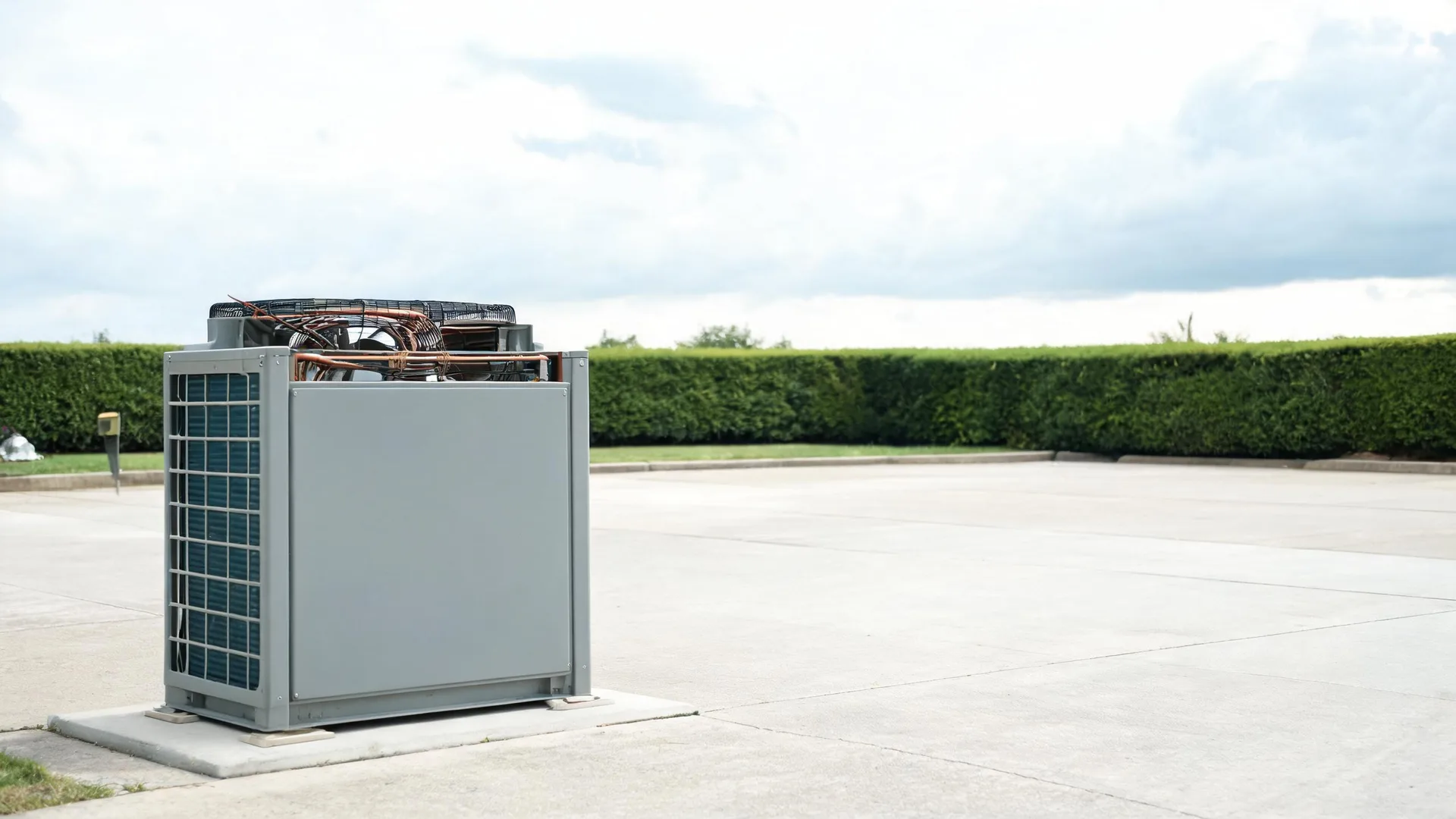
Installation day starts with the old equipment coming out, the indoor coil, the outdoor unit, and the line set if it isn't being reused. A good contractor checks the ductwork while that's open, because new equipment moving the wrong amount of air through old, leaky or undersized ducts won't perform the way the rating sticker says it should. Setting the outdoor unit means a level pad, clearance on all sides for airflow, and distance from anything that would recirculate the hot air it's trying to throw off. Inside, the coil has to match the outdoor unit, not just fit the old cabinet. Once everything's connected, the line set gets evacuated to pull out moisture and air before refrigerant goes in, and the charge gets checked against the manufacturer's numbers rather than eyeballed. Last comes airflow, checking that each room is getting what the duct design calls for, and running the system through a full cycle before anyone calls it done.