A lit antebellum-style two-story house with white columns and a wraparound porch at night, framed by live oak trees draped in Spanish moss.

AC Installation in Slidell, LA

Tell us about the job

Takes about a minute. No obligation.

New system or replacementCentral ACSt. Tammany Parish, LA
Step 1 of 2

What ZIP code is the job in?

Storms come through here often

St. Tammany Parish logged 146 severe weather events between 2015 and 2024. That includes 88 damaging wind events, 25 tornadoes, 24 hail events, and 5 tropical storms or hurricanes. A new AC here is going to face weather most systems elsewhere never see.


The power doesn't always hold

Almost half of Louisiana households, 49%, went at least 24 hours without power in 2024. An outage that long means no cooling and no hot water if your water heater runs on electricity. A new install is worth planning around that, not just around the heat.

7 months
April through October, your air conditioner is on duty
91°F
the average summer afternoon it cools against
24 hail events
in ten years, and hail bends the fins on outdoor coils
13.4 SEER2
the federal minimum any new unit must meet
Isometric cutaway illustration of a house interior showing ducted HVAC piping, an indoor air handler unit, and an outdoor condenser with fan connected by a line, rendered in grey tones on a white background.
Your air conditioner works hardest from May through September.

NOAA nClimDiv, 1991–2020 normals

Cooling season here runs April through October.

March is the month to put in a new AC, before the first warm week forces the decision.

Most of St. Tammany heats with electricity, and that AC is probably going in next to it

61.9% of homes heat with electricity
Cooling runs April through October
Summer afternoons average 91°F

St. Tammany falls under zone 2A, a hot and humid climate where the AC carries most of the year's work. Any split system installed here now has to hit at least 14.3 SEER2 below 45,000 Btu/h, higher than the national minimum of 13.4. That rating narrows what a contractor can legally put in, so not every unit on the market qualifies for this install. A system that meets it runs more efficiently through a long cooling season than one built to the lower national floor. There's also a federal tax credit available for qualifying high-efficiency equipment, worth asking about before you settle on a model.

Plan this install around the outages, not just the heat

Decide now where the outdoor unit will sit and what will shield it, before the contractor pours the pad. Ask what happens to cooling and hot water if the power goes out, and whether that's something to plan for at install. These are easier questions to settle before the system goes in than after.

Find a contractor
A man in a cap, dark jacket and tan work pants walks up porch steps toward a green front door, carrying a worn canvas tool bag in his right hand, with a potted shrub beside the entry.
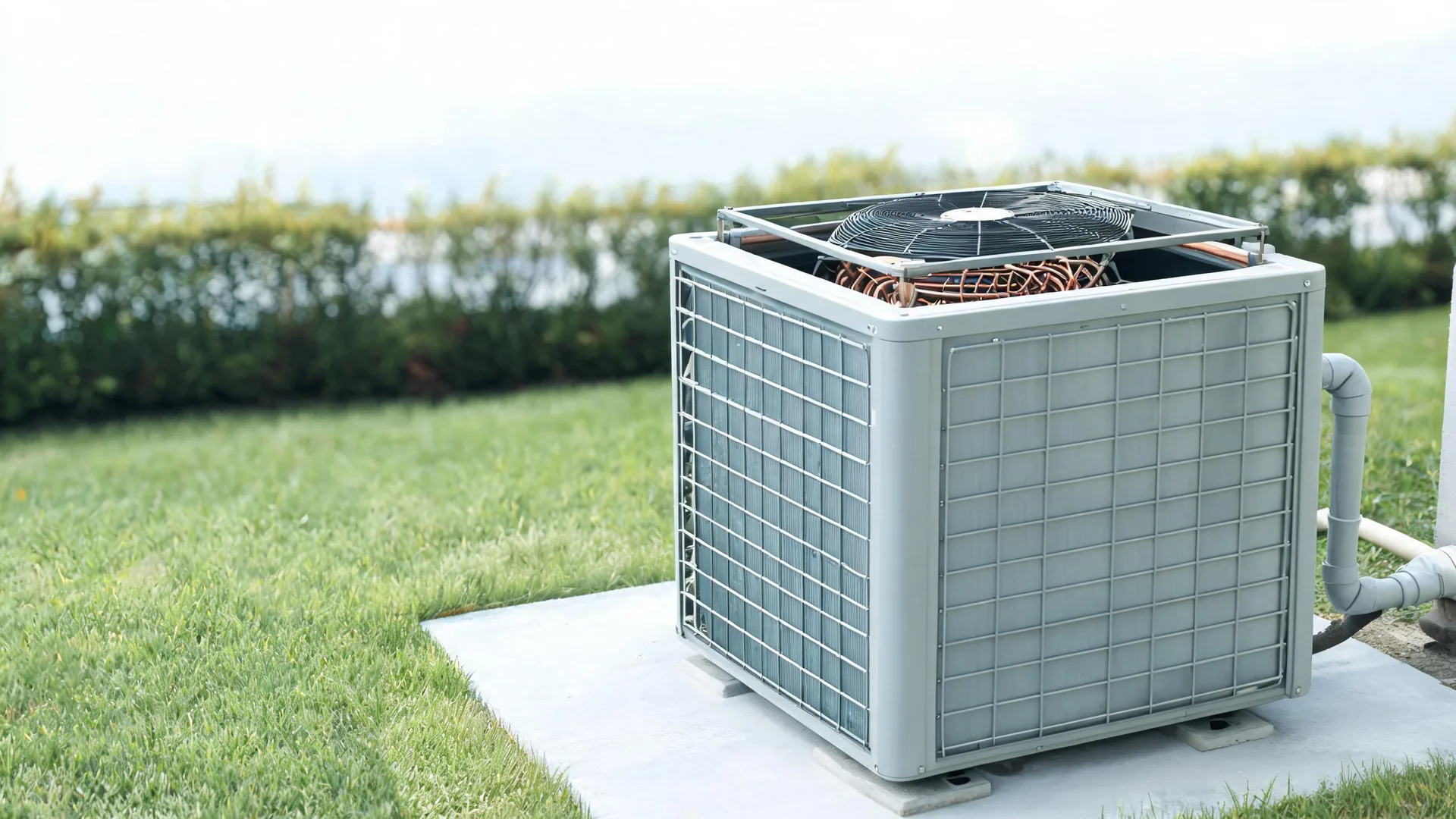
An outdoor residential air conditioning condenser unit mounted on a concrete pad, surrounded by gravel with a blue sky in the background.

Seven Months of Work, Every Year

April through October, this system runs. That's seven months of the year carrying the load, with afternoon highs averaging 91°F in June, July and August. The dew point sits at 73°F those same months, higher than most of the country, and that's the number that matters for a compressor. Heat alone is one job. Wringing that much moisture out of the air at the same time is another, and this system does both without a break from spring into fall. Equipment sized wrong for that shows its weak points early. Get the sizing right at install and it spends its seven months doing the job instead of fighting it.

Sizing the system costs more than sizing the box

A contractor has to work out how much heat and moisture the house gains before picking a unit, checking the walls, the windows, the attic, the ductwork that's already there. A unit too big cools the air fast but never runs long enough to pull the moisture out. One sized right runs longer, steadier cycles and does both jobs at once. Getting that number right takes more time on site than grabbing a unit off the truck, and it shapes everything priced after it.

The ducts decide how much else has to change

The outdoor unit and the coil are only part of the job. If the ductwork already in place is undersized, leaky, or built for a different system, air won't move the way the new equipment expects, and a contractor has to resize or seal it before the new system can perform the way it's rated to. A straight swap, same ducts, same spot, same size, is a different job than one where the duct runs need rework to carry what the new system pushes.

An outdoor air conditioning condenser unit installed beside the exterior wall of a blue vinyl-sided house at sunset.

A higher-efficiency unit would save about $30 a year to run in St. Tammany Parish compared with a new unit at the federal minimum.

  • A higher-efficiency unit$420 a year
  • A new unit at the federal minimum, 14.3 SEER2$450 a year

Estimates for a typical St. Tammany Parish home, from EIA household energy data, Louisiana fuel prices and NOAA climate normals. Your home will differ.

Installation starts with the old system coming out, the indoor coil, the outdoor unit, and the line set running between them. A contractor will check the refrigerant lines before deciding whether to reuse them or run new ones, since the wrong diameter or a contaminated line can ruin a new compressor fast. The indoor coil usually goes in first, matched to the air handler or furnace already in the house, then the line set connects it to the new outdoor unit on its pad. Once everything's connected, the lines get pulled into a vacuum to clear out air and moisture before any refrigerant goes in, since either one left behind causes problems later. The system gets charged to the exact weight the manufacturer specifies, not just until it feels cold. Last comes startup: checking airflow at the vents, checking the temperature split between the air going in and the air coming out, and listening for anything that sounds wrong before calling the job done.